
How do you handle WhatsApp dive bookings without double-booking?
Most double-bookings at dive centres start with a friendly message. Someone replies "yes, we have space Saturday" on WhatsApp, a colleague sells the same place to a walk-in, and on the morning there are nine divers for eight places. The cause is rarely carelessness. It is availability living in too many places at once. This guide explains why it happens, the rule that prevents it, how to word your replies, and how DiveOps keeps the last space from being sold twice.
The short answer
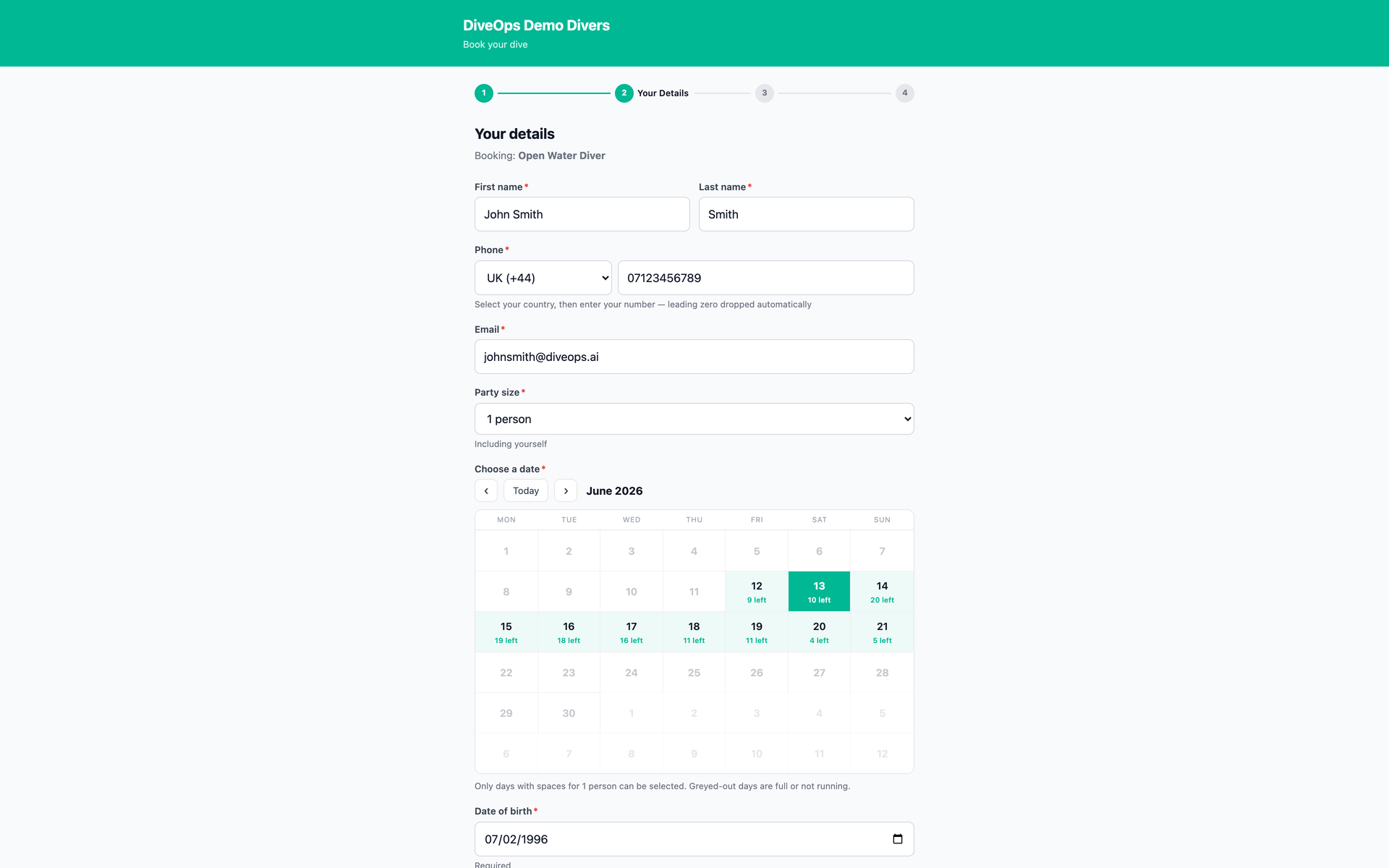
Keep one live calendar that every channel draws from, and treat nothing as booked until it is in that calendar. Answer WhatsApp enquiries from the calendar, send the diver a booking link that re-checks space and takes a deposit, and release any unpaid hold quickly. Walk-ins and phone bookings use the same spaces.
 (opens full size in a new tab)
The short version
- Double-booking happens when availability lives in heads, chats and whiteboards instead of one live calendar.
- Every channel, WhatsApp, web, phone, walk-in and agents, must draw from the same spaces.
- A place is booked when it is in the calendar, not when someone says yes in a chat.
- Hold places only briefly, and let unpaid holds expire on their own.
- In DiveOps, capacity is re-checked at the moment of booking, and the assistant only says a day is open when the calendar shows space.
Why does WhatsApp lead to double-bookings?
WhatsApp leads to double-bookings because a chat feels like a booking, but nothing else in the centre knows about it. A promise made in a conversation does not reduce the spaces anyone else sees.
The pattern is familiar. Several staff answer from several phones. Availability sits on a whiteboard or in someone's memory. There is a gap of hours between "yes, we have space" and the diver actually paying. Meanwhile a walk-in, an agent or the website sells the same place. Nobody did anything wrong in their own channel; the channels simply never met.
What is the one rule that prevents double-booking?
The rule is one live source of availability, used by every channel, and a place counts as booked only when it is recorded there. Not when a diver says they will come, and not when a member of staff says yes in a chat.
Everything else follows from that. Staff check the calendar before they reply. The website reads the same calendar. Walk-ins are entered before they pay. Agents either book through the same system or are given a fixed allocation that comes out of it. If any channel keeps its own list, double-bookings come back.
How should staff reply when a diver asks if there is space?
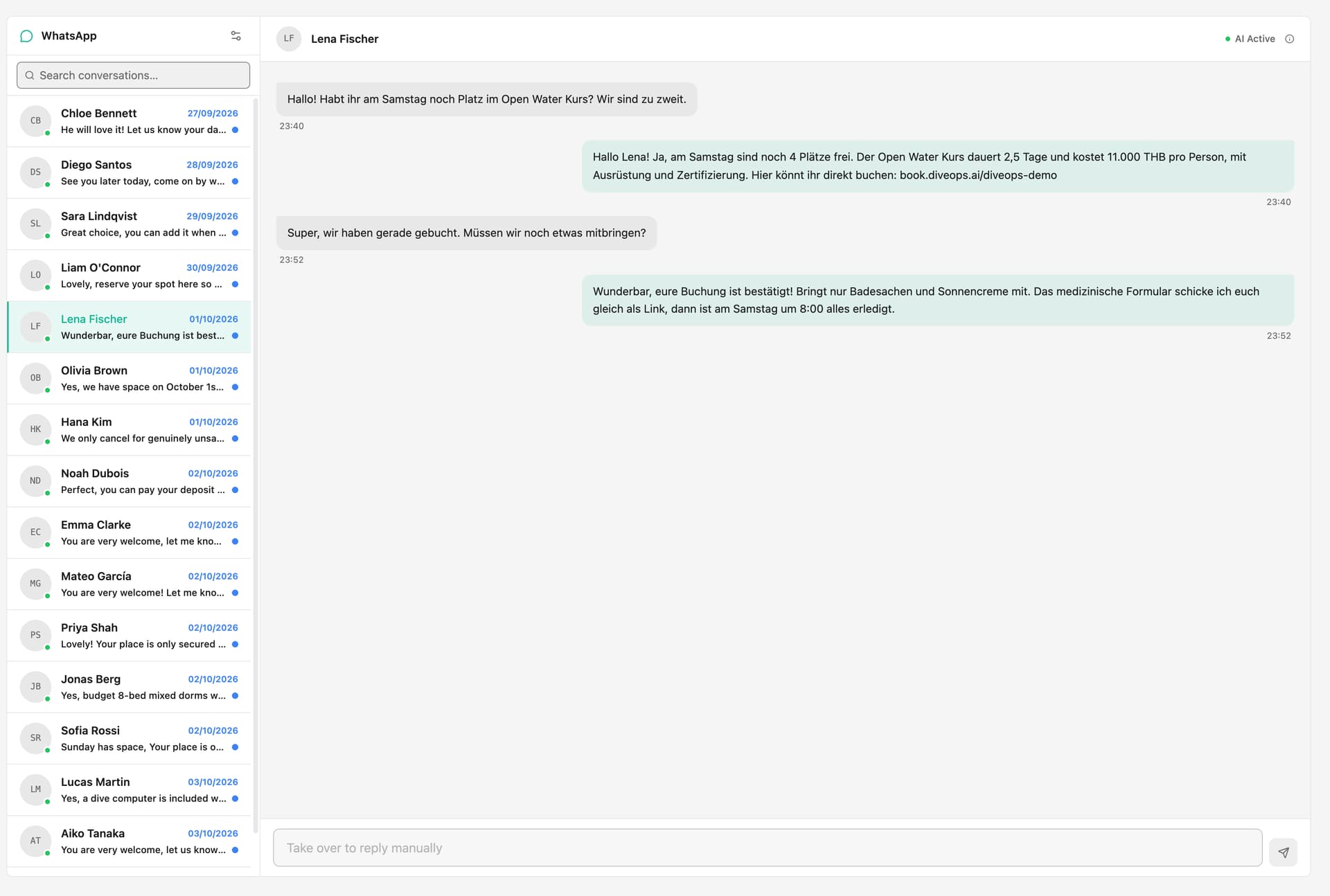
Staff should answer from the live calendar and move the diver straight to a booking, rather than promising the place in the chat. A safe reply has three parts: what is available, the price, and the link to secure it.
- Check the calendar first, every time, even when you think you know
- Say what is open today, not what will definitely still be open tomorrow
- Send the booking link so the diver secures the place themselves
- If they cannot book online, enter the booking yourself before the chat ends
- Never promise an exact number of spaces left or a named instructor unless it is recorded
Should you hold a place before the diver pays?
Hold a place only briefly, and only in the calendar. A short hold while a diver completes payment is fair and avoids losing them halfway through. A hold that lasts until "they said they would come back" is how boats end up oversubscribed, or empty seats go unsold.
Decide your rule and apply it every time. A deposit is the cleanest way to secure a place: it turns intent into commitment and gives you something to work with if they do not turn up. For setting deposit levels and cancellation terms, see our guide to deposits, cancellations and no-shows.
How do you include walk-ins, phone bookings and agents?
Enter them in the same calendar as everything else, at the moment they are agreed. A walk-in who pays at the desk takes a space exactly as an online booking does. A phone booking is entered while the caller is still on the line.
Agents and partner hotels are where double-bookings hide. Either give them a link into your booking page, so their divers draw from the same spaces, or agree a fixed number of places that you remove from sale. Do the same for limited resources inside a day: if the boat holds twelve but only two places suit a technical course, cap that service separately.
Where does an AI assistant fit in?
An AI assistant fits best as the fast first reply that sends divers to the live calendar. It should answer questions about courses, prices and dates, say a day is open only when the calendar shows space, and send the booking link so the diver secures the place themselves.
It should not confirm bookings on its own, quote exact spaces or promise anything the calendar does not show. When a chat needs judgement, a group discount or a tricky date, it should hand over to a person with the whole conversation in view. For more on reply speed, see how to answer WhatsApp enquiries faster.
How does DiveOps stop the last space being sold twice?
DiveOps keeps one booking calendar for every channel. Spaces count every booking that day, from the web, WhatsApp and walk-ins, and capacity is re-checked at the moment of booking, so the last place cannot be sold twice. You can cap one service inside a day, for example two technical places on a twelve-place boat, and fixed course dates show "X places left" and close when full.
When a diver is part-way through paying online, their place is held for 30 minutes and then released if nobody pays. If they pay after that and the day has filled, the booking stays cancelled, the money is kept, and the notification bell tells you so you can fit them in or refund them.
The WhatsApp assistant answers 24/7, in under 2 minutes, in the diver's language, and sends your booking link. You choose how it treats availability: defer every date to your team, check the live calendar and only say a day is open when it shows space, or assume space beyond a booking cutoff you set. It never quotes an exact number of spaces, never confirms a same-day booking, and hands over to a person in one tap. At the live DiveOps centre it handles about 92% of routine questions without a person.
Questions, answered.
What is the main cause of double-booking at dive centres?
Availability kept in more than one place: a chat, a whiteboard, a booking tool and an agent's list. One live calendar used by every channel removes it.
Can an AI assistant on WhatsApp cause double-bookings?
It can if it promises space it cannot see. Set it to answer from your live calendar or defer to your team, and to send the booking link rather than confirm the place itself.
How long should I hold a place for a diver who has not paid?
Briefly, and only in the calendar. In DiveOps an online payment in progress holds the place for 30 minutes, then releases it automatically.
Do walk-ins count against online spaces in DiveOps?
Yes. Spaces count every booking that day, from the web, WhatsApp and walk-ins, so a walk-in takes a place exactly as an online booking does.
See it run your dive centre.
A short live walkthrough on your real schedule. No slides, no sales patter.