
How should a dive centre handle deposits, cancellations and no-shows?
Deposits, cancellations and no-shows are where a dive centre's goodwill and its cash flow meet. Too soft, and empty places on a full boat cost you money. Too hard, and you collect bad reviews and card disputes. This guide covers how to size deposits, what a cancellation policy should say, the consumer rules worth checking, how to handle weather days and no-shows, how to refund without a mess, and how DiveOps handles each step.
The short answer
Take a deposit that covers what you commit when a diver books, publish a short cancellation policy before they pay, and apply it the same way every time. Offer a new date or refund when you cancel for weather, record every no-show with its reason, and refund through the method the diver paid with.
 (opens full size in a new tab)
The short version
- Size deposits to what you commit when a diver books: instructor time, a boat place, course materials.
- Publish the cancellation policy before payment, in plain words, and apply it every time.
- When you cancel for weather or safety, offer a new date or a refund.
- Record each no-show and the reason, and keep the deposit only if the policy says so.
- Refund through the method the diver paid with, and keep the evidence in case of a card dispute.
How big should a dive centre deposit be?
A deposit should be large enough to cover what you commit when a diver books and lose if they do not arrive. For a course that means instructor time, a place in a small group, and often materials or e-learning bought on their behalf. For a fun dive it means a place on a boat you might otherwise have sold.
That usually leads to different rules for different products. A cheap fun dive may be best paid in full at booking, because a small deposit is barely worth the admin. An expensive course suits a percentage deposit with the balance on arrival. A long professional programme may need a larger deposit and a written agreement. Whatever you choose, let divers pay in full if they prefer.
What should a cancellation policy say?
A cancellation policy should answer, in plain words, what happens to the diver's money in each common situation. Keep it short enough to read on a phone, show it before payment, and make sure everyone on the team, and any AI assistant, gives the same answer.
- How much notice the diver must give, and what is refunded at each point
- What happens when you cancel for weather or safety: a new date or a refund
- What happens if a doctor says the diver cannot dive
- Whether a course can be moved to another date, and how often
- What happens to a course stopped part-way through
- What counts as a no-show, and what is kept
What do consumer rules say about cancellations?
In the UK and the EU, the usual 14-day right to cancel a distance purchase does not apply to leisure services booked for a specific date, which covers most dives and courses. That gives you room to set your own terms, but it does not make every term fair.
Unfair terms can still be challenged, and a deposit kept should bear some relation to your real loss. Be cautious about keeping money when you cancelled, when a medical decision stopped the diver, or when you resold the place. This is general information, not legal advice: check the rules in each country you sell to, and in your customers' countries if you sell online.
How should you handle no-shows?
Prevent what you can, then record what you cannot. Most no-shows are confusion rather than bad faith: the wrong meeting time, the wrong pier, a diver who thought they had cancelled. A reminder the day before with the meeting time and place removes many of them.
When a diver does not turn up, mark them as a no-show with the reason, take them off the boat so the headcount is right, and apply your policy. Keeping a record matters: it settles disputes later and shows you whether no-shows cluster around one channel, one product or one agent.
How do you handle weather days and postponements?
When you cancel, the diver should never have to chase you. Offer a new date first, keep their deposit against it, and make the refund easy if no date suits. Treat a postponed booking as still live, so the money already paid stays attached to it and the balance still stands, rather than letting it drift into a note on a whiteboard.
How do you refund without making a mess?
Refund through the method the diver paid with, record the reason, and give them a refund receipt. A card refund should go back to the same card; a cash refund should be recorded as cash going out, so the drawer and the books still agree.
Card disputes are the cost of getting this wrong. If a diver disputes a charge, you will need to show the policy they agreed to, the booking and your messages. Keep them together on the booking. Remember too that a deposit is money you owe until the dive happens, which our dive centre finance guide explains.
How does DiveOps handle deposits, cancellations and no-shows?
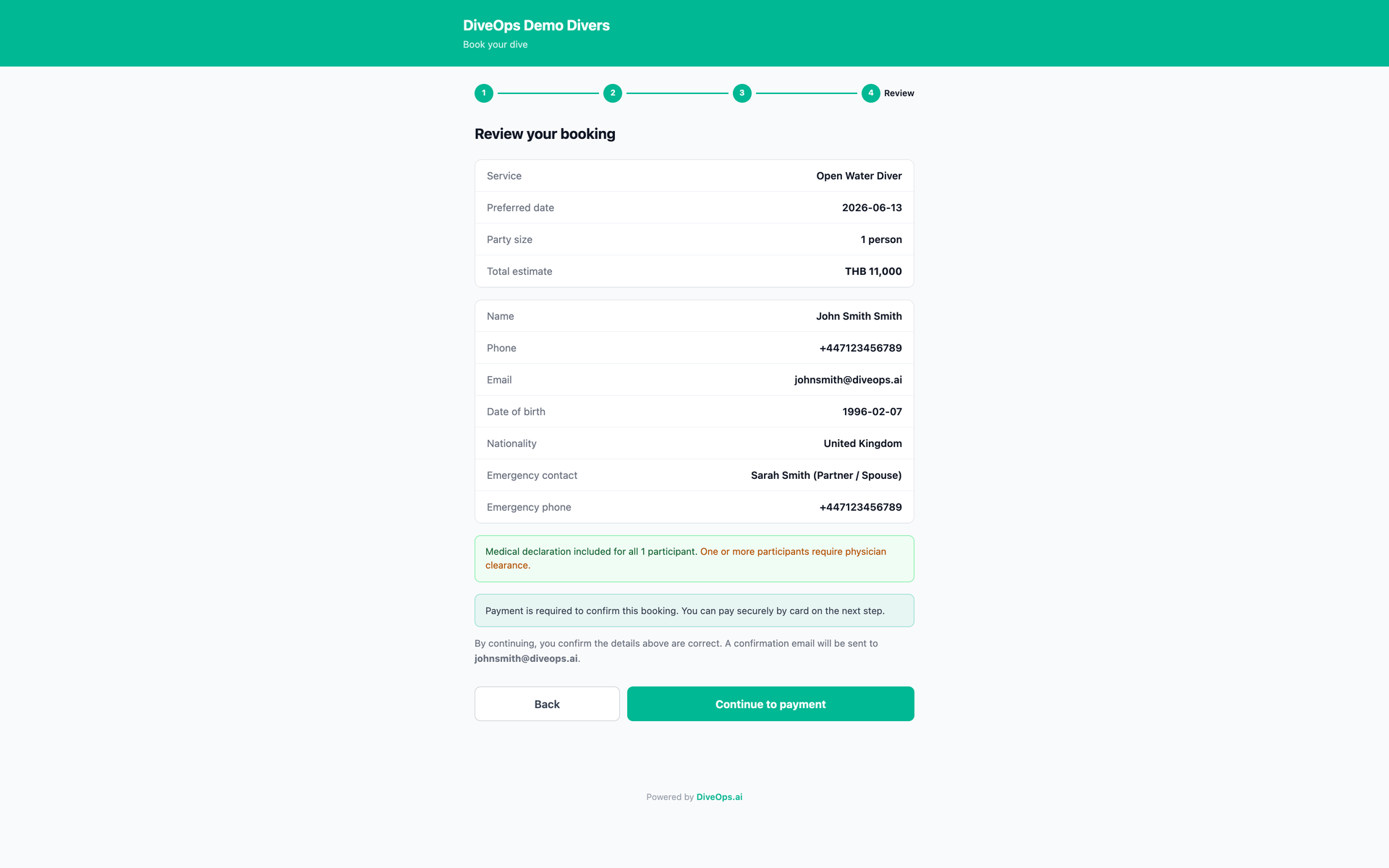
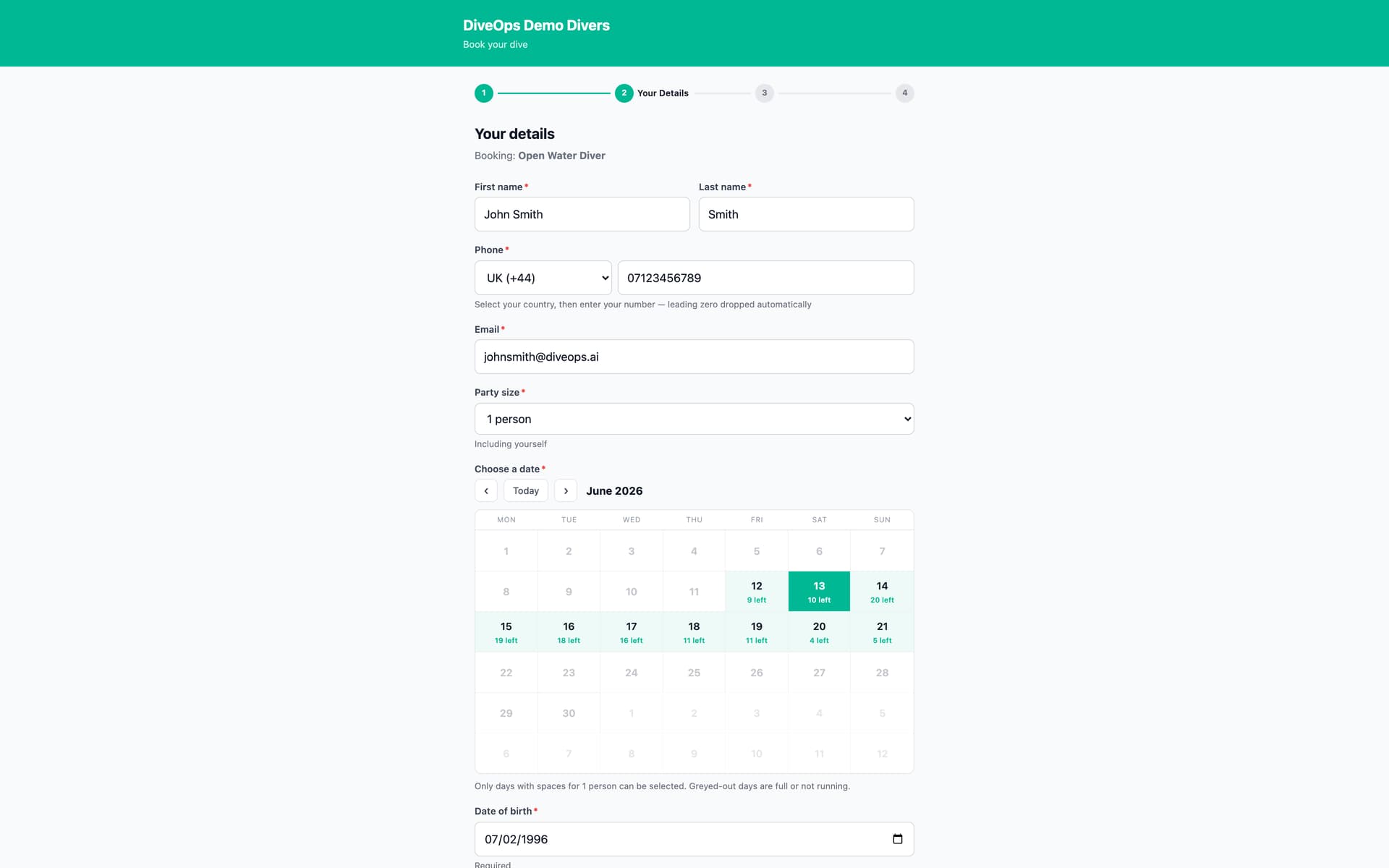
In DiveOps you set a centre-wide rule on the booking page, full payment, a deposit as a fixed amount or a percentage, or pay at the centre, and override it on any product. Divers can always choose to pay in full. The booking records what was paid and shows the rest as outstanding, and online payments go to your own Stripe or PayPal account. An unpaid online booking releases its place after 30 minutes.
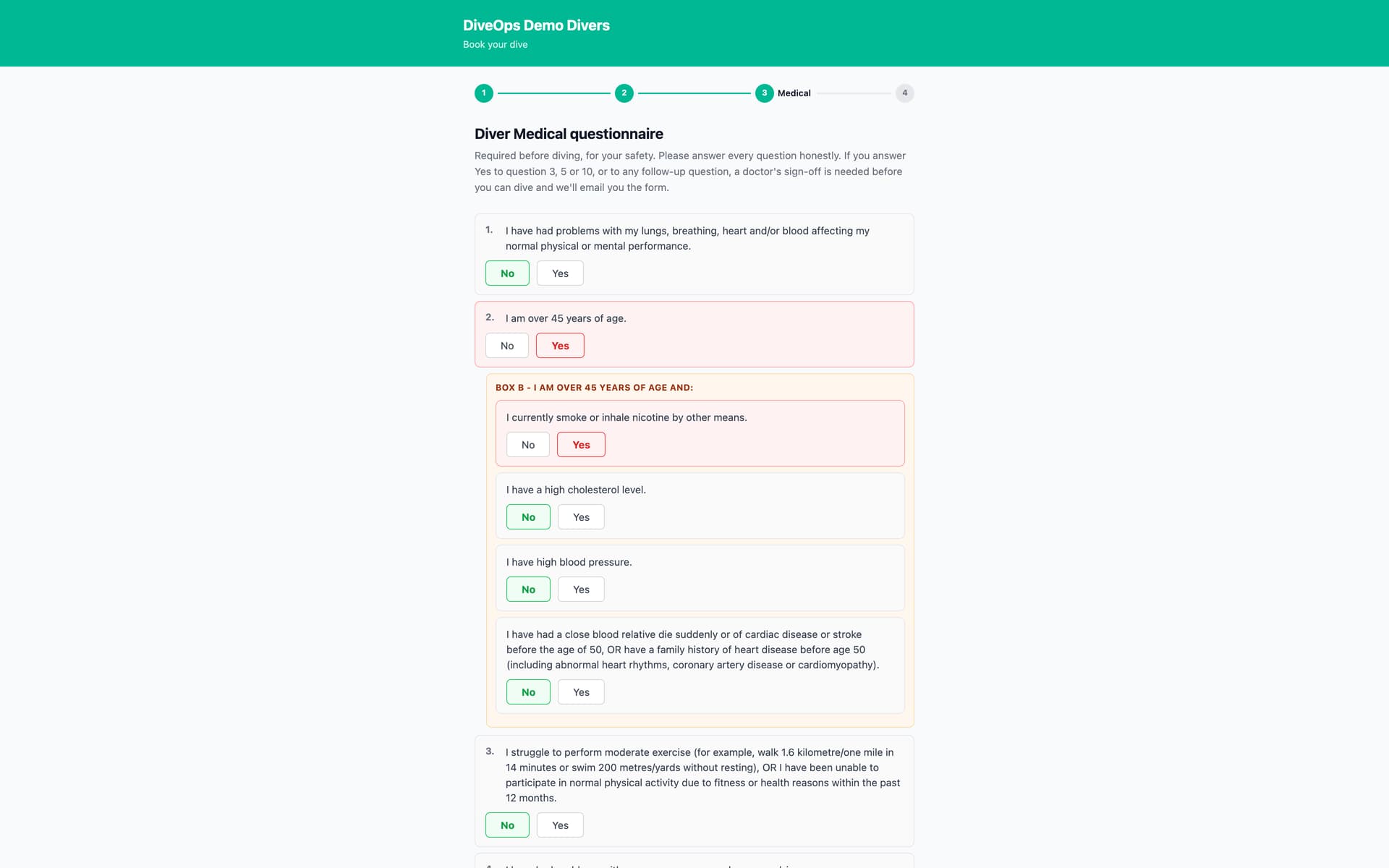
Your cancellation, medical and other policies live in Settings, pre-loaded with a starter set you edit to match your centre, and the WhatsApp assistant quotes what they say. Taking a diver off the day asks why: no-show, cancelled, duplicate, postponed or other, so every case has a reason on record. A postponed booking keeps its deposit and its balance.
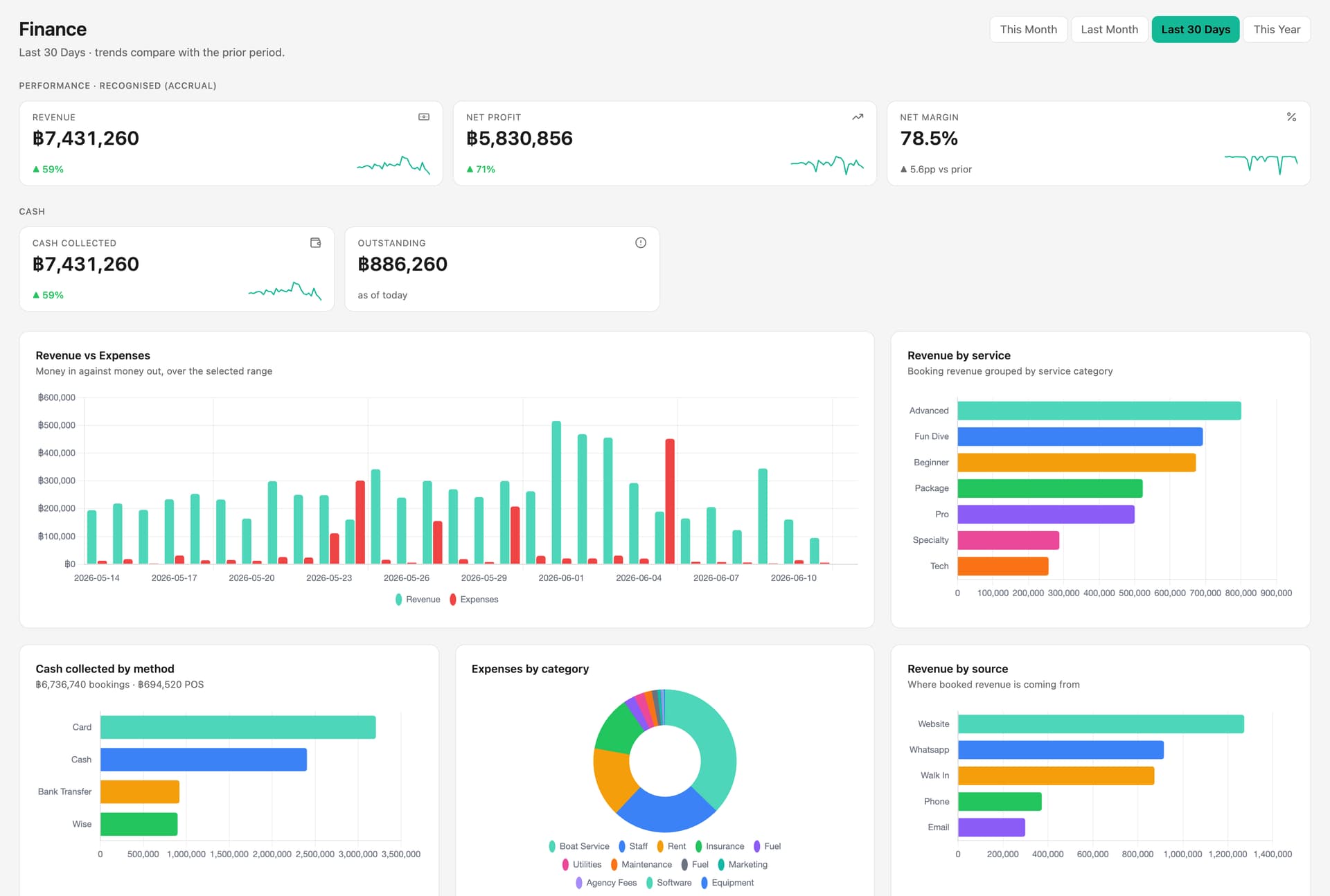
If a cancellation leaves a group overpaid, the booking says so. Refund sends card and PayPal payments back automatically with a reason you confirm, Record refund logs cash and other refunds you made by hand, and each refund gets a refund receipt and reverses in the books. If a card refund later fails, the notification bell tells you who to repay another way.
Questions, answered.
Do divers have a 14-day right to cancel an online dive booking?
In the UK and EU, generally not for leisure services booked for a specific date. Your own policy applies, but terms must still be fair. Check local rules; this is not legal advice.
Should I keep the deposit if I cancel for weather?
No. When you cancel, offer a new date or a refund. Keeping money for a dive you called off invites disputes and bad reviews.
Can DiveOps take a deposit on some products and full payment on others?
Yes. Set a centre-wide default, then override it per product: full payment, a deposit as a percentage, or pay at the centre.
How does DiveOps record a no-show?
Archive the diver's booking and choose No-show. It leaves the Planner, the boat headcount updates, and the reason stays on the record.
Sources
See it run your dive centre.
A short live walkthrough on your real schedule. No slides, no sales patter.