
Dive Centre Booking System: A Practical Guide to Taking Bookings Without the Admin
A dive centre booking system is more than a calendar. It is the path a diver takes from first message to confirmed seat on the boat, across WhatsApp, your website and the front desk. This guide covers the channels that matter, how to take payments, how to stop overselling, where medicals fit, and how a booking should flow straight onto the trip sheet.
 (opens full size in a new tab)
What a dive centre booking system actually has to do
Most centres do not lose bookings because their prices are wrong. They lose them because an enquiry sat unanswered for six hours, a seat got double-sold, or a diver turned up with no medical on file. A booking system is the thing that closes those gaps. Its job is to capture the enquiry, confirm availability honestly, take or hold payment, collect the paperwork you need, and put the right people on the right boat on the right day.
Judge any system against the same simple test. Can a diver who messages you at 11pm get an accurate answer and a held seat without you waking up? Can your reception team see, in one place, who is booked on tomorrow's two-tank dive and who still owes a deposit? If the answer is no, the admin is being done by people instead of software, and people are expensive and asleep half the day.
Channels: WhatsApp, web and walk-in
Divers book across three channels, and a good system treats all three as one pipeline rather than three separate inboxes.
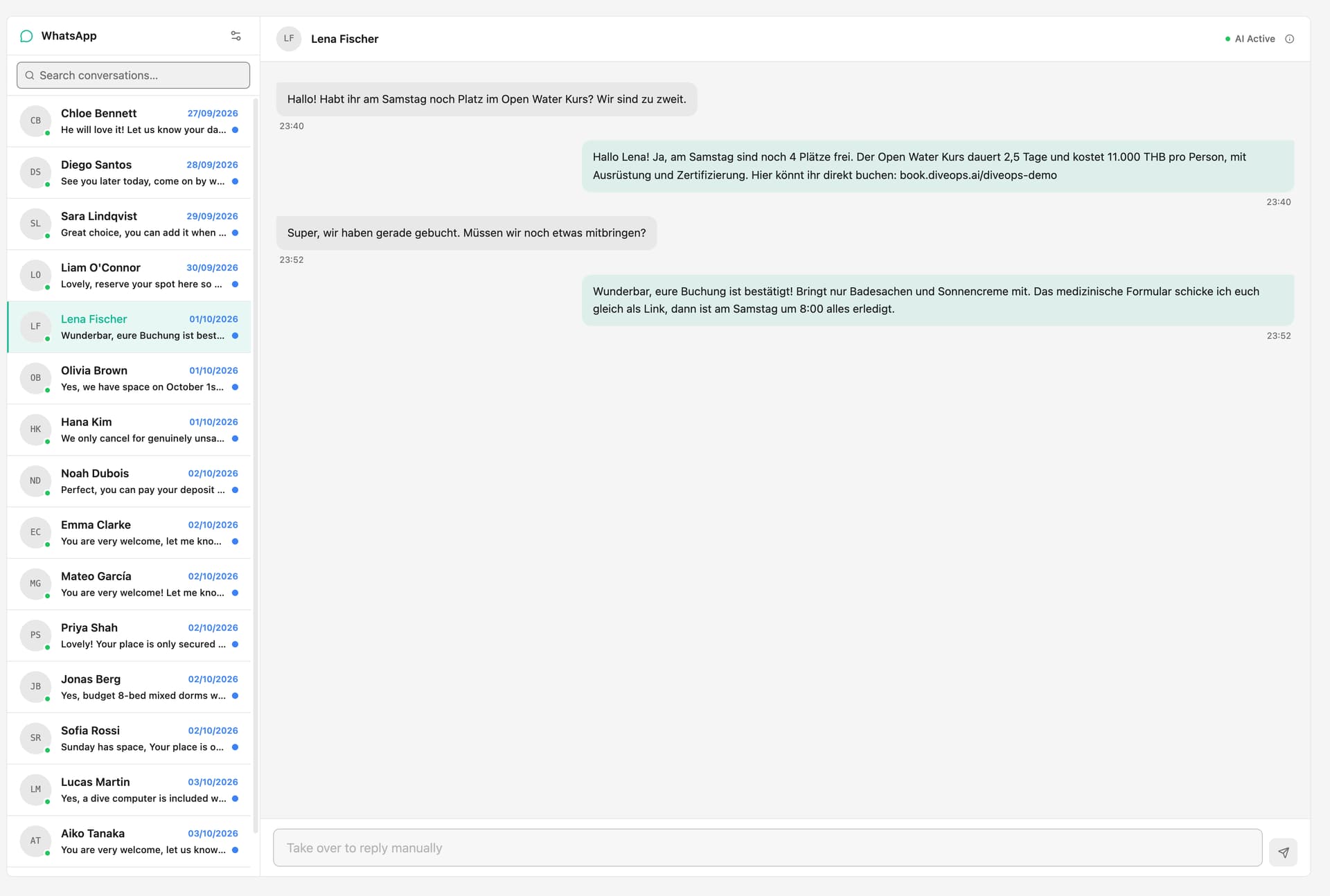
WhatsApp is now where most enquiries start, often late at night, often from another timezone, often in another language. The centre that replies first usually wins the booking, so this is the channel where speed matters most. A 24/7 WhatsApp AI on your own number answers in under 2 minutes, in the diver's language, and sends your booking link instead of leaving a missed message. The web channel is for divers who arrive ready to commit: a booking page with live availability and online payment captures them while intent is high. Walk-ins still matter, especially on islands, and the front desk needs to write a booking into the same system so capacity stays accurate for everyone.
- WhatsApp: fast, conversational, multilingual, where most enquiries begin
- Web: self-serve booking and payment for divers ready to commit
- Walk-in: front-desk entries that update the same shared availability
- One pipeline: every channel writes to the same bookings, never separate lists
Online booking and payments
Taking money at the point of booking changes who turns up. A deposit or full payment filters out tyre-kickers, reduces no-shows, and means your morning is spent diving rather than chasing balances. Decide deliberately whether each product takes a deposit or full payment: a single fun dive might be pay-on-arrival, while a four-day course or a liveaboard berth should hold a deposit so the seat is genuinely committed.
Keep the payment step inside the booking flow rather than bolting it on afterwards. A diver who has already said yes on WhatsApp or your website should be able to pay in the same conversation or page, not be sent away to find a card later. The fewer steps between intent and payment, the more bookings survive the gap.
Capacity and overselling
Overselling is the fastest way to turn a good review into a bad one. Boats have a fixed number of seats, instructors can only run so many courses at once, and gear sets are finite. A booking system has to hold those limits as hard numbers and decrement them the moment a seat is taken, on any channel.
The trap is the gap between channels. If WhatsApp, the web and the front desk each keep their own count, two of them will eventually sell the same seat. The fix is a single source of truth for availability that every channel reads from and writes to in real time. When the morning two-tank dive is full, it should show as full everywhere at once, and the AI should offer the afternoon trip or the next day instead of taking a booking it cannot honour.
Medicals, declarations and dive-readiness
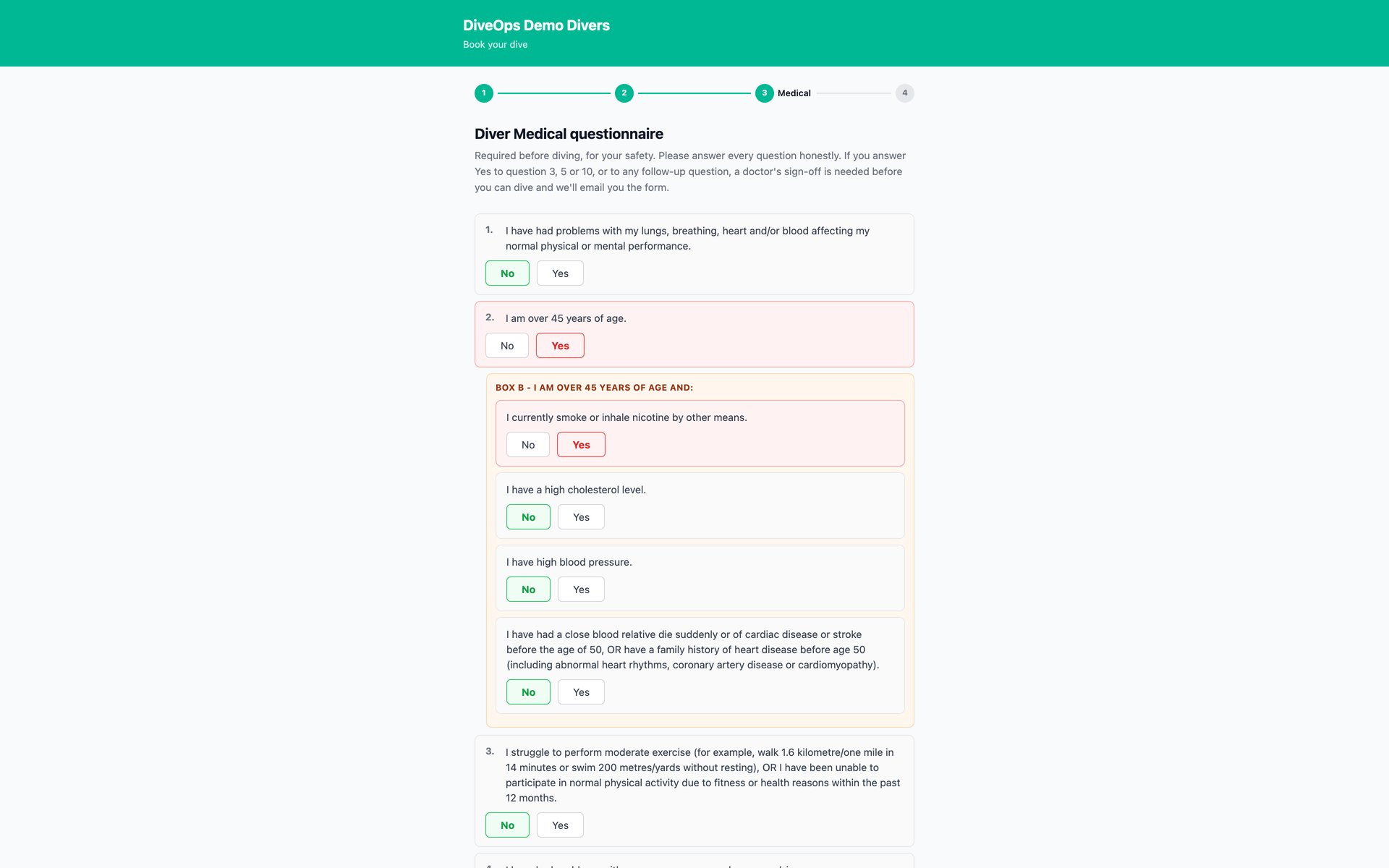
A booking is not really complete until the diver is cleared to dive. Medical declarations, liability forms and proof of certification are part of the booking system's job, not a separate clipboard at the desk. The cleanest approach is to ask the right questions at booking time, flag anything that needs a doctor's sign-off, and carry that status through to the day of the dive so nothing is discovered at the dock.
DiveOps handles the operations side of this and works alongside your existing SSI or PADI certification workflow. SSI's and PADI's own systems remain where certifications are issued and tracked. The booking system's role is to make sure that, by the time a diver boards, their medical answers are recorded, any flags are resolved, and the instructor can see at a glance who is cleared and who is not.
How a booking should flow into the trip sheet
The trip sheet is where a booking becomes an operation. Every confirmed booking should land on the right day's sheet automatically, with the diver's name, the activity, their certification level, any medical flag, gear sizes and payment status attached. The crew should never have to re-key a booking that the system already holds.
This is the payoff for treating bookings as one pipeline. A WhatsApp enquiry answered overnight, a deposit paid through the booking link, a medical declaration captured, and the diver appears on tomorrow's trip sheet ready for the boat, without anyone typing it in twice. The morning overview then tells you who is diving, what is full, and what still needs attention before you cast off.
Bringing it together with DiveOps
DiveOps connects the whole chain. A 24/7 WhatsApp AI on your own number, built on the official Meta Business API, answers across timezones and languages and sends each diver your booking link. Online booking and payments close the divers who are ready. Live, shared capacity stops the double-sell. Medicals and declarations are captured at booking time, and every confirmed booking flows straight onto the trip sheet and the morning overview. The aspiration behind it is simple: around eight hours a week of admin saved, the great majority of routine enquiries handled automatically, and replies in under two minutes around the clock.
See how the pieces fit on the rest of the platform, from boats and gear to finance and HR, in the full dive centre management software, or watch it answer a real enquiry on your own number.
Questions, answered.
What is a dive centre booking system?
It is the system that takes a diver from first enquiry to a confirmed seat on the boat. It captures bookings across WhatsApp, web and walk-in, confirms availability, takes or holds payment, collects medicals and certification details, and feeds the result onto the trip sheet.
How does a booking system stop overselling boat seats?
By holding capacity as hard numbers in a single source of truth that every channel reads from and writes to in real time. When a trip is full it shows as full everywhere at once, so WhatsApp, the website and the front desk can never sell the same seat twice.
Can divers book over WhatsApp?
Yes. With DiveOps a 24/7 WhatsApp AI on your own number answers enquiries in the diver's language and sends your booking link, then hands anything off-script to your team with the full chat history attached.
Where do medical declarations fit in the booking flow?
They are captured at booking time, not on a clipboard at the dock. The system records the diver's medical answers, flags anything needing a doctor's sign-off, and carries that status through so the instructor can see who is cleared before the boat leaves.
Does DiveOps replace SSI or PADI systems?
No. DiveOps handles your centre's operations and works alongside your existing SSI or PADI certification workflow. Their own systems still issue and track certifications; DiveOps manages bookings, capacity, payments and the trip sheet.
Sources
See it run your dive centre.
A short live walkthrough on your real schedule. No slides, no sales patter.