
How should a dive centre price its courses and fun dives?
Many dive centres set prices by looking at the shop down the road and knocking a little off. That works until a quiet month shows the boat was never covering its costs. A better price starts with what each diver really costs you, then decides how you want to sell it. This guide walks through the costs to include, how to turn them into a price, per person and package pricing, what to make an extra, how to use discounts, the effect of card fees, and how DiveOps helps you price and sell.
The short answer
Work out the real cost per diver at the occupancy you actually achieve, add the margin you need, then check the result against your local market. Include everything every diver must pay in the headline price, sell genuine options as extras, and use packages and time-limited offers rather than permanent discounts.
 (opens full size in a new tab)
The short version
- Cost each product per diver at the occupancy you really achieve, not a full boat.
- Include staff pay and commission, boat, gas, kit wear, agency materials, insurance, fees and card costs.
- Put everything every diver must pay in the headline price; sell real options as extras.
- Packages and dated offers protect your price better than permanent discounts.
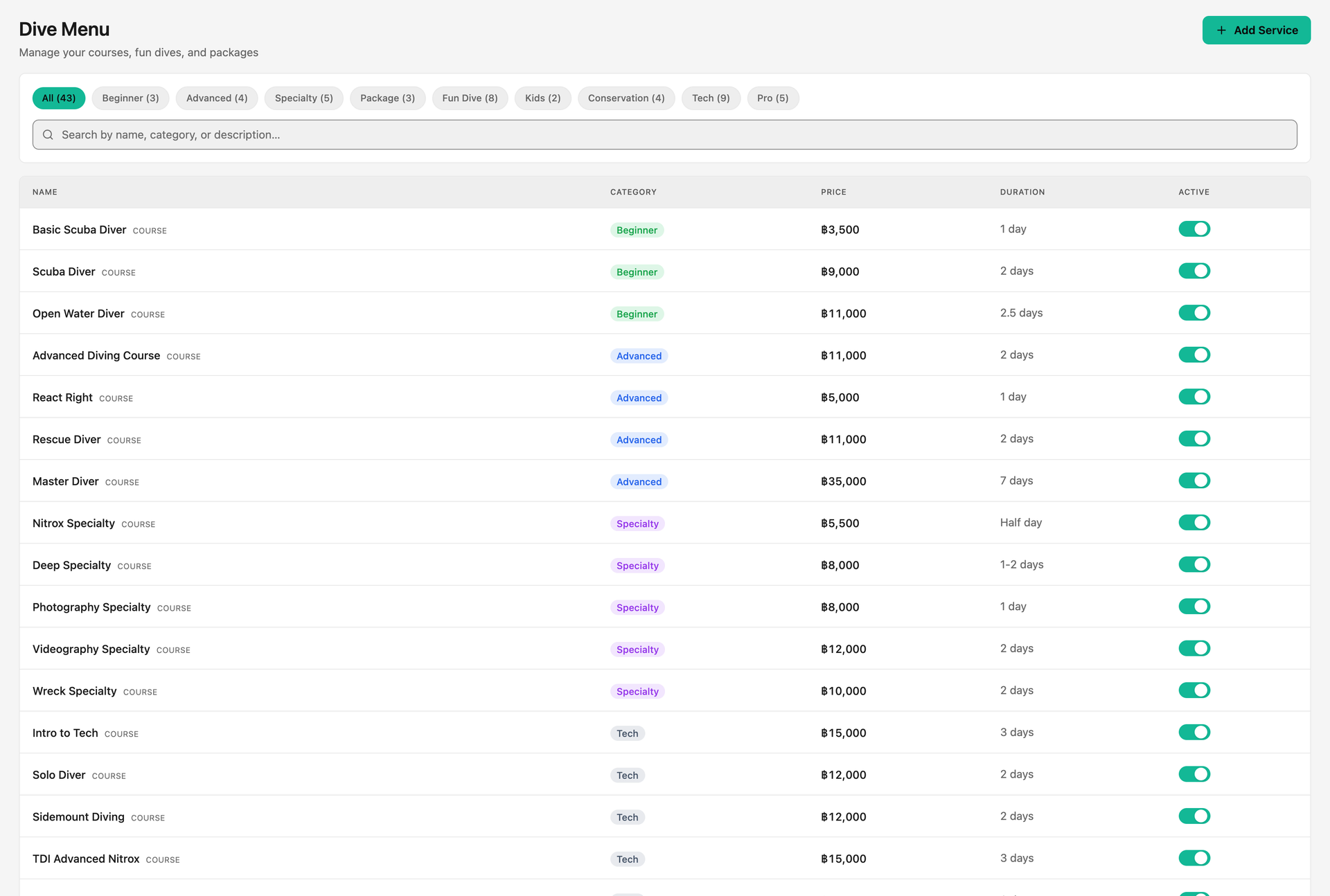
- In DiveOps prices, extras, packages and offers are set once on the dive menu and used everywhere.
What should go into the cost of a course or a fun dive?
Every cost that goes up when one more diver joins, plus a fair share of the costs that do not. Most centres undercount the second group, which is why a busy season can still leave the bank account thin.
- Instructor or guide pay, commission and any bonus
- Boat costs per trip: fuel, crew, mooring and maintenance
- Gas fills, nitrox and the wear on rental kit
- Agency materials, e-learning and certification fees
- Insurance, park or site fees and any local taxes
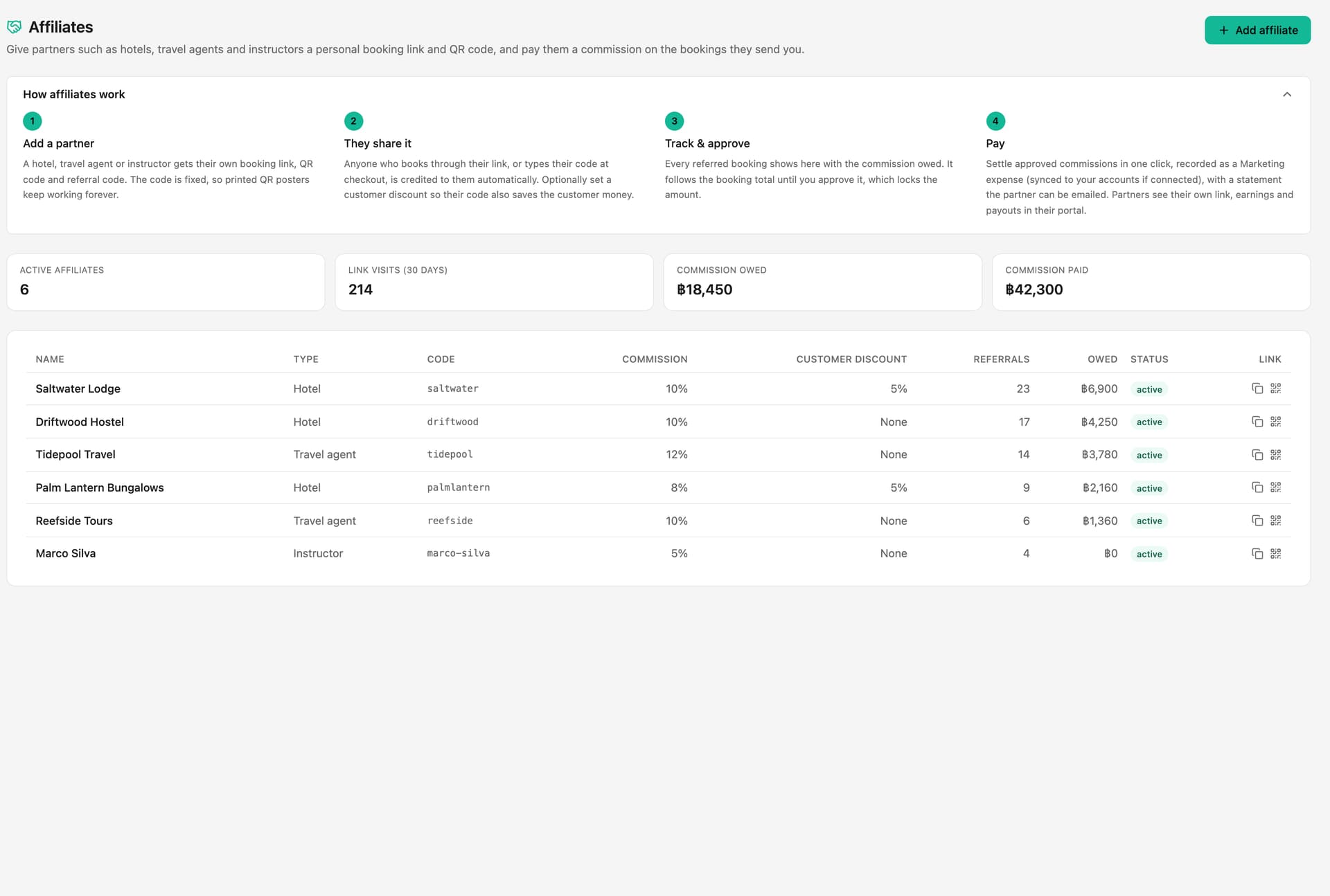
- Card processing fees and agent or partner commission
- A share of rent, staff, software and marketing
How do you turn costs into a price?
Divide each trip's costs by the number of divers you usually carry, not the number the boat can hold. If a boat seats twelve but averages seven in low season, a price that only works at twelve loses money most days.
Add the margin you need to run the business and pay yourself, then compare the result with your local market. If you are well above it, look for costs to cut or reasons divers will pay more: small groups, languages spoken, a better boat or better sites. If you are well below it, you may simply be undercharging.
Should you price per person, per group or as a package?
Per person suits most courses and fun dives, because cost rises with each diver. A flat fee suits private boat charters, often with an amount per guest on top, so a large group pays more than a couple. Packages suit repeat buying, such as a ten-dive pack or two courses sold together, because they reward commitment without cutting the single price.
What should be included, and what should be an extra?
Include everything every diver must pay; offer as extras only the things some divers choose. Kit for a beginner course, materials and certification are usually part of the course. Nitrox, a dive computer, a private guide or photos are genuine options.
Fees every diver must pay, such as a marine park charge, belong in the price shown up front or are at least stated clearly with it. Consumer law in many countries now treats hiding them until checkout as misleading, and divers trust a centre whose first price is the real one.
How do you use discounts without training divers to wait?
Use offers that are specific and dated, not a standing price cut. A quiet-month offer on one course, a package that is better value than buying twice, or a returning-diver rate all bring in bookings without teaching everyone that the list price is negotiable.
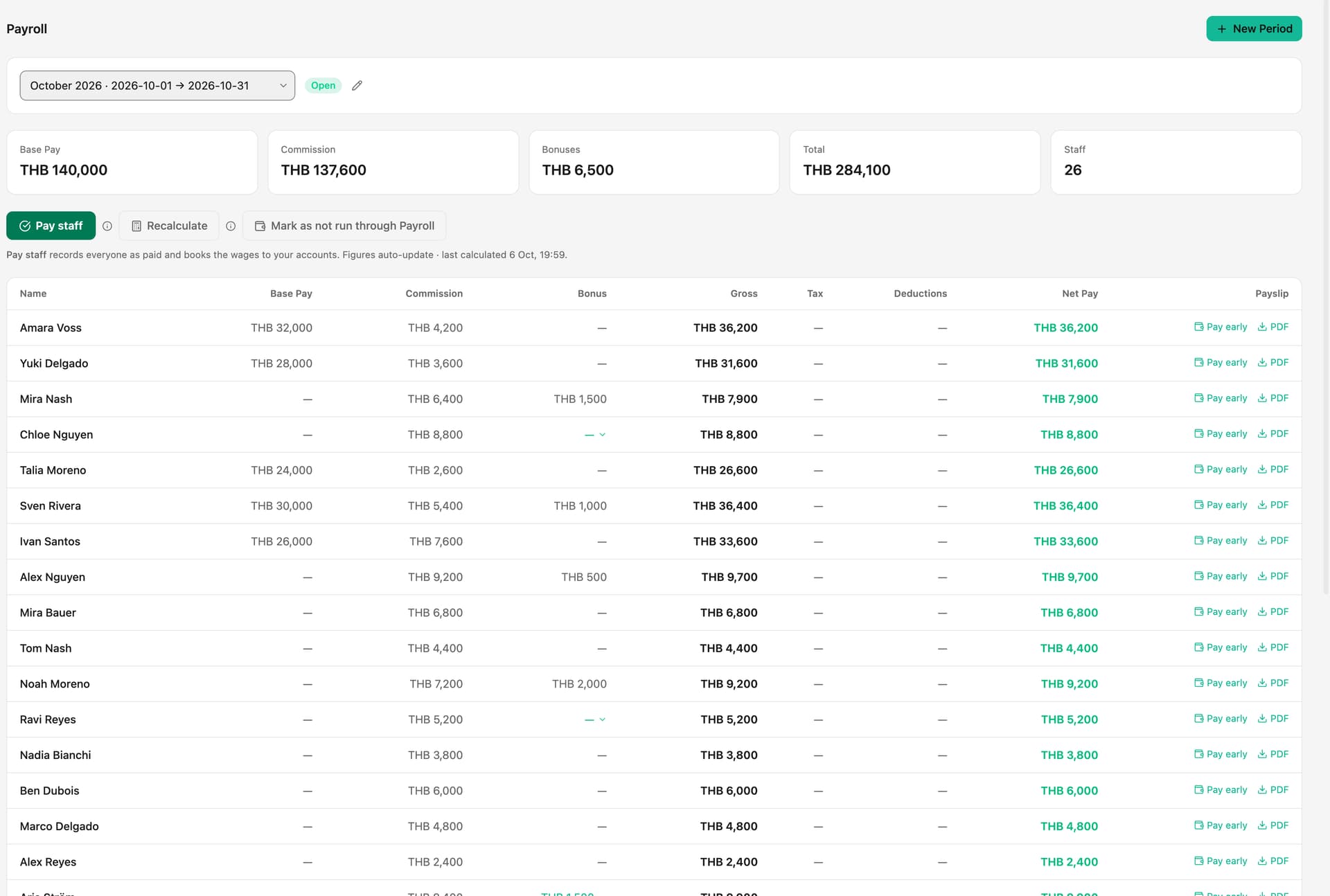
Decide too whether staff commission follows the discount. Many centres pay commission on the list price so instructors are not penalised for a promotion they did not choose. Our guide to instructor commission and pay covers that choice.
How do card fees affect your prices?
Card fees are a cost on every online and card sale, so build them into your prices rather than treating them as a surprise. Some countries allow a card surcharge and some ban it for consumers, so check the rule where you trade before adding one. Compare the published processing rates with what your current terminal provider charges, because the difference across a season is often larger than expected.
When should you review your prices?
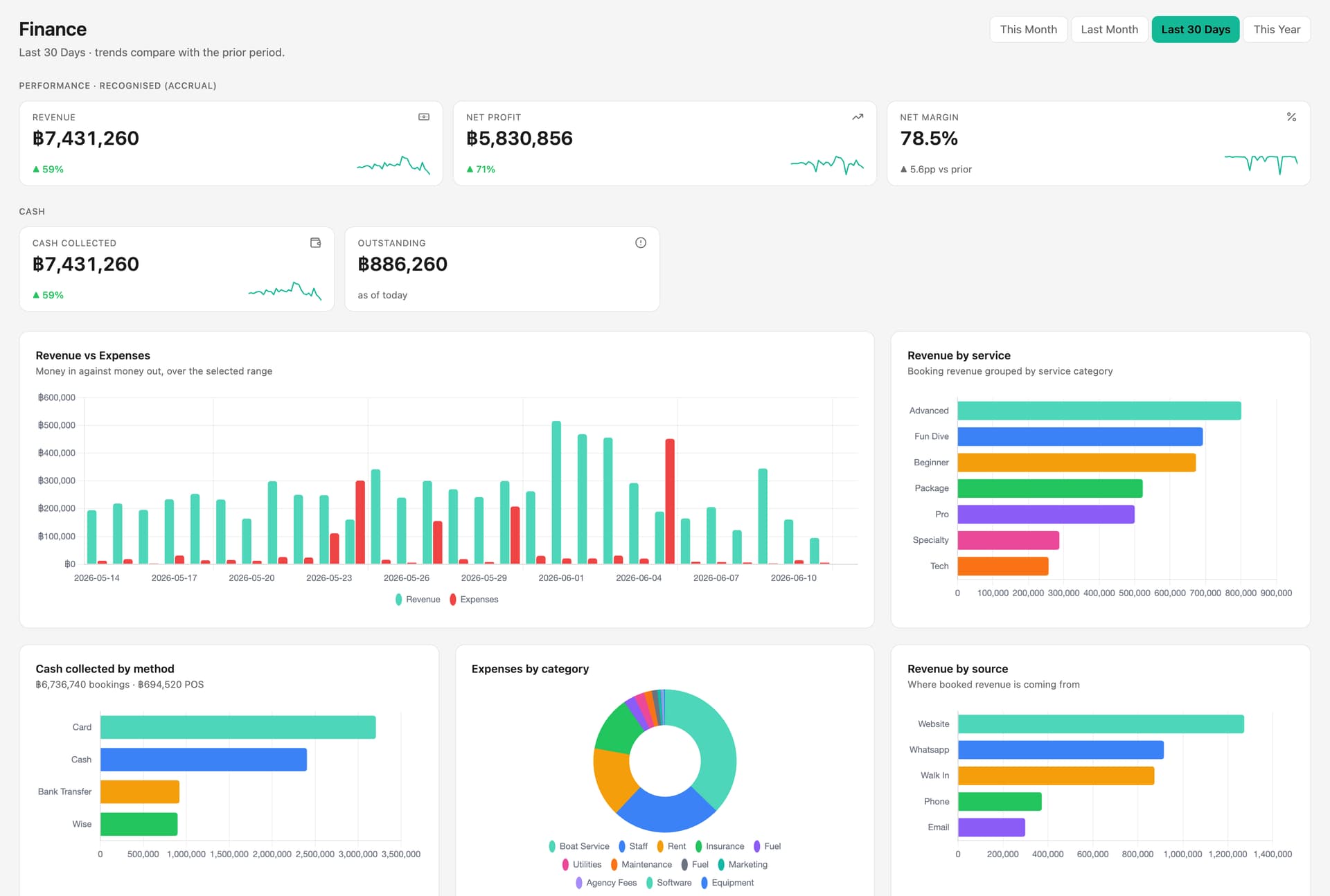
Review them at least once a year before the main season, and whenever a big cost changes, such as fuel, agency fees or staff pay. Look at revenue and margin by product, not just in total, so you can see which courses carry the business and which only fill the boat.
How does DiveOps help you price and sell?
In DiveOps every course, fun dive and package lives on the dive menu, priced once and used on your booking page, at the till and by the WhatsApp assistant when divers ask. A product can be priced per person, or as a flat fee with an optional amount per guest for private charters. Add-ons, such as nitrox or kit hire, can be charged per person or once, and you can make divers answer yes or no before they book. Choice groups make them pick one option, such as a course date or a level.
Course bundles sell two or more courses at one price and split into separate courses at the desk. Activity packs, such as ten dives, count the sessions down as they are used. Each product can take full payment, a deposit or payment at the centre. Promotions carry dates and the exact wording you write, and the assistant mentions the most relevant one and never invents an offer.
Instructor commission is worked out from the dive-menu price at the time of booking, so a discount changes what the diver pays, not what your staff earn. Card fees can be up to 20% lower through your own Stripe account, never as a guarantee, and Metrics shows each figure against the period before.
Questions, answered.
Should I price my dive courses below other centres to win bookings?
Only if your costs allow it. Price from your own cost per diver first, then compare. Undercutting a market you cannot afford to undercut fills the boat and empties the bank.
Should nitrox be included or an extra?
For most centres it is an extra, because only some divers want it. Make it easy to add when booking so it is not forgotten on the day.
Can DiveOps sell a ten-dive package?
Yes. An activity pack has a session count that goes down as the diver uses dives on published trip sheets.
Do discounts reduce instructor commission in DiveOps?
No. Commission is worked out from the dive-menu price when the booking was made, so a discount changes what the customer pays, not what staff earn.
See it run your dive centre.
A short live walkthrough on your real schedule. No slides, no sales patter.