
Dive centre finance: the complete guide to card fees, cash, commission and a real P&L
Money is where a dive centre quietly leaks: card fees skimmed off every booking, deposits spent before they are earned, cash that never quite reconciles, and a year-end scramble because the real numbers live in spreadsheets. This guide covers dive centre finance end to end and how to run it from one ledger.
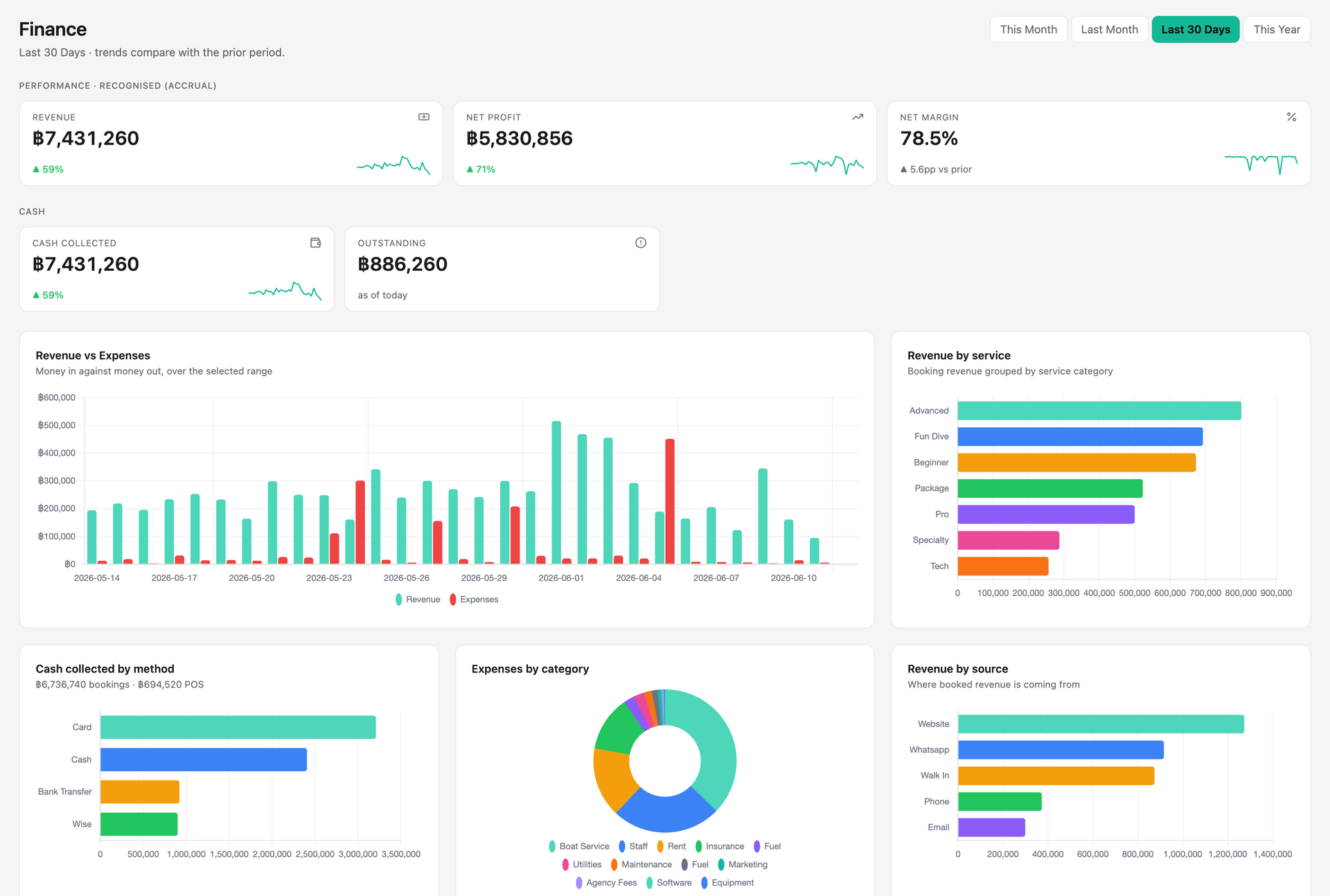 (opens full size in a new tab)
The short version
- Card fees are a fixed tax on every booking; taking payment through your own Stripe account can cut them, with card fees up to 20% lower than typical terminal rates.
- Deposits are a liability until the diver actually dives, not income you can spend, and treating them as revenue is how centres run out of cash mid-season.
- Cash only reconciles if the till, booking payments and expenses all post to one ledger, so the drawer can be cross-checked at close.
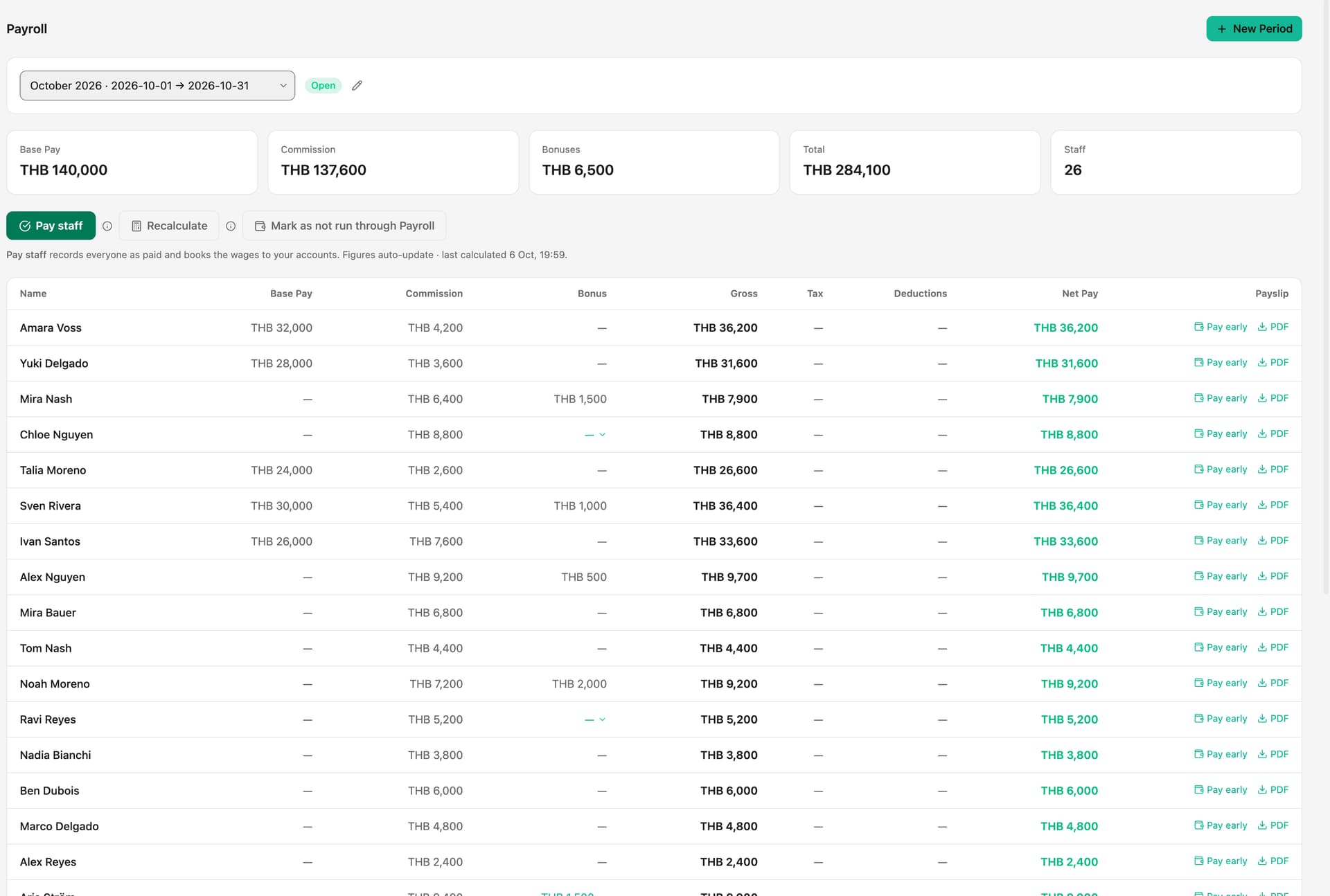
- Commission should pay once per booking and split fairly across the instructors who taught it, not be tallied by hand each payday.
- A real double-entry P&L tells you margin and cash position live; a spreadsheet tells you what you remembered to type in.
How should a dive centre handle its finances?
A dive centre should run every pound through one double-entry ledger: booking payments, shop sales, rentals, servicing, wages and expenses all posting to the same books, so the profit-and-loss statement and cash position are always live rather than reconstructed at year end. The alternative, a booking diary in one place and a till in another and a spreadsheet in a third, guarantees re-entry and drift.
Dive-centre finance has three parts that generic accounting tools handle badly: taking payment cheaply, treating deposits correctly, and paying commission fairly. DiveOps builds all three into the money module, so the books keep themselves as the day happens.
Card fees: the tax on every booking
Card fees are the most overlooked cost in a dive centre because they never arrive as a bill. They are shaved off the top of every card booking and every till sale, so a centre can lose a real slice of revenue for years without ever seeing the line item. On a high-volume season that quietly adds up to serious money.
The lever is who processes the payment. When bookings and the till run through your own Stripe account rather than a terminal rented from a local bank, the money lands directly with you and the processing rate is lower. Through Stripe in the centre's own account, DiveOps centres see card fees up to 20% lower than the terminal rates centres typically pay. It is a comparison against published rates, not a guarantee, and the exact saving depends on your country and card mix, but the direction is consistent: own the payment rail and you keep more of every booking.
- The money lands in your own account, not a middleman's, so payouts are yours to reconcile
- One rate across bookings and the shop till, rather than a patchwork of terminal contracts
- Card fees up to 20% lower than typical terminal rates, booked automatically as a cost so your margin is honest
Deposits are a liability, not income
The single most common finance mistake in a seasonal business is spending deposits as though they were earnings. A deposit is money you owe back until the diver actually dives or the course actually runs. Booked as revenue on the day it arrives, it flatters the numbers and hides the fact that you are carrying a debt to every diver who has not yet turned up.
Proper books treat a deposit as a liability and only recognise it as income when the service is delivered. That is not accounting pedantry, it is cash-flow survival: centres that treat deposits as spendable income are the ones that run short in the quiet weeks even after a busy month. When bookings, payments and delivery live in one system, the shift from liability to revenue happens on its own, and your cash position reflects what you have actually earned.
The till and closing the drawer
The shop and the front desk take real money all day: retail, rentals, walk-in fun dives, the balance on a course. A proper point-of-sale records each sale with the tax worked out, the stock adjusted and the salesperson attached, so a single sale never has to be typed twice into a separate book.
Reconciliation is where cash discipline lives. Open the drawer with a float, log cash in and out through the day, and count it at close. The system then cross-checks the count against every till sale and booking payment taken in cash and tells you whether you are over or short. Because rentals and servicing income post to the same place as retail and bookings, the day's money-in figure is complete rather than missing the awkward categories that usually slip through.
Commission that pays once and splits fairly
Commission is where payroll goes wrong in a dive centre, because a single course can involve more than one instructor and a single booking can touch retail, a fun dive and a rental. Tally it by hand each payday and you get two failure modes: the same booking paying commission twice, and a shared course paying only the instructor who happened to sign the sheet.
The rule that keeps it fair is simple: commission is earned once per booking, then split across the people who actually delivered it. In DiveOps a course shared between two instructors divides its commission automatically by the trip sheet, a flat-fee service pays once for the whole group, and retail commission follows the salesperson on the sale. Because it is derived from the operational record rather than retyped, nobody is double-paid and nobody is quietly missed. The detail lives in the companion staff and payroll guide.
A real P&L versus the spreadsheet
A spreadsheet tells you what you remembered to enter. A real profit-and-loss statement, backed by double-entry books, tells you what actually happened: revenue by type, cost of sales, wages, card fees, fuel, and the margin left over, with a trial balance and a drill-down ledger underneath every figure. That is the difference between guessing at the season and knowing it.
The final piece is your accountant. Rather than exporting a shoebox of receipts once a year, every payment, sale and expense can sync to your accounting software overnight, so the person who does your tax is working from live, categorised data. Boat fuel is pulled into the books automatically from the fleet's own logs, expenses carry their categories, and the year-end stops being a scramble. This is the same discipline that removes hours of admin elsewhere, covered in where dive centre admin actually goes.
Questions, answered.
How can a dive centre reduce card processing fees?
Take payment through your own Stripe account rather than a rented bank terminal. The money lands directly with you and the processing rate is lower. DiveOps centres see card fees up to 20% lower than the terminal rates centres typically pay, applied across both bookings and the shop till.
Should dive centre deposits be counted as income?
No. A deposit is a liability until the diver actually dives or the course runs, because you owe it back until then. Recognise it as income only when the service is delivered. Treating deposits as spendable revenue is how centres run short of cash even after a busy month.
How does DiveOps handle instructor commission?
Commission is earned once per booking, then split across the instructors who delivered it. A course shared by two instructors divides automatically by the trip sheet, a flat-fee service pays once per group, and retail commission follows the salesperson, so nobody is double-paid and nobody is missed.
Does DiveOps give me a proper profit-and-loss statement?
Yes. Every booking payment, sale and expense posts to real double-entry books, so you get a live P&L, a trial balance and a drill-down ledger your accountant can use. The figures update as the day happens, rather than being rebuilt from a spreadsheet at year end.
Sources
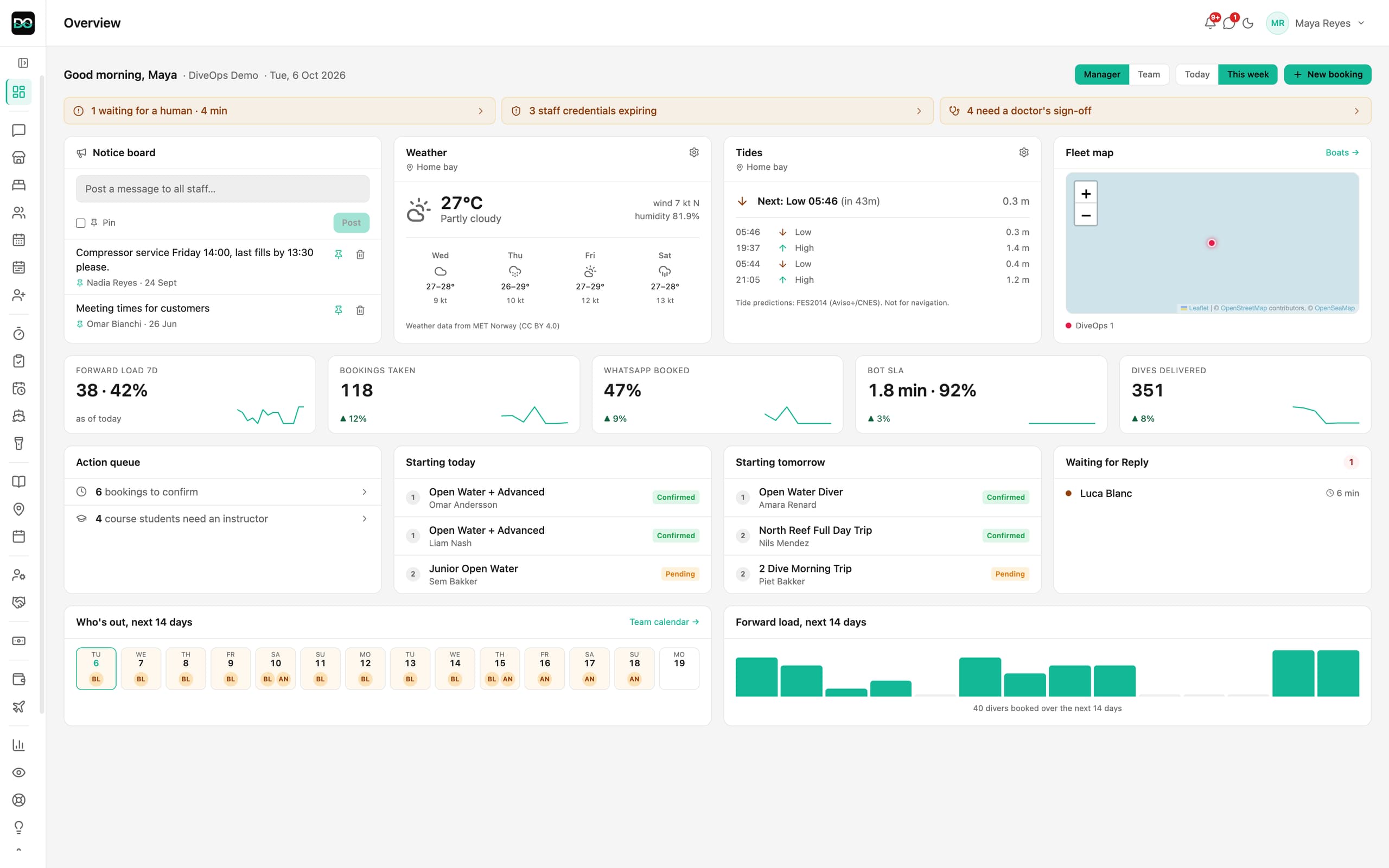
See it run your dive centre.
A short live walkthrough on your real schedule. No slides, no sales patter.