
How do dive centres track instructor commission and pay?
Instructors watch two things closely: whether they are paid on time, and whether the commission is right. Most disputes come from commission being tallied by hand at month-end from notebooks and chat messages. This guide covers the common pay models, how to split shared courses and trips fairly, what changes for freelancers, when to pay out, which records to keep, and how DiveOps does it.
The short answer
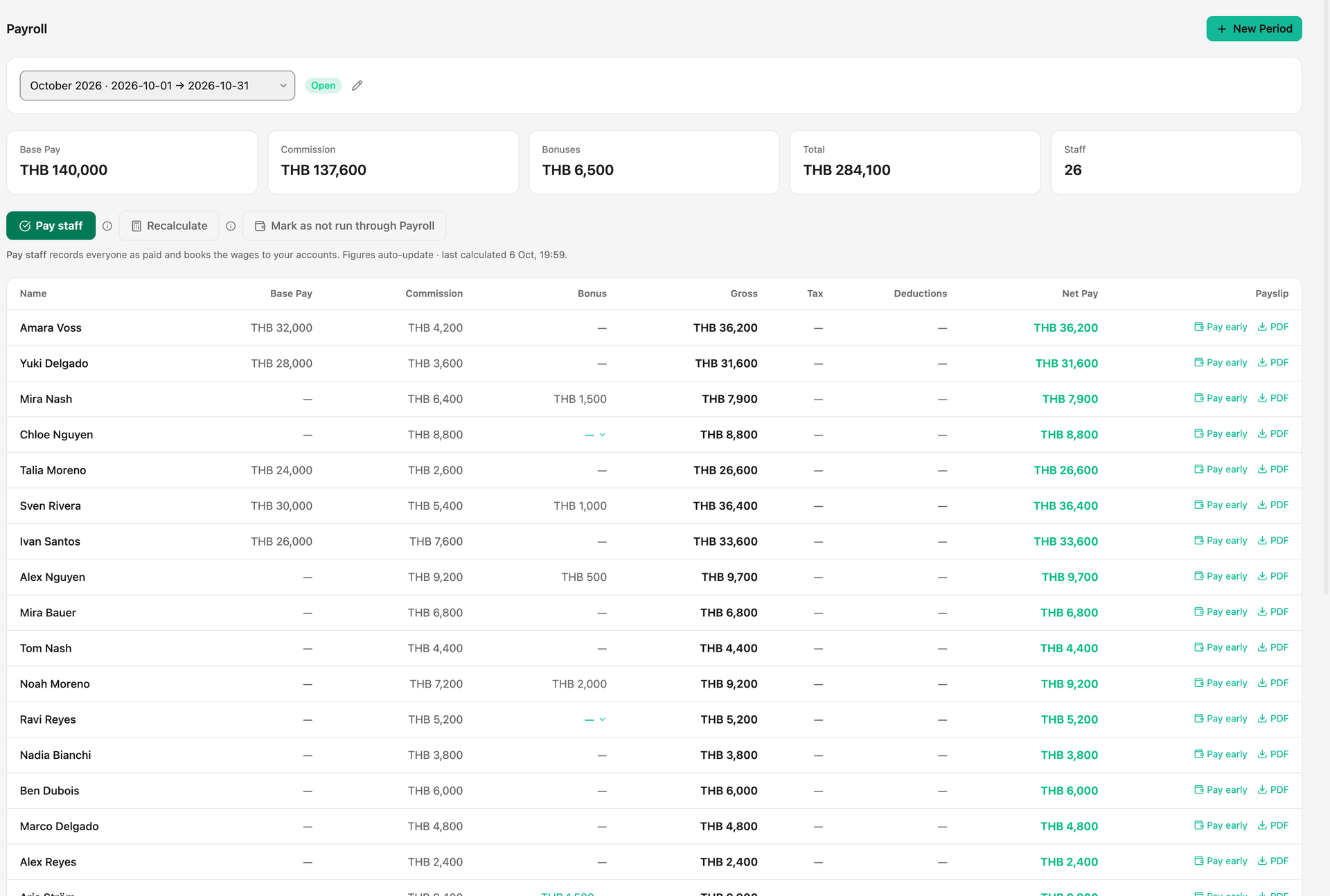
Most dive centres pay instructors a base rate plus commission, either a percentage of the course or dive price or a flat fee. Track it from the record of who actually led each group, and release it once the customer has paid. DiveOps works commission out from published trip sheets and feeds it into payroll.
 (opens full size in a new tab)
The short version
- The usual model is a base rate plus commission per course or per dive, as a percentage or a flat fee.
- Work commission out from who actually led each group, not from who was on the booking.
- Agree whether commission is on the list price or the price the customer paid, and write it down.
- Release commission once the course is signed off and the customer has paid in full.
- In DiveOps, commission comes from published trip sheets, shows its working line by line, and flows into payroll once approved.
How are dive instructors usually paid?
Dive instructors are usually paid a base rate plus commission on the courses and dives they deliver. The base might be a monthly salary, a day rate or nothing at all for a seasonal freelancer, and the commission is what rewards a busy instructor in high season.
On top of that, many centres add one-off bonuses, for example for continuing education sold to a student, plus a share of tips, and retail commission on gear an instructor sells in the shop.
- Base pay: salary, day rate, or none for some freelancers
- Course commission: per course taught, by percentage or flat fee
- Dive commission: per fun dive or per day guided
- Retail commission: on shop sales, by the salesperson
- Bonuses: continuing education, tips and one-off rewards
Percentage or flat fee: which commission model is fairer?
A percentage of the price is the most common model because it scales with what the centre earns, while a flat fee per student or per dive is simpler to explain and easier to predict. Neither is wrong; what matters is that every instructor knows the rule before the season starts.
The question that causes most arguments is which price the percentage applies to. If a diver gets a discount, or an agent books at a net rate, does the instructor's commission fall too? Decide it, write it into the contract, and make your system follow it. DiveOps works commission out as a percentage of the dive-menu price as it stood when the booking was made, so a discount or a later price rise changes what the customer pays, not what your staff earn.
Freelance instructors or employed staff: what changes?
What changes is who handles tax. An employee is normally paid through payroll, with tax taken off and a payslip, while a genuinely self-employed instructor usually invoices you and handles their own tax. Calling someone freelance does not make them self-employed: the working arrangement decides it. In the UK, HMRC's employment status guidance explains how to check, and in the US the IRS sets out how to tell an independent contractor from an employee. Check the rules in your country.
Whichever applies, the commission maths is the same. In DiveOps each person can have their own course and retail commission rate, or use the centre's defaults, and a tax percentage on their profile is taken off when you pay. A freelance or stand-in guide can be added to the team without a login so they can lead groups on the trip sheet.
When should commission be paid out?
Pay commission once the work is done and the money is in: the course signed off, or the dives delivered, and the customer's bill paid in full. Paying earlier means clawing money back when a student drops out or a booking is refunded.
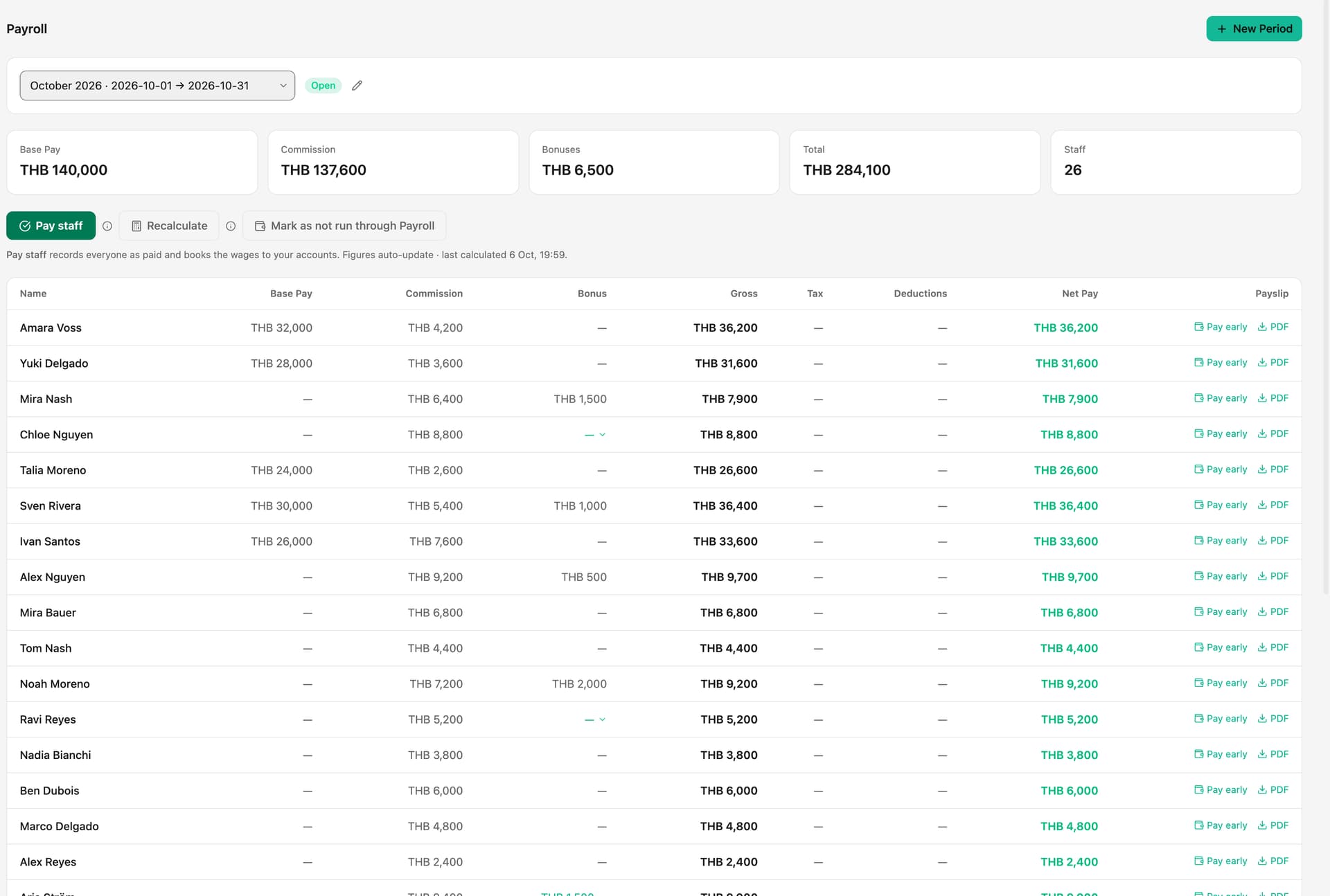
In DiveOps every commission waits for review on one screen with two checks: signed off, and paid in full. When both are green it approves in one click; otherwise you give a reason, which is kept on the record. Approved amounts land in that period's payroll, alongside base pay, retail commission and bonuses, and the pay run produces each person's payslip. If a day's trip sheet is not yet published, its pay waits in a Held list rather than disappearing. Once you trust the rules, ready commission can approve itself.
What records should a dive centre keep for instructor pay?
Keep enough to show how every figure was reached: who led which group on which day, the rate used, any split, and what was paid when. That answers an instructor's question in a minute rather than an evening, and it is what an accountant or tax office will ask for. In the UK, HMRC expects employers to keep payroll records for 3 years from the end of the tax year they relate to.
DiveOps keeps that record as it goes. Every commission entry opens to show how it was worked out, one line per day with the site, the guide, the dives and that day's share. Changes to approved pay are flagged for a second look, paid payslips are locked, and each instructor sees their own commission building up on their My Pay page before payday.
Questions, answered.
What is a typical commission model for dive instructors?
A base rate plus commission on each course or dive delivered, either as a percentage of the price or a flat fee per student or dive. Many centres add retail commission on shop sales and one-off bonuses such as continuing education.
Should commission be on the full price or the discounted price?
Either works if it is agreed up front and applied every time. DiveOps uses the dive-menu price as it stood when the booking was made, so discounts and agent rates do not cut what staff earn.
How do you split commission between two instructors?
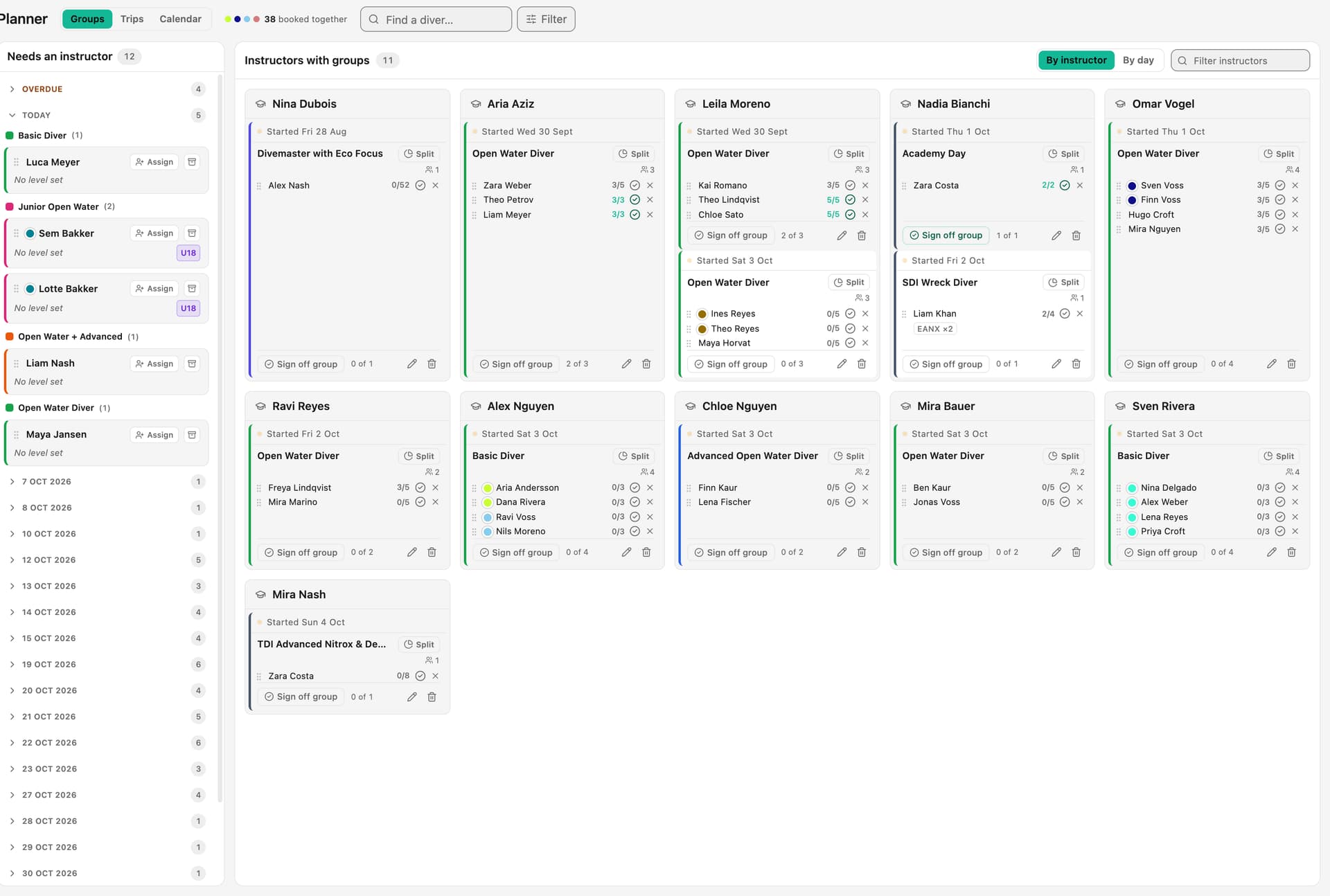
By who delivered the dives. A co-taught course splits by agreed percentages; a fun-dive package pays each guide for the days they led. In DiveOps both follow from the dive groups and published trip sheets.
When should a dive centre pay instructor commission?
After the course is signed off or the dives are delivered, and the customer has paid in full. That avoids clawing money back after a drop-out or refund.
Can instructors see their own commission in DiveOps?
Yes. Each team member's My Pay page shows the commission they have earned from published trip sheets so far, and their payslips once you release them.
Sources
See it run your dive centre.
A short live walkthrough on your real schedule. No slides, no sales patter.