
How do dive centres manage daily trip sheets and boat manifests?
The trip sheet decides who dives where, on which boat, with which guide. Get it right and the morning runs itself. Get it wrong and someone is rewriting it on the dock at 7am. This guide covers what goes on a trip sheet, how the boat manifest and headcount work, the honest trade-offs between paper, spreadsheets and software, and how DiveOps builds the sheet for you.
The short answer
Most dive centres build the day in four steps: group the booked divers under an instructor or guide, place each group on a boat within its capacity, add sites and safety checks, then print a sheet for each boat. DiveOps builds the sheet from the day's bookings, with a live headcount for every boat.
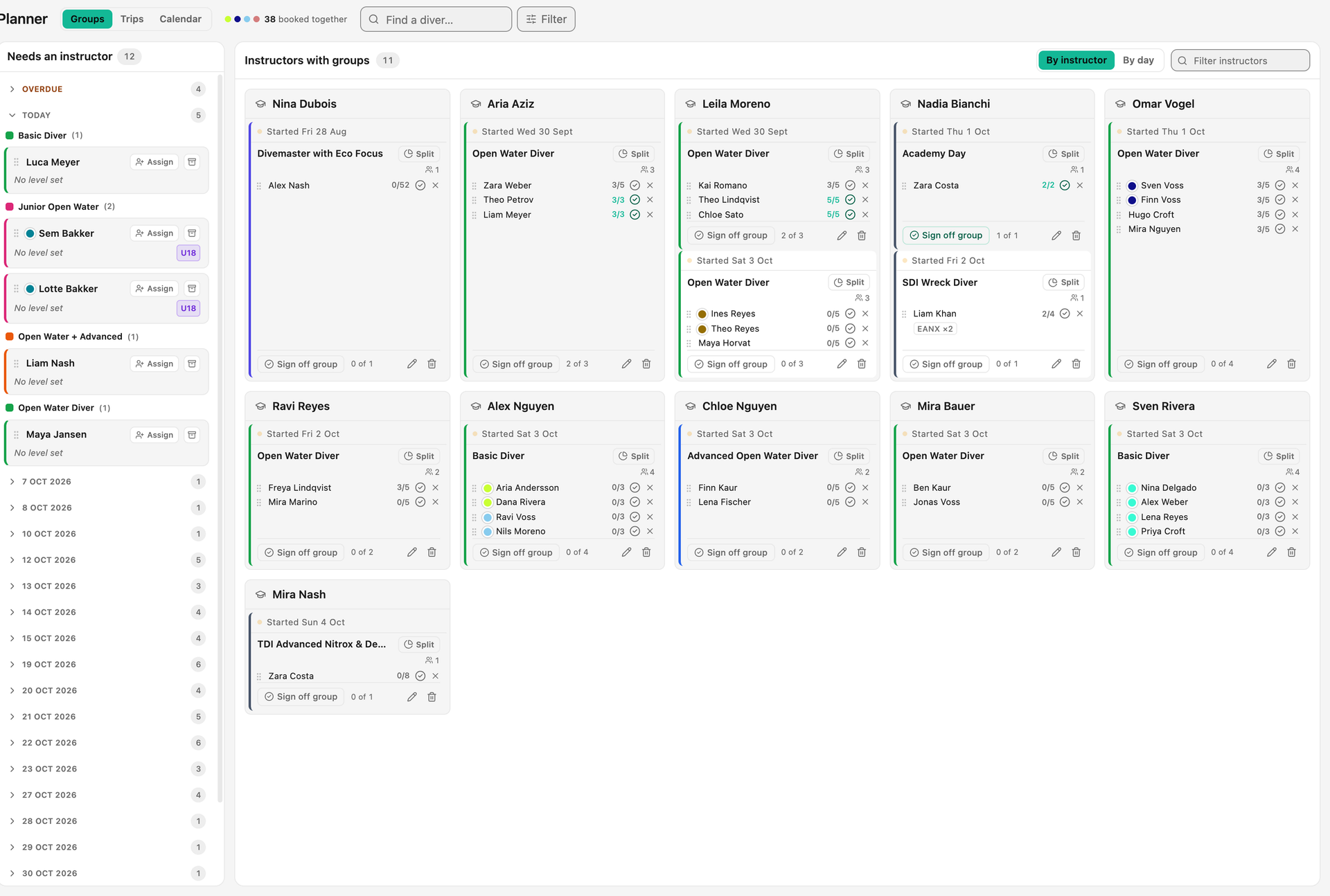 (opens full size in a new tab)
The short version
- A trip sheet is the day's boat plan: who is on which boat, who leads them, and whether the boat is within its capacity.
- The manifest is everyone on board, not just paying divers: instructors, trainees, staff and guests all count towards the headcount.
- Paper works for one boat and a handful of divers; it starts to break when bookings change late or more than one boat goes out.
- Software helps most when the sheet is built from the bookings you already hold, so nobody types the same names twice.
- In DiveOps the day's boats come from your schedule, groups drag onto boats with a live headcount, and one click prints a two-page sheet per boat.
What is a dive centre trip sheet?
A trip sheet is the day's operational boat plan: it puts everyone booked to dive onto a boat, pool session or classroom, alongside the instructor or guide responsible for them. By the time the first boat leaves it should answer three questions without anyone asking: who is on which boat, who is leading them, and is the boat within its safe capacity.
It is not the booking diary and it is not the dive schedule. The schedule decides which sites run on which days, and bookings decide who is coming. The trip sheet is where the two meet the boat, and it is the page the boatmaster carries to sea.
What goes on a trip sheet?
A good trip sheet has a front for the crew and a back for the people on board. The front is the boatmaster's view of the trip; the back is the roster, grouped by instructor so each leader can find their divers fast.
- The boat, time slot and departure time
- The dive sites planned for the trip
- The boatmaster, and persons on board against the boat's capacity
- Every group on the boat, with its instructor or guide and each diver's certification level
- Requests the crew must load for: nitrox, larger tanks, kit sizes, meals
- Safety checklists: roll call out and in, emergency oxygen, first aid, the compressor check
- Emergency contacts: the shop, a 24-hour diving emergency line, the coastguard, the nearest chamber and hospital
How does a boat manifest and headcount work?
A boat manifest is the list of every person on board, and the headcount is checked against it when the boat leaves and again before it returns. The common mistake is counting only paying divers: instructors, divemaster trainees, staff helping out and non-diving guests all take a place on the boat and all need to be on the roll call.
Each person should appear once per boat, even if they do two things that day, or the count is wrong before anyone gets wet. In the UK, instructing and guiding recreational divers is covered by the Diving at Work Regulations 1997, and HSE's approved code of practice for recreational diving projects sets out what a centre has to do to comply. Check the rules that apply where you dive.
- Count everyone on board, not just customers
- Show the count against capacity while you build the sheet, not after
- Roll call out, roll call in, written down on the sheet
- Mark under-18 divers clearly, because depth limits and supervision change
Paper, spreadsheet or software: which works best?
Paper or a whiteboard works well for a small centre with one boat and a stable plan; it is fast, it never crashes and it goes to sea without a signal. A spreadsheet adds a shared copy and a print layout, but it still has to be retyped from the bookings and redone every time someone cancels or a late booking lands.
Software earns its place when the day changes often or more than one boat goes out. The test is simple: does the sheet build itself from the bookings you already hold, or are you copying names across by hand? Whatever you use, print it. A paper copy on the boat is still the right backup.
- Paper or whiteboard: best for one boat, a few divers and a plan that rarely changes
- Spreadsheet: a shared copy and a tidy print, but every change is a manual rewrite
- Dive centre software: built from bookings, with capacity, groups and the printout kept in step
What goes wrong with trip sheets, and how do you prevent it?
Most painful trip-sheet mornings trace back to the same four problems, and each one is easier to design out than to catch on the dock.
- The endless rewrite: a late booking or a weather change means the whole sheet is redrawn, and each redraw is a chance to lose someone.
- Silent over-capacity: divers are added group by group and nobody totals the boat until it is full on the jetty.
- The diver left off a boat: someone is booked for the day but never placed, and turns up with nowhere to go.
- The missing sign-off: course dives are done but never closed, so the student's paperwork stalls.
How does DiveOps build the trip sheet?
DiveOps builds the trip sheet from the day's bookings. Booked divers sit in dive groups under their instructor or guide, and the day's boats appear from your dive schedule, so you start from a real plan rather than a blank grid. You drag each group onto a boat and all its divers move with it. Each boat shows a live headcount of everyone on board against its capacity, turning amber as it fills and red at the limit, and the same person cannot be put on one boat twice.
When the plan is ready you publish it. Publishing locks the sheet, shows each guide their own read-only plan on their phone, and warns you about anyone in a group on the day who has no boat place. The print is two pages per boat: the boatmaster's checklists and emergency numbers on the front, the roster grouped by instructor on the back, with bag numbers, under-18 badges and a count of requested nitrox, tanks and kit sizes. A late change means unpublish, edit and publish again, so there is always one version.
The published sheet also feeds instructor pay, because it is the record of who guided whom. See how dive centres track instructor commission for that side of it.
Questions, answered.
What is the difference between a trip sheet and a dive schedule?
The schedule decides which dive sites run on which days across the season. The trip sheet is the daily boat plan: it places the people actually booked that day onto specific boats with specific guides.
Is a trip sheet the same as a boat manifest?
Close to it. The manifest is the list of everyone on board; a good trip sheet carries that list on its back page, grouped by instructor, plus the boatmaster's checklists and emergency numbers on the front.
Who counts towards a dive boat's headcount?
Everyone on board who is not the boat's own crew: customers, instructors and guides, divemaster trainees, staff helping out and non-diving guests. Counting only paying divers is the most common reason a boat ends up over capacity.
Can a trip sheet build itself automatically?
Largely, yes. In DiveOps the day's boats come from your schedule, booked divers arrive already in their groups, and you drag each group onto a boat while a live headcount updates. Publishing and printing are one click each.
Can instructors see the trip sheet on their phone?
Yes. Once the sheet is published, each instructor or guide sees their own groups, sites and times on their phone, read-only. The printed sheet still goes on the boat.
Sources
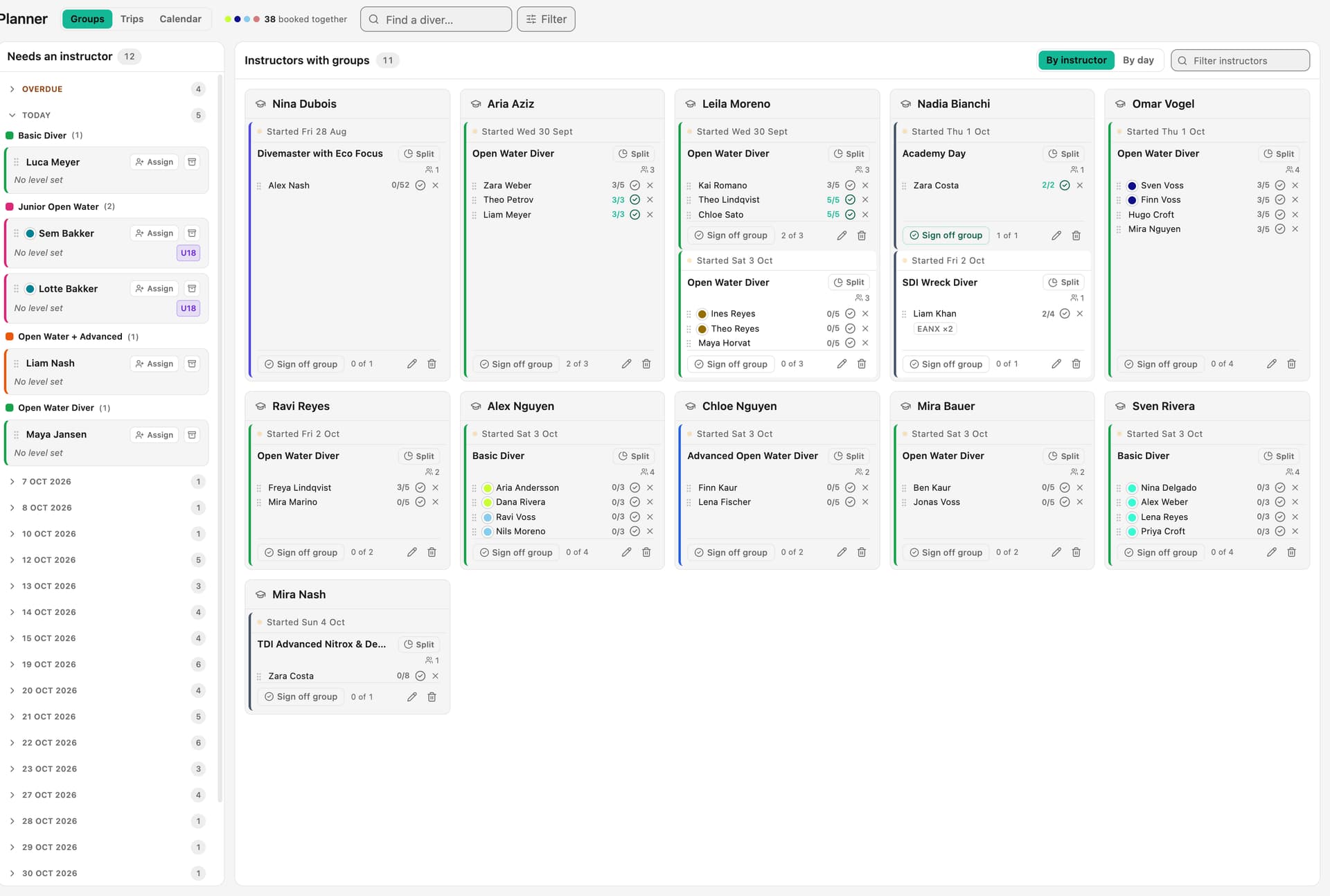
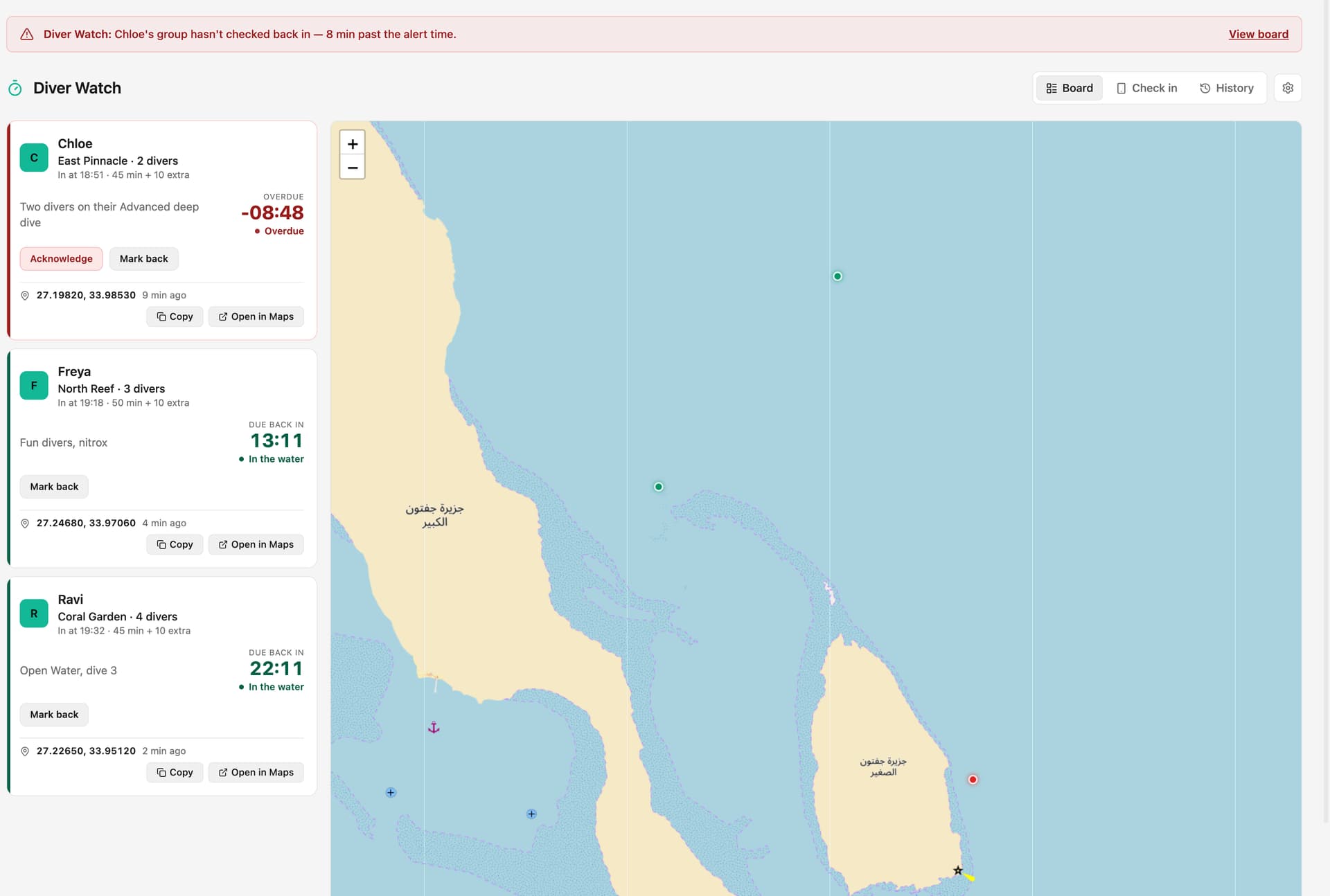
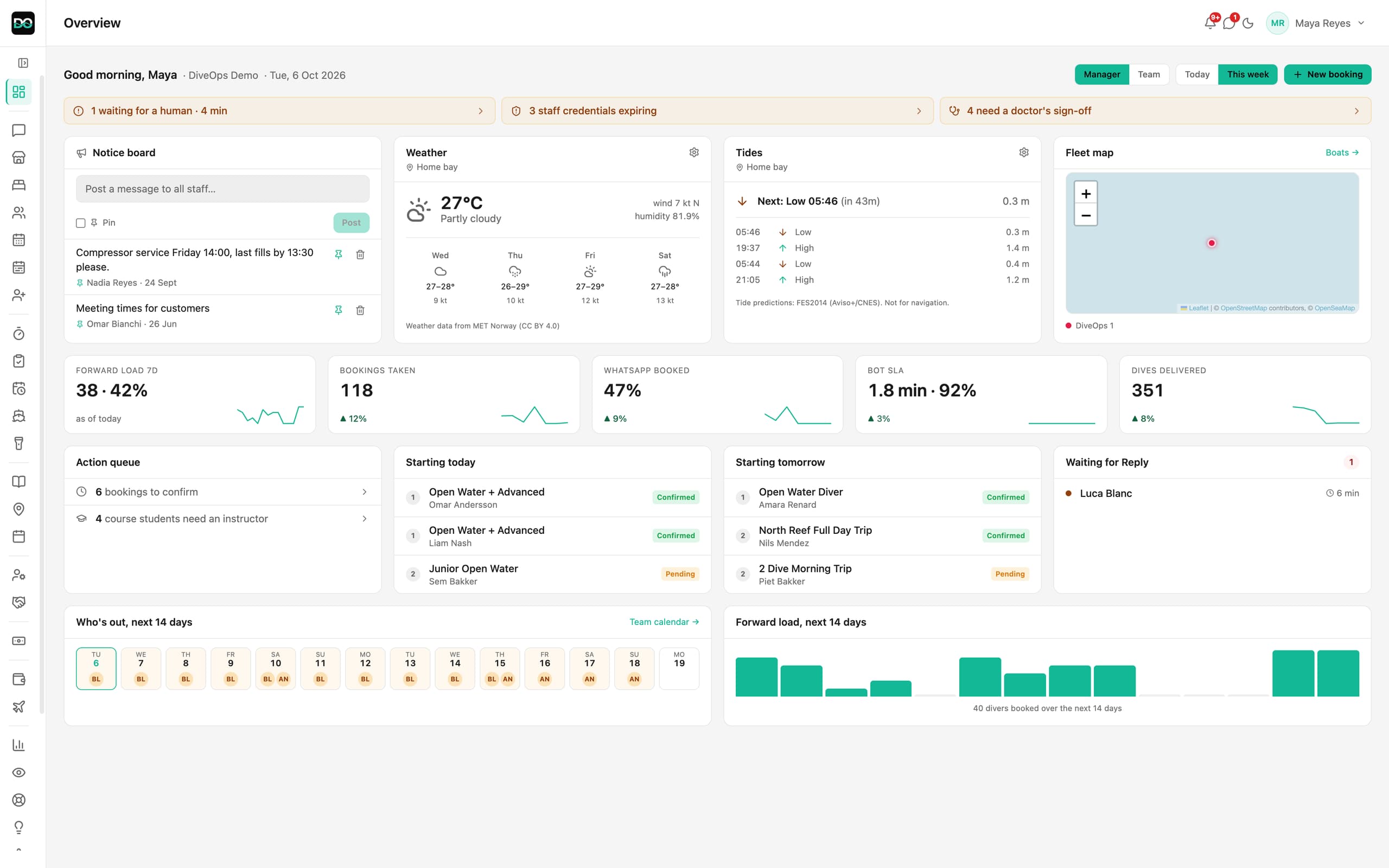
See it run your dive centre.
A short live walkthrough on your real schedule. No slides, no sales patter.