
Managing dive centre staff and payroll: paying instructors, splitting commission and running the rota
A dive centre lives or dies on its instructors, and instructors leave over two things: getting paid late and getting paid unfairly. Add seasonal freelancers, teaching permissions to track and leave to approve, and staff management becomes a job in itself. This guide covers paying your crew on time, splitting commission fairly, and running the team from one place.
 (opens full size in a new tab)
The short version
- Instructors are paid late when payroll is rebuilt by hand each month; wages with commission built in run on time because the data is already there.
- Commission should pay once per booking and split fairly across the instructors who taught it, each on their own rate.
- Leave and the rota only work when a request, an approval and the team calendar are the same action, not three.
- Access levels decide who sees the money, the inbox and the schedule, so a trainee and an owner never have the same view.
- Onboarding a divemaster trainee is a directory record, certs, languages, teaching permissions and a medical, not a fresh spreadsheet.
How do you manage staff and payroll at a dive centre?
Managing a dive centre's people means keeping four things current at once: who is qualified to do what, who is working when, who is owed how much, and who can see what. When those live in separate spreadsheets, every payday becomes a reconciliation exercise and every certification lapse is a near-miss waiting to happen.
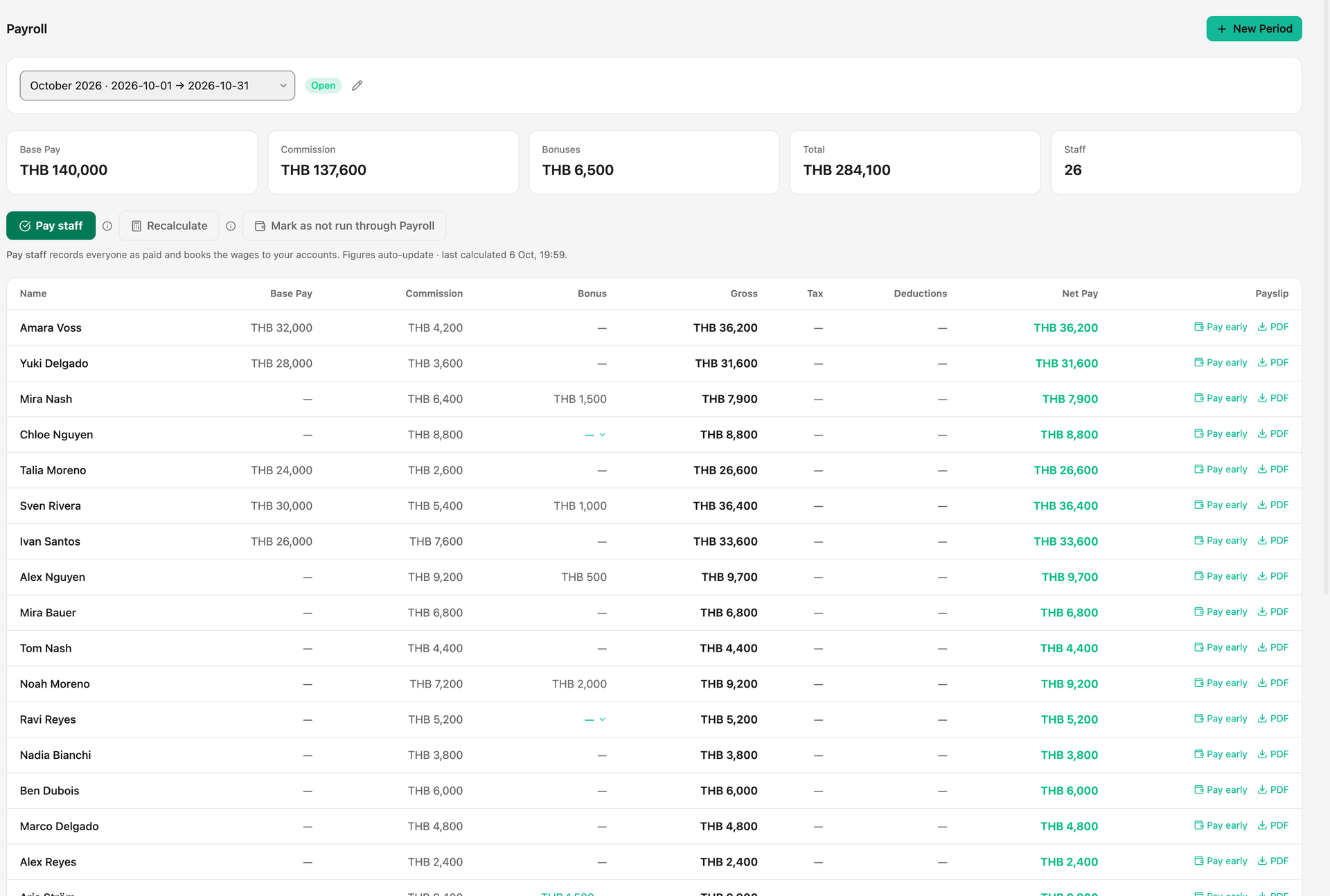
The alternative is one team directory that feeds payroll, leave and access from the same records. In DiveOps, the team and payroll module holds each person's certifications, languages, teaching permissions and medical, and payroll reads its commission straight from the operational record, so paying the crew is a review rather than a rebuild.
Paying instructors on time
Late pay is the fastest way to lose a good instructor, and it is almost always caused by the same thing: payroll being assembled by hand from notebooks, chat messages and half-remembered courses at the end of the month. The work of gathering the numbers is what makes the deadline slip, not the paying itself.
When wages, hours and commission all come from the system that already recorded the day, payroll runs on schedule because there is nothing to reconstruct. Each instructor sits on their own rate, and every member of staff gets their own portal with payslip PDFs and year-to-date totals, so they can see what they earned and why without asking. The admin this removes across the whole centre is covered in where dive centre admin goes.
Commission that pays once and splits fairly
Commission is the part instructors watch most closely, so it is the part you most need to get right. Two things break trust: paying commission twice on the same booking, and paying only one instructor when two shared the teaching. Both come from tallying commission by hand instead of deriving it from what actually happened.
The fair rule is that commission is earned once per booking and then split across the people who delivered it. A course taught by two instructors divides its commission automatically by the trip sheet. A flat-fee service pays once for the whole group and splits the same way. Retail commission follows the salesperson recorded on the sale. Because it is calculated from the operational record, the split is transparent and repeatable, and an instructor can see exactly how their number was reached. The money side of this is detailed in the dive centre finance guide.
- One booking, one commission, never double-paid
- Shared courses split automatically across both instructors by the trip sheet
- Each instructor on their own rate, with the split visible on their payslip
Leave, rota and the team calendar
Rotas break when leave lives in a separate place from the schedule. Someone books time off in a chat, it never reaches the calendar, and they get rostered onto a boat they were never going to make. The fix is to make requesting, approving and recording leave a single connected action.
In DiveOps a staff member requests leave, the manager approves it in one tap, and the allowance and the team calendar update themselves. Because leave and the dive schedule read from the same team records, the people you plan onto boats are the people actually available. And when the day is set, every instructor can be emailed their groups for the day with one click, so nobody is guessing what they are teaching.
Access levels: who sees what
Not everyone in a dive centre should see everything. Reception needs the inbox and the bookings, an instructor needs the schedule and their own groups, and the owner needs the money. Handing every login the full picture is both a data-protection risk and a distraction.
Role-based access solves this by deciding, per person, who can see the money, the inbox or the schedule. It keeps sensitive data, wages, margins, medical declarations, in front of the people who need it and away from those who do not, which is also a GDPR requirement covered in the compliance guide. The result is a system a new starter can be given access to on day one without exposing the centre's finances.
Onboarding a divemaster trainee
A divemaster trainee is the most common new arrival at a busy centre, and onboarding one should take minutes. The mistake is starting a fresh spreadsheet for each intake, which means their details live nowhere the rest of the system can use them.
Done properly, onboarding is a single directory record: the trainee's certification level, languages, teaching permissions, insurance and medical, all captured once. From there they inherit an access level suited to a trainee, appear in the schedule and leave calendar, and, if they earn it, sit in payroll on their own rate with commission tracked from their first sign-off. Their certifications carry expiry alerts, so the credential that lapses mid-season is flagged before it becomes a problem, not after. This works alongside SSI, PADI and other dive agencies, whose own systems handle the trainee's actual certification.
Questions, answered.
Why do dive instructors get paid late?
Almost always because payroll is rebuilt by hand each month from notebooks, chat messages and remembered courses. The gathering is what makes the deadline slip. When wages and commission read from the system that already recorded the day, payroll runs on time because there is nothing to reconstruct.
How does DiveOps split commission between two instructors?
Commission is earned once per booking, then split by the trip sheet across the instructors who delivered it, each on their own rate. A course taught by two people divides automatically, and a flat-fee service pays once for the group. The split is visible on each instructor's payslip.
Can I control what each staff member can see?
Yes. Role-based access decides, per person, who can see the money, the inbox or the schedule. Reception sees bookings, an instructor sees their groups, and the owner sees the finances. It keeps wages, margins and medical data in front of only the people who need them.
How long does it take to onboard a divemaster trainee?
Minutes. Create one directory record with their certification level, languages, teaching permissions, insurance and medical. They then inherit a trainee access level, appear in the schedule and leave calendar, and sit in payroll on their own rate. It works alongside SSI, PADI and other agencies for the actual certification.
Sources
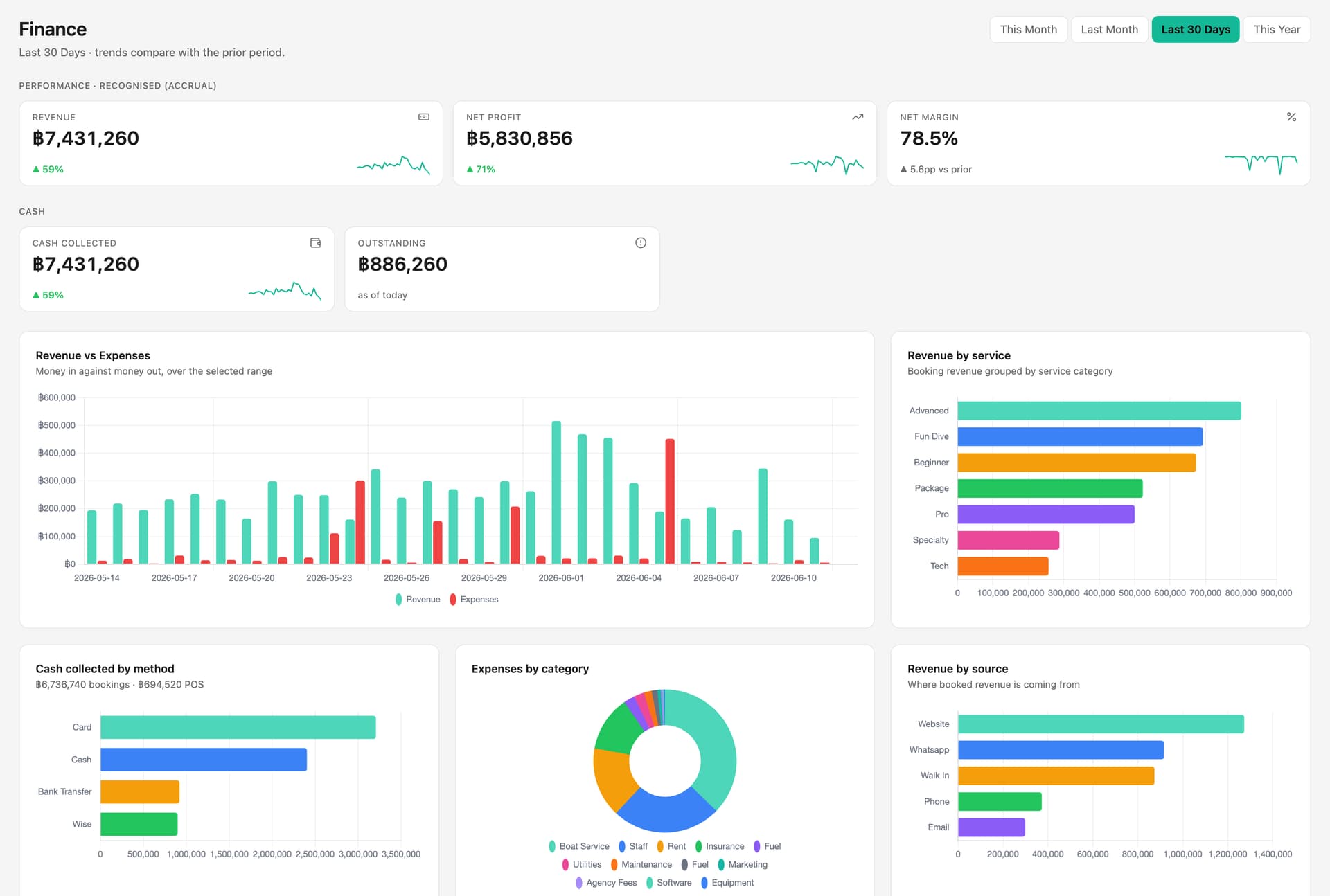
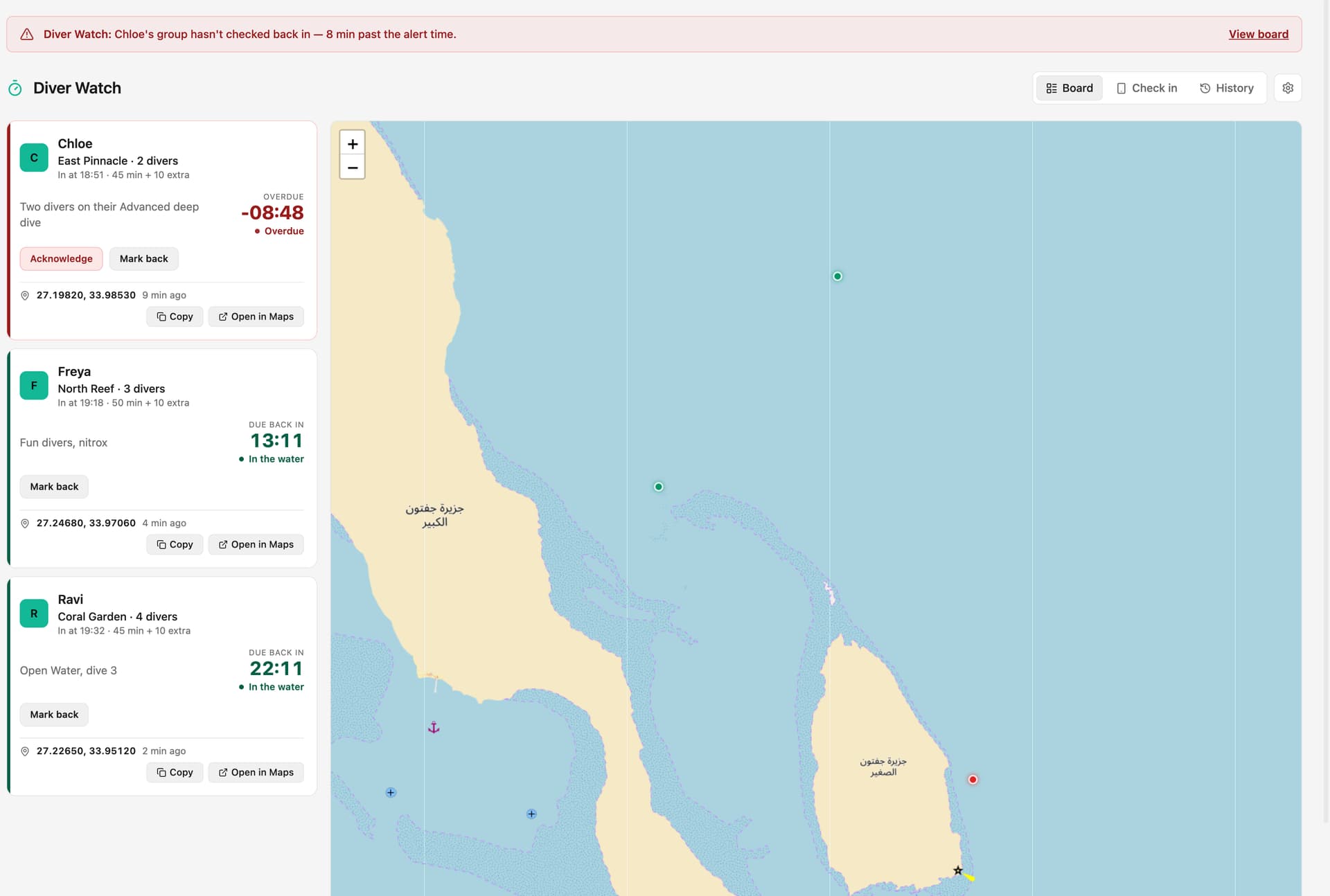
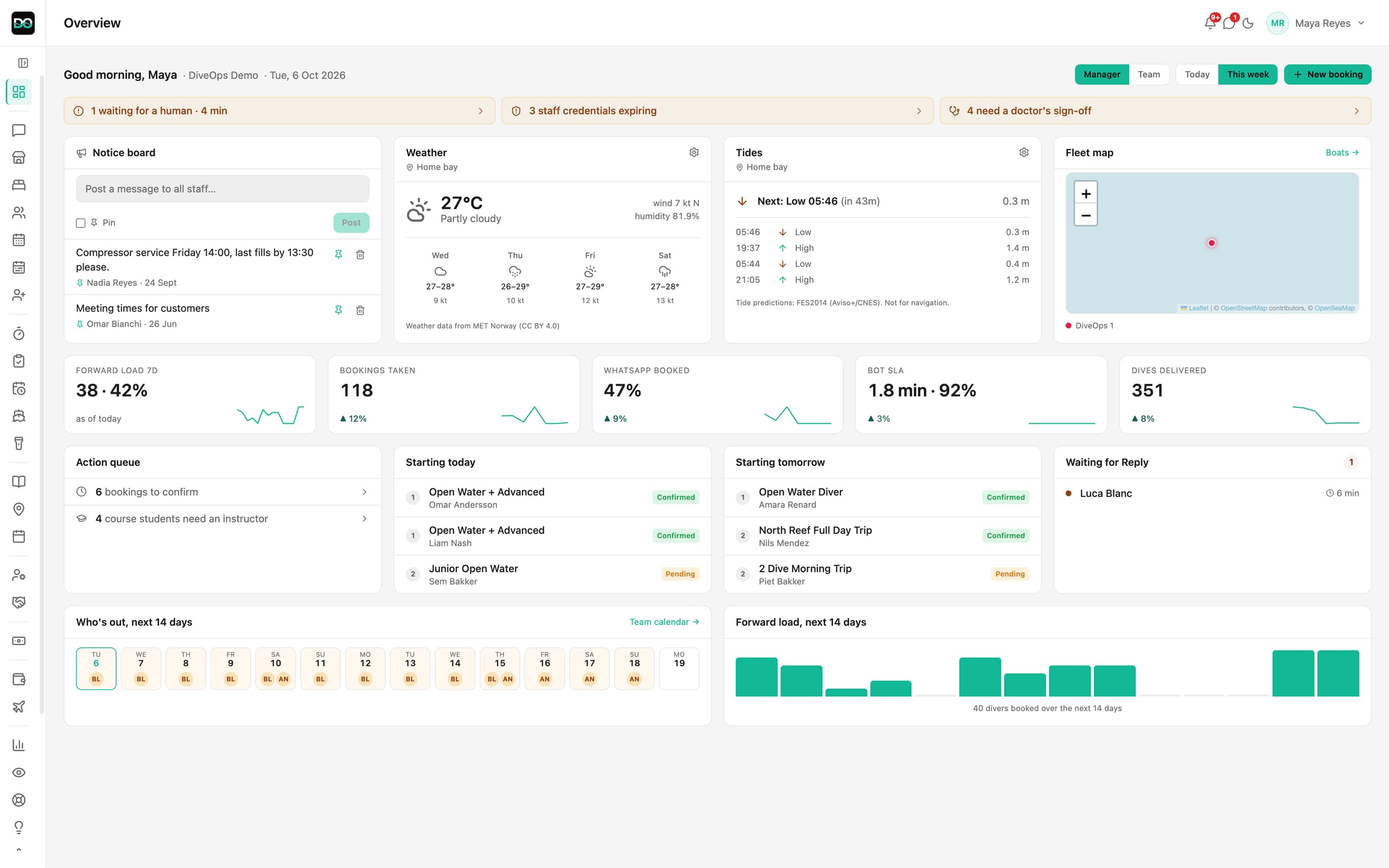
See it run your dive centre.
A short live walkthrough on your real schedule. No slides, no sales patter.