How do you get your dive centre found on Google and in ChatGPT?
Divers choose a centre long before they message one. They search for a dive centre in a place, scan Google Maps, read reviews, check a travel site, and increasingly ask an AI assistant, which names three or four centres and moves on. If you are not one of them, you never hear about the enquiry you lost. This guide covers how divers search, what matters for Google and Google Maps, what your website needs, how AI assistants pick centres to name, which listings matter, how to measure progress, and how DiveOps shows you where you stand.
The short answer
Complete your Google Business Profile, give your website a clear page for each course and dive, get listed on the travel and review sites divers trust, and describe your centre the same way everywhere. AI assistants such as ChatGPT draw on those same pages. Then measure where you appear and fix the gaps.
 (opens full size in a new tab)
The short version
- Google Maps and local search reward a complete, active Business Profile with genuine reviews.
- Your website needs a clear page for each course and dive, your location, languages and agency.
- AI assistants such as ChatGPT name centres the web already describes well: listings, reviews and your own site.
- Use the same name, address and description everywhere.
- Measure monthly: your Google clicks and searches, your Maps position, and how often AI assistants name you.
How do divers find a dive centre today?
Divers search for a place and an activity, such as a dive centre in a resort or an Open Water course on an island, then compare the few names that appear. Those names come from Google's results and its map, from travel and review sites, from agency centre locators, and more and more from AI assistants that answer the question directly.
Each of those surfaces reads largely the same information about you. Fixing it once, accurately and everywhere, is the single most useful thing a centre can do for being found.
What matters most for Google Maps and local search?
A complete and active Google Business Profile matters most. Google says local results are based mainly on relevance, distance and prominence, and the parts you control are a profile that matches what divers search for and a steady flow of genuine reviews.
- Choose the right primary category and add the services you offer
- Keep opening hours, phone, website and booking link accurate
- Add real photos of your boats, team and sites, and keep adding them
- Ask happy divers for reviews, and reply to every review, good or bad
- Post news, offers and season changes so the profile stays active
What does your website need?
Your website needs a clear page for each course and type of dive, saying what it is, how long it takes, who it suits and how to book. Pages that answer the questions divers ask before they book, such as minimum age, what is included, where you meet and which languages you teach in, help both search engines and AI assistants describe you accurately.
State plainly where you are, which agencies you teach with, and how to contact you, using exactly the same name and address as your Business Profile. Make sure every page works quickly on a phone, because that is where most divers will read it.
How do AI assistants such as ChatGPT decide which centres to name?
AI assistants name the centres that the pages they read describe well. When a diver asks ChatGPT, Gemini, Claude or Perplexity for a dive centre in a place, the answer draws on travel guides, review sites, listings and centres' own websites. A centre that appears consistently on those pages, with clear facts about what it offers, is more likely to be named.
You cannot pay to be named. What you can do is make sure the sites these tools quote know you exist and describe you correctly. Google's own guidance says the same fundamentals that help pages in search also apply to its AI features.
Which listings should a dive centre be on?
Be on the listings divers and AI tools actually use in your area. Start with your Google Business Profile, TripAdvisor and your agency's dive centre locator, whether SSI, PADI or another agency. Add activity marketplaces only where the commission makes sense for you, and local tourism and dive guides that rank for your destination.
Check each listing once a season: the name, the address, the phone, the website link and the description. An out-of-date listing is worse than none, because it sends divers and AI assistants the wrong facts.
How do you measure whether it is working?
Measure the same few things every month. Google Search Console shows the searches that find your site, how often you appear and how often people click. Your position in Google Maps for the searches divers use tells you how you compare with nearby centres. For AI assistants, ask the questions divers ask, note which centres are named and which sites are quoted, and repeat it over weeks, because the answers change from day to day.
How does DiveOps show where you rank on Google and in ChatGPT?
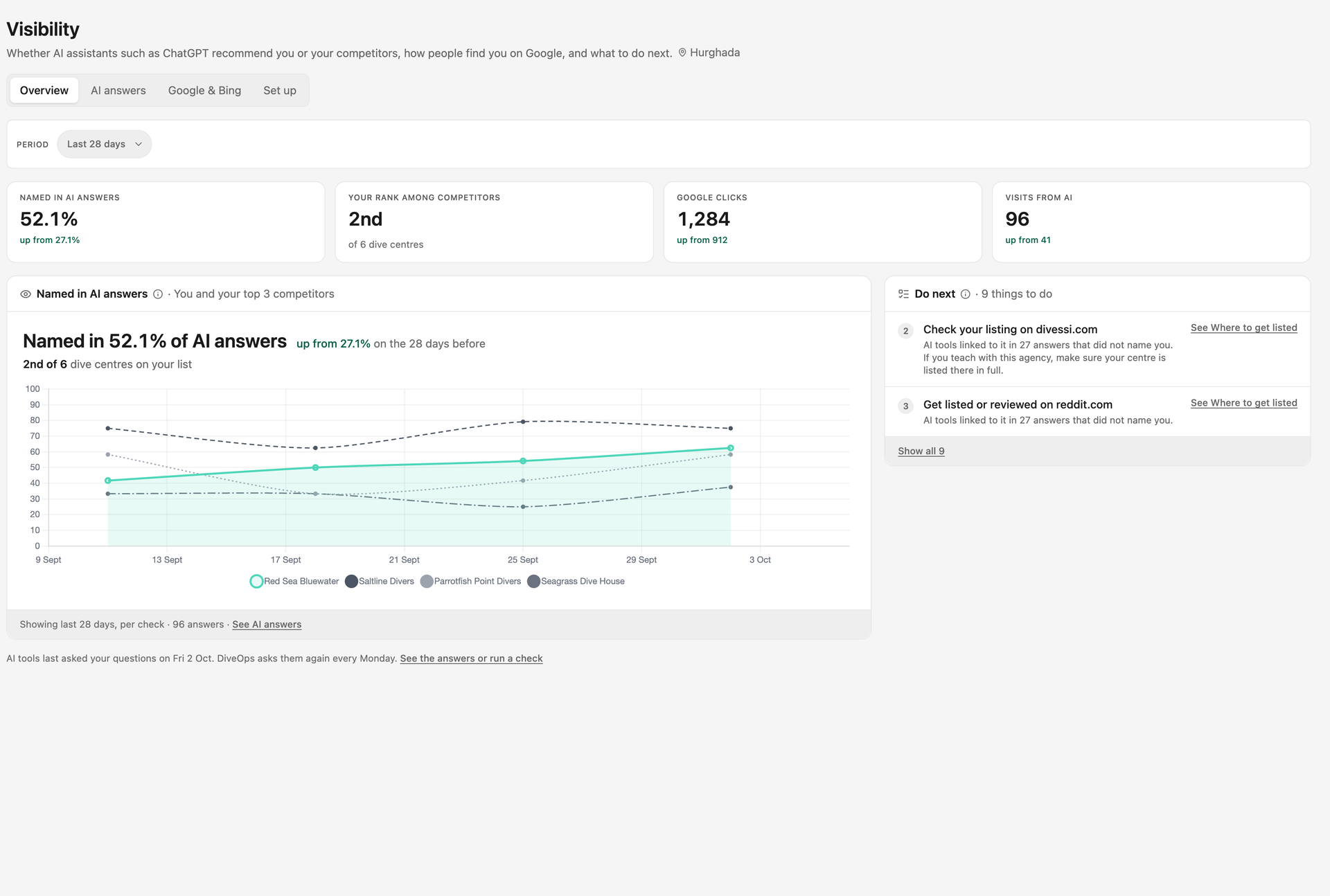
DiveOps includes Search and AI visibility. You connect your own Google Analytics, Google Search Console and Bing Webmaster Tools accounts, read only, so DiveOps never changes your website or settings. It shows the searches that bring divers to your site, your Google clicks and the visitors who arrive from AI assistants.
You add up to ten questions divers ask in your area and the centres you compete with. DiveOps asks ChatGPT, Gemini, Claude and Perplexity those questions every week and shows how often each names you, who they name instead, and the full answers with the sites they quoted. It also shows where you and your competitors come on Google Maps for the searches you choose.
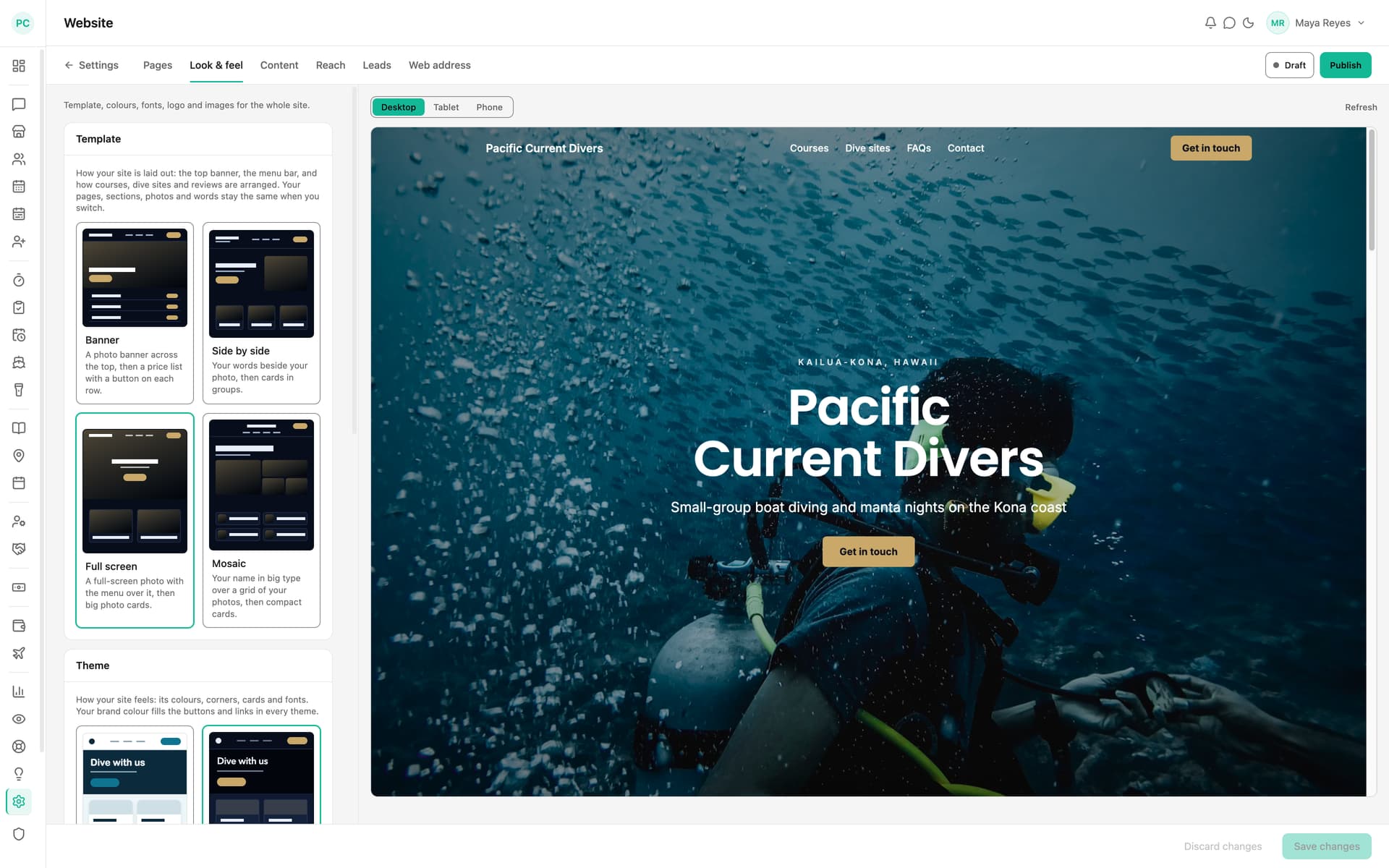
The Actions list turns all of this into jobs, split into quick wins and bigger jobs, each with the reason and the pages the AI assistants quoted as proof, such as a listing site that keeps being cited without mentioning you. If you need a website, the DiveOps website builder is an add-on that keeps courses and prices in step with your dive menu.
Questions, answered.
Can I pay to be recommended by ChatGPT?
No. AI assistants draw on what the web says about you. Being listed and described accurately on the sites they quote is what you can influence.
What is the quickest win for Google Maps?
A complete Google Business Profile with the right category, accurate hours and booking link, real photos and replies to every review.
Which AI assistants does DiveOps check?
ChatGPT, Gemini, Claude and Perplexity, with your own questions, every week.
Does DiveOps change my website or Google account?
No. The Google and Bing connections are read only. DiveOps shows you the data and suggests what to fix; you decide what to change.
Sources

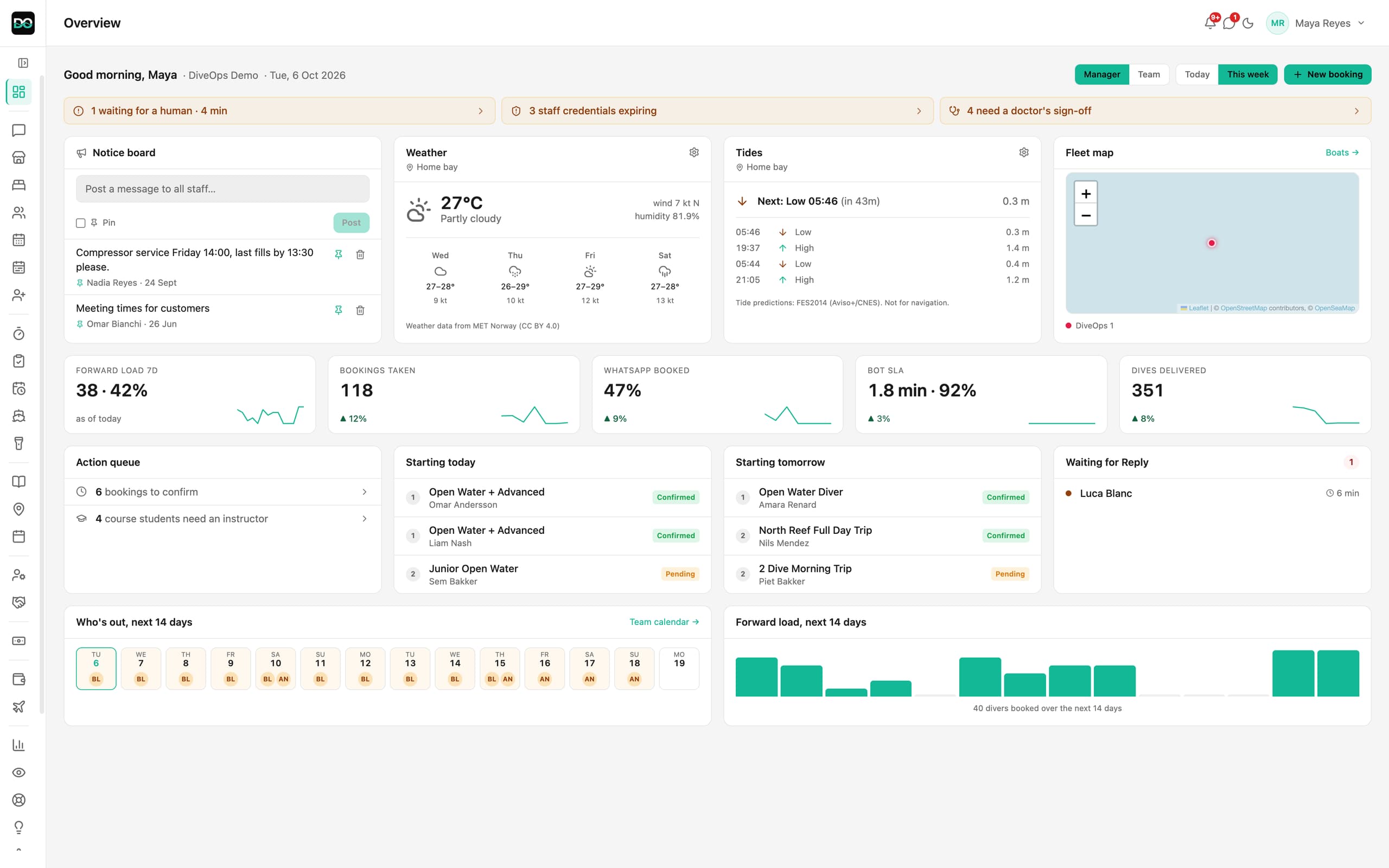
See it run your dive centre.
A short live walkthrough on your real schedule. No slides, no sales patter.