
How should a dive centre handle diver medicals, waivers and certification checks?
Before a diver gets in the water, a dive centre needs to know three things: that they are fit to dive, that they are qualified for the dive planned, and that they understand and accept the risks. Each is a separate piece of paperwork, and mixing them up is how gaps appear. This guide explains how the diver medical works, who decides when a doctor is needed, the difference between a medical and a waiver, how to check certifications, how long to keep the records, and what DiveOps does and does not cover.
The short answer
Have every diver complete the standard diver medical form before they dive, and send anyone with a yes answer to a doctor. Check each certification card against the dive planned and record who checked it. Use your agency's or insurer's liability release for waivers, and keep every record private and findable.
 (opens full size in a new tab)
The short version
- Fitness, qualification and acceptance of risk are three separate records: medical, certification check and liability release.
- Use the standard diver medical form, and let its answers, not staff, decide when a doctor is needed.
- Record a doctor's decision against the booking it was given for.
- Check each card against the dive planned, and record who checked it and when.
- DiveOps handles the medical form, the doctor's decision and certification checks; keep your agency's or insurer's waiver for the liability release.
What paperwork does a diver need before getting in the water?
A diver needs a completed medical declaration, proof of certification for anything beyond a first experience or the course they are starting, and a signed liability release or statement of understanding of the kind your agency and insurer require. Add their contact details, an emergency contact and any insurance details.
For an under-18, a parent or guardian answers and signs on their behalf, and the diver's age should be visible to the people supervising them, because it changes the depth they may dive to and how closely they must be watched.
How does the diver medical form work?
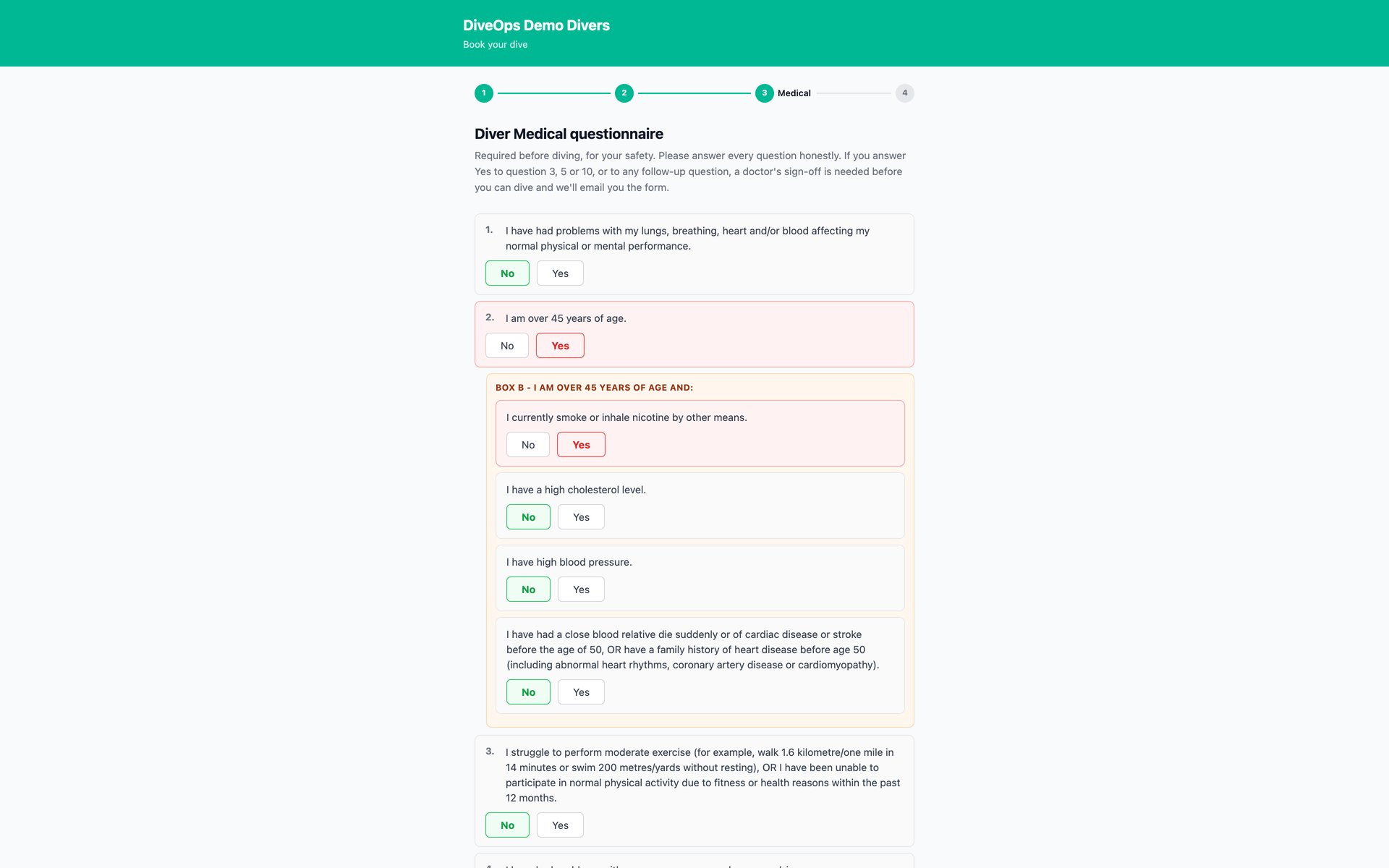
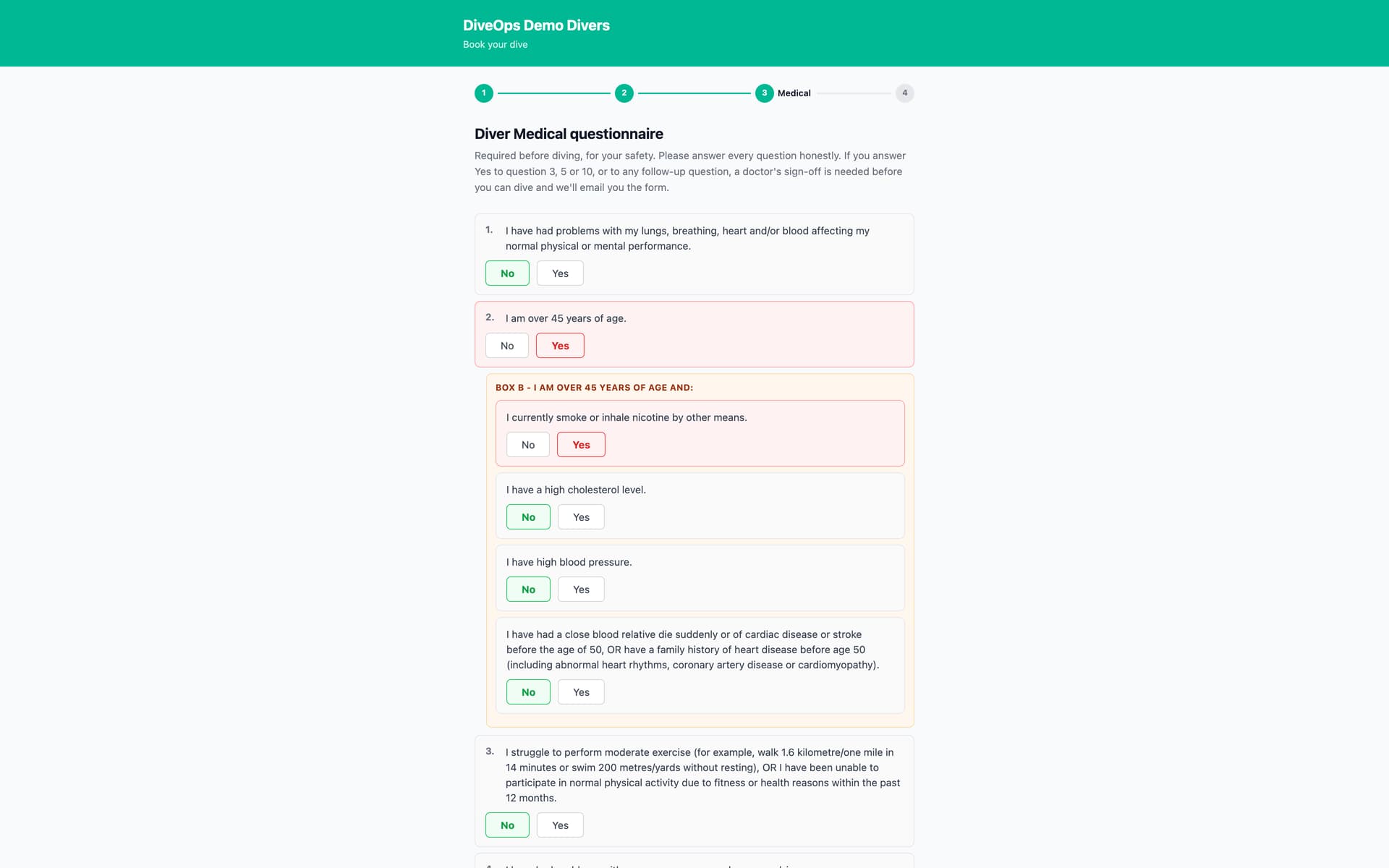
The diver answers a short set of standard health questions. If every answer is no, they are cleared to dive on their own declaration. If any answer is yes, or a follow-up question applies, they need a doctor's evaluation before diving, and the form includes a page for the doctor to complete.
Most of the industry uses the same form, so a diver who has seen it with one centre will recognise it at yours. Use the current version, keep it unaltered, and give divers the chance to do it before they arrive. A form filled in calmly at home is more honest than one rushed at the counter while the boat is loading.
Who decides when a diver needs a doctor?
The form decides, and a doctor makes the call. Staff should never reinterpret a yes answer because the diver says it is nothing serious. That is exactly the conversation the form exists to avoid, and it moves the risk from the diver to your centre.
When the diver comes back with the doctor's evaluation, record the decision, approved or declined, and keep a copy. A declined diver should be impossible to miss on every list for that trip. Treat the decision as belonging to the trip it was given for: a diver returning months later answers the questions again.
What is the difference between a medical and a waiver?
A medical records whether the diver is fit to dive. A waiver, often called a liability release or statement of understanding, records that the diver understands the risks of diving and accepts your terms. They answer different questions and you usually need both.
Your certification agency and your insurer normally provide or specify the release they expect, so start there rather than writing your own. How far a waiver protects you varies a great deal from country to country, so ask your insurer or a local lawyer what yours must say and how it must be signed.
How should you check a diver's certification?
Look at the card or the agency's digital card, compare the level with the dive you have planned, and ask when they last dived. A diver certified to a shallower depth should not be on a deep site, and a diver who has not dived for a long time may need a refresher first, whatever the card says.
Record that the check was done, by whom and when. A note saying certification checked, with a name and a date, is worth far more after an incident than a general belief that reception always looks at cards.
How long should you keep medical forms and waivers?
Keep them for as long as your insurer and local law require, which is often several years after the dive. Medical answers are health data, which data protection law treats as a special category, so store them where only the staff who need them can see them, not in a shared inbox, a drawer anyone can open or photos on a personal phone. For the wider picture, see our compliance guide.
How does DiveOps handle medicals, certification checks and waivers?
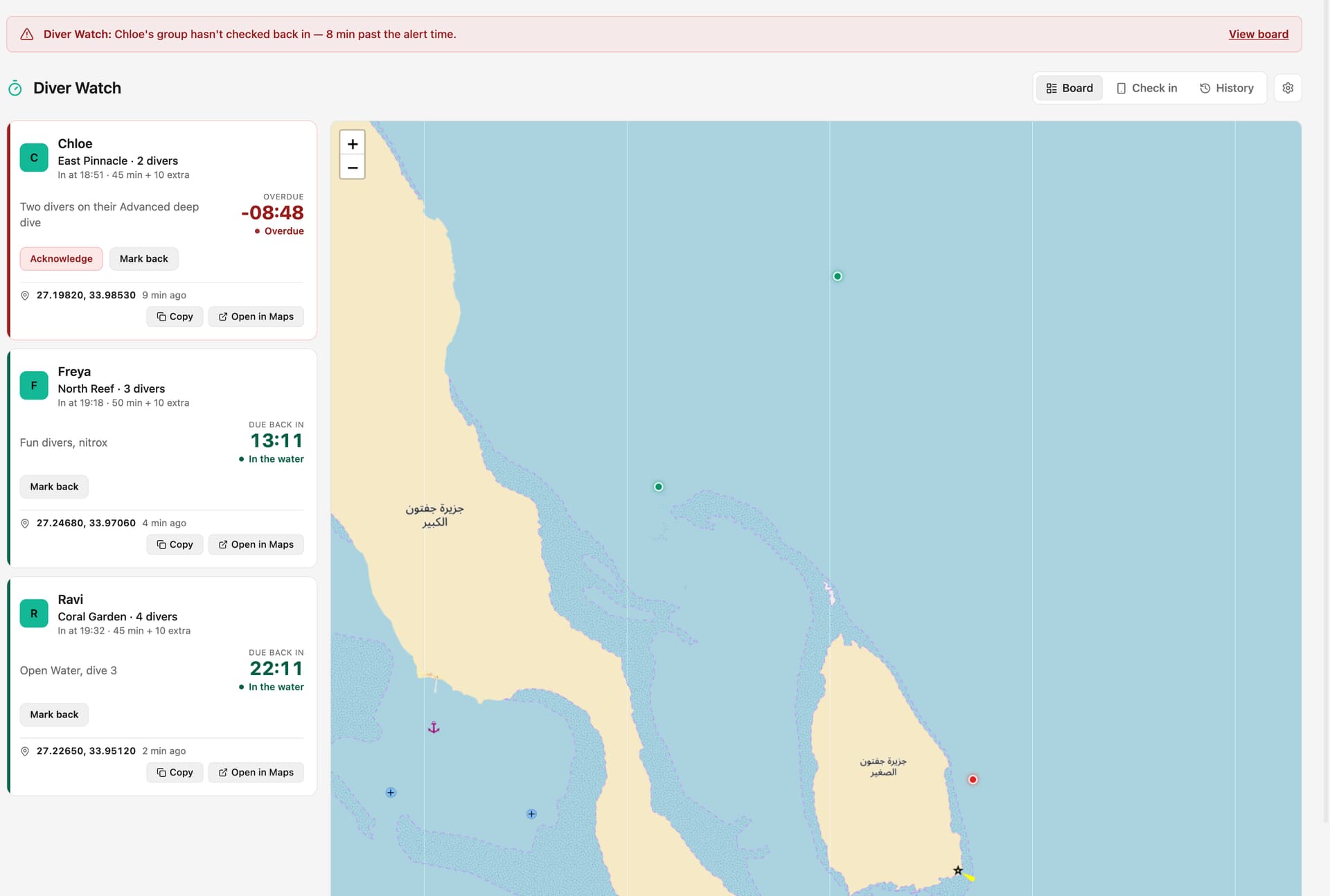
When a service needs a medical, divers complete the standard Diver Medical form, the one SSI, PADI and other agencies use, on their phone as part of booking, and sign it on screen. Under-18s need a parent or guardian to answer and sign. A yes answer flags that a doctor's sign-off is required and emails the diver the form for their doctor. For walk-ins and bookings made by phone or WhatsApp, staff send a details link, valid for 30 days, or open it on a tablet at the counter, or upload a signed paper form.
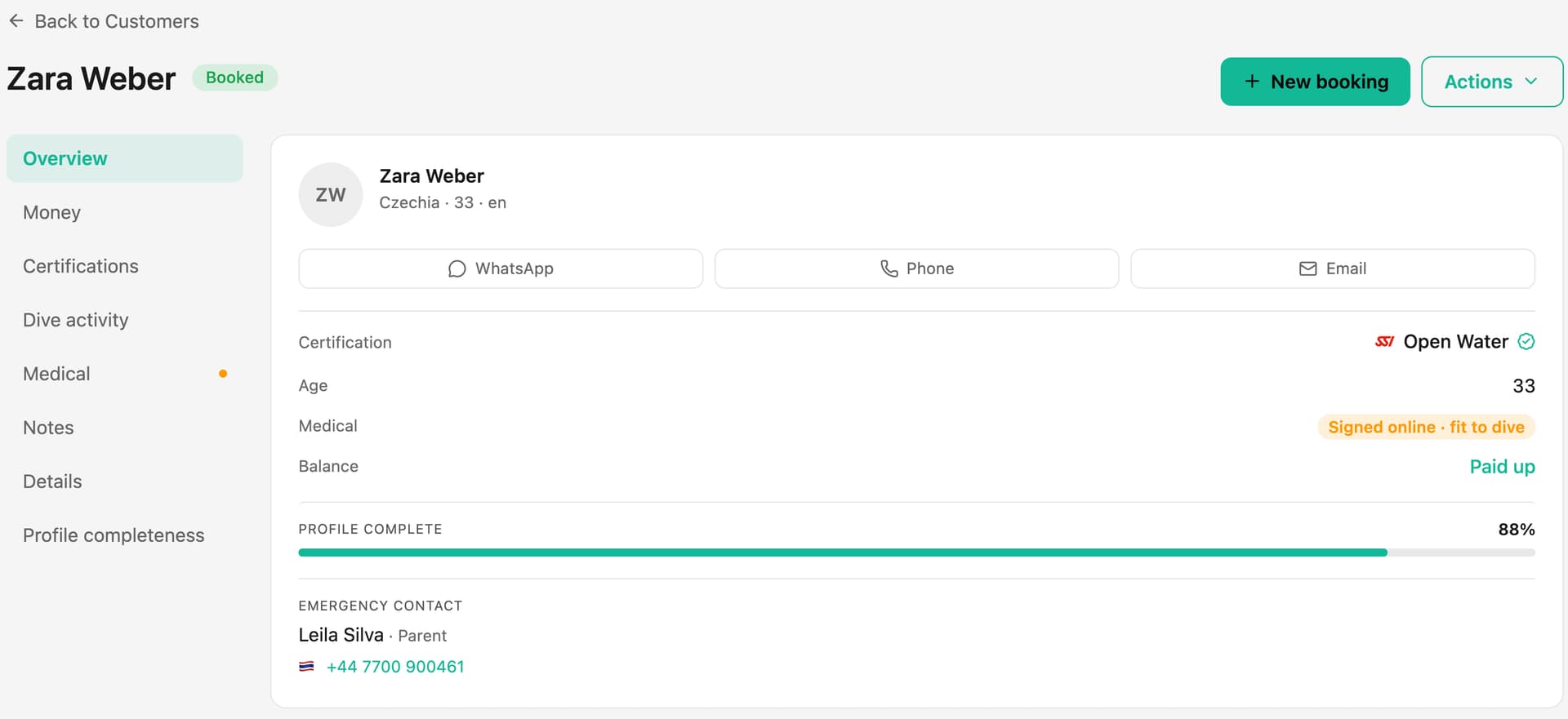
Each medical belongs to one booking. Staff record the doctor's decision, approved or declined, once, with the doctor's form attached, and a declined diver carries a red flag everywhere so nobody puts them in the water by accident. Signed forms are private to your own centre's staff.
For certifications, the booking page can ask for the diver's level, agency, last dive date and a photo of their card. Marking a card as checked records who checked it and when. DiveOps does not include a separate liability release or waiver form today, so keep using the one your agency or insurer provides. Rentals have their own tick to confirm the diver agreed to your rental terms.
Questions, answered.
Does DiveOps include a liability waiver?
No. DiveOps handles the diver medical form, the doctor's decision and certification checks. For the liability release, keep using the form your agency or insurer provides.
Can a diver complete the medical form before they arrive?
Yes. In DiveOps they complete and sign it on their phone when they book, or from a details link you send for bookings made another way.
Who decides if a diver needs a doctor's sign-off?
The diver's answers on the medical form. A yes answer means a doctor's evaluation is needed before diving; staff should not overrule it.
Does one medical form cover every future trip?
Not in DiveOps. Each medical belongs to one booking, so a diver returning for a new trip answers again and any doctor's decision applies to that booking.
See it run your dive centre.
A short live walkthrough on your real schedule. No slides, no sales patter.