
What should a dive boat manifest and headcount checklist include?
A boat manifest is only useful if it matches the people on the boat. The worst incidents in diving have involved a diver left behind after a count that added up but named nobody. This guide is a practical checklist: what the manifest must include, what to check before the boat leaves, how to run the headcount at every dive, what to do if someone is missing, and what to keep afterwards. For how the daily plan is built, see our trip sheet and boat manifest guide.
The short answer
A dive boat manifest should list every person aboard by name, with their group, leader, certification, age where relevant and medical status, against the boat's capacity. Check it by roll call before departure, before every entry and after every dive, by name, never by number, and keep the signed sheet afterwards.
 (opens full size in a new tab)
The short version
- The manifest lists every person aboard, staff and guests included, not just paying divers.
- Count by name at departure, before every entry and after every dive.
- Two people should confirm the count after each dive before the boat moves.
- A missing diver triggers your emergency plan at once, not a second recount.
- In DiveOps the trip sheet is the manifest, and Diver Watch, switched on with us, adds an in-water headcount with an overdue alert.
What must a dive boat manifest include?
It must include everyone aboard, because a headcount is only as good as the list it checks against. Staff, trainees, guests and snorkellers count as much as paying divers.
- The boat, the date, the departure time and the planned sites
- Every person aboard by full name, grouped by their instructor or guide
- Each diver's certification level, and age for anyone under 18
- Medical status, with any diver awaiting a doctor's decision clearly flagged
- Kit needs: tank size, nitrox, rental sizes
- Persons on board against the boat's capacity
- Emergency contacts and the nearest chamber and hospital
What should you check before the boat leaves?
Check that the people on the boat are the people on the manifest, by name, and that the boat is ready for the worst day, not the average one.
- Roll call by name against the manifest, adding any walk-ups in writing
- Persons on board within the boat's limit
- Every diver's medical cleared and certification checked
- Oxygen kit full and working, first aid kit complete
- Radio or phone working, emergency numbers on board
- A copy of the manifest and the dive plan left ashore
- Briefing given, including the recall signal and the plan for a lost buddy
How should you run the headcount at every dive?
Run it by name, before every entry and after every exit, and write it down. Counting heads is not enough: a count of twelve can hide one diver counted twice and another still in the water.
Before entry, the leader of each group confirms their divers and buddy pairs and notes the time in and the planned time out. After the dive, each diver is ticked back by name as they climb aboard. A second person, usually the boat captain or the divemaster, checks the total against the manifest before the boat moves. If a group is late against its planned time, the boat knows at once rather than when someone notices.
What should happen if someone is missing?
Start your emergency action plan straight away. Do not spend time recounting or assuming the diver is on another boat. Note the time, the last known position and who was with them, keep watch from the boat, and call for help early: a search is far easier in the first minutes than in the first hour.
Every centre should have a written emergency plan, practised by the crew, covering a missing diver, a diver in distress and a medical emergency on board. DAN publishes guidance for dive operators on building one.
What records should you keep afterwards?
Keep the signed manifest with the entry and exit times for each dive, any incident notes and who completed the checks. Store it with the day's other records for as long as your insurer and local law require.
Some places set this out in law. In Malta, for example, the recreational diving regulations require a signed per-dive record. Elsewhere it may only be an insurer's condition, but the record is the same thing that protects you if a question is ever asked.
How does DiveOps build the manifest and support the headcount?
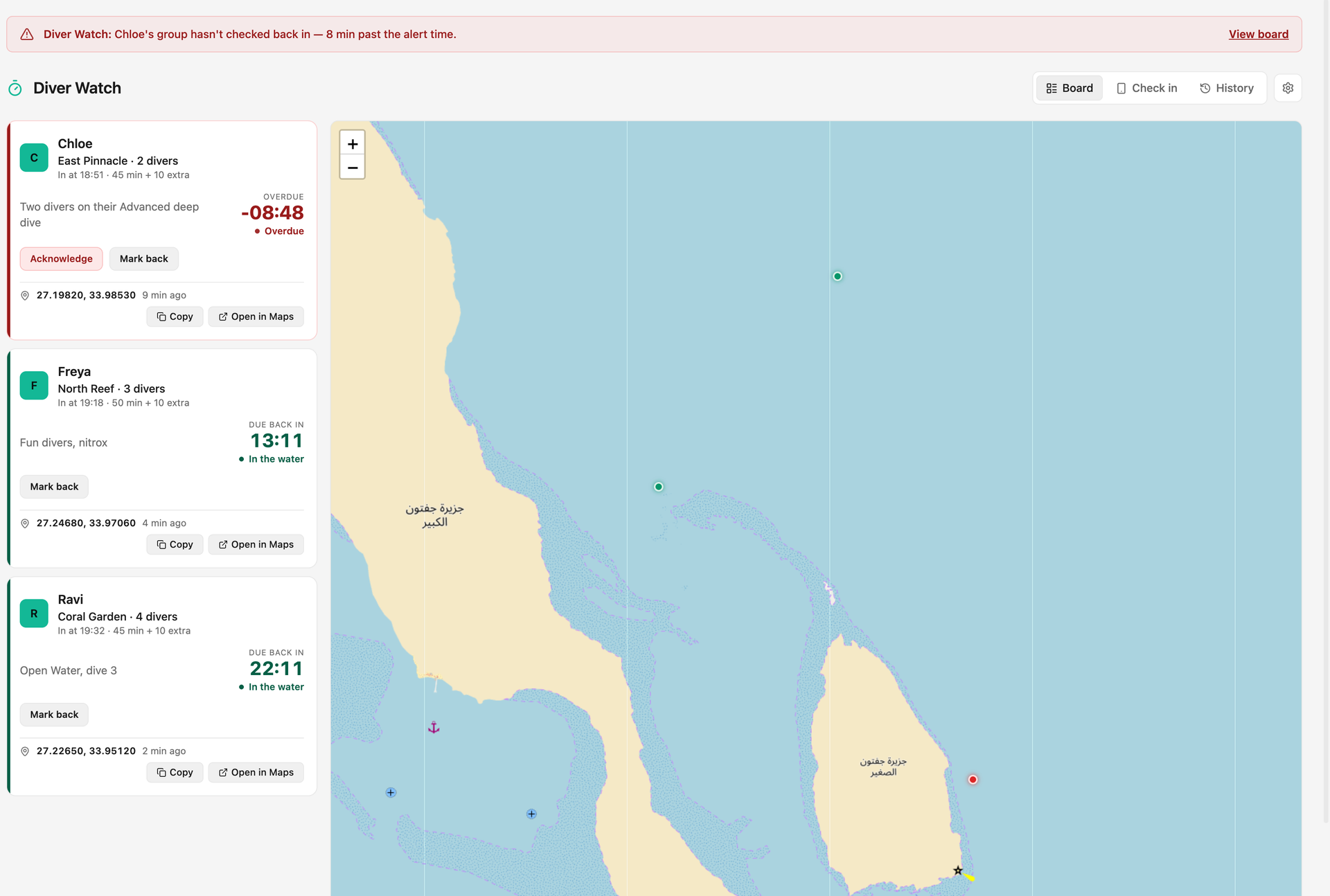
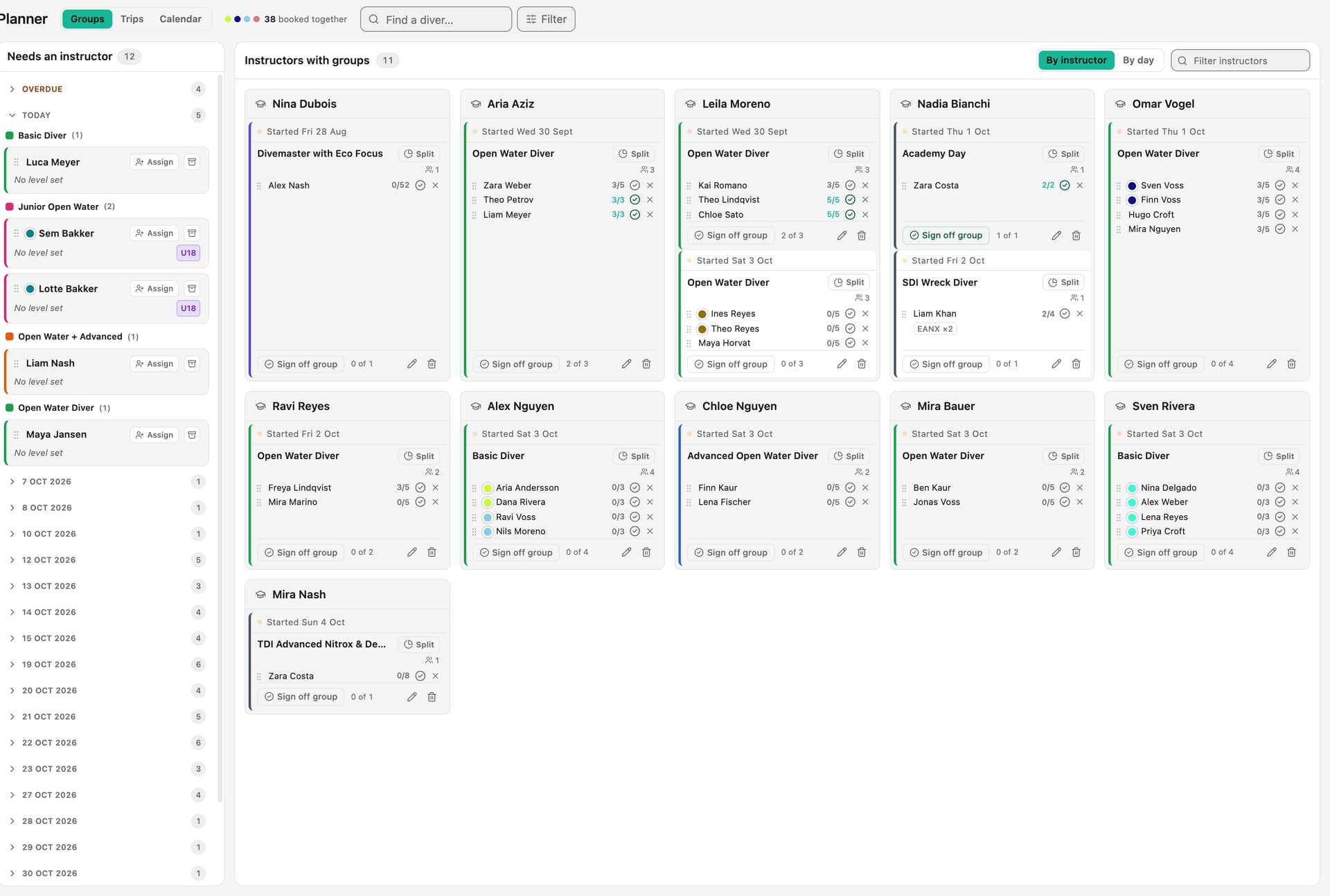
In DiveOps the trip sheet is the manifest. Groups are placed on boats as a whole, each person shows once per boat, and the capacity count includes everyone aboard: customers, instructors, divemaster trainees, staff and guests. It turns amber as the boat fills and red at the limit. Divers under 18 carry a badge with their age, and divers waiting on a doctor's decision are flagged on their booking.
The printed boat sheet is two pages: the boatmaster's sheet with your checklists, roll-call rows for each dive, oxygen and first aid checks and your emergency numbers, and a roster of every person grouped by their instructor, with bag numbers, requested tanks and nitrox, and blank rows for walk-ups. You choose which sections print.
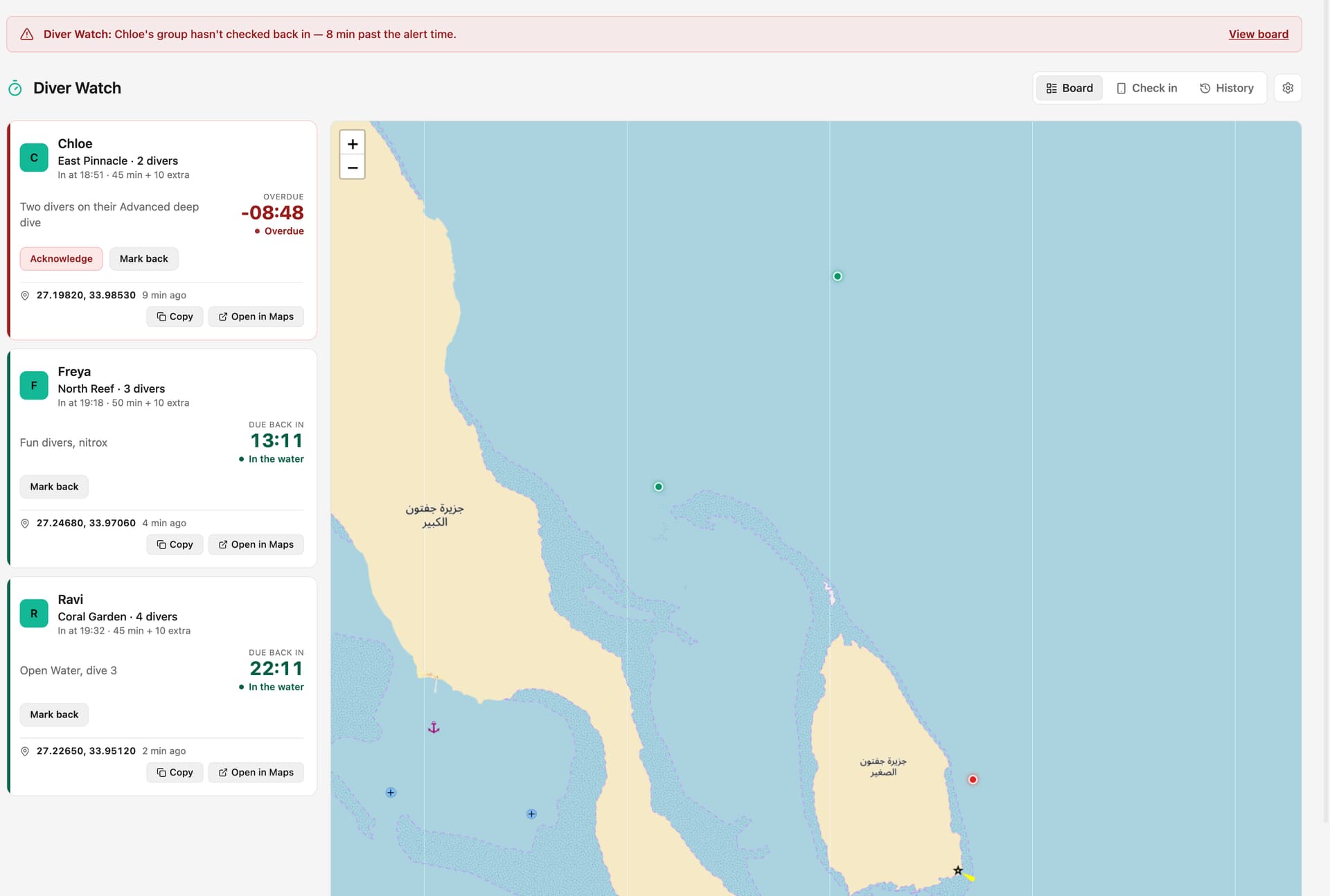
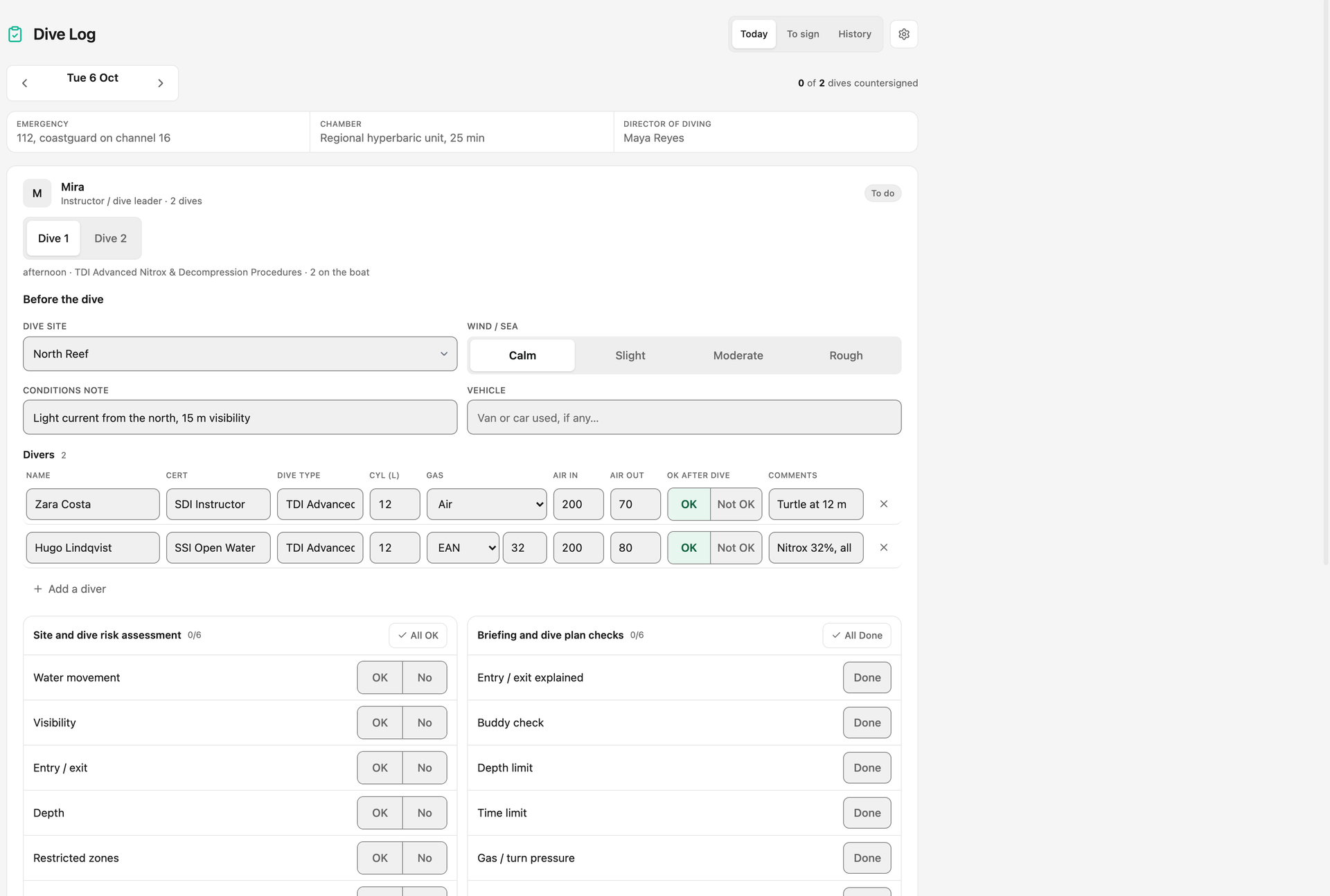
Diver Watch adds an in-water headcount, switched on with us centre by centre. Instructors check their group into the water and back out from their phone. If a group is late, the boat and the shop see it straight away and the team is emailed, with an all-back email when they surface. In Malta, the Dive Log keeps the signed per-dive record.
Questions, answered.
Who should be on a dive boat manifest?
Everyone aboard: divers, students, instructors, guides, trainees, crew members you count, snorkellers and guests. A headcount can only be checked against a complete list.
Why count divers by name rather than number?
A number can balance while the wrong person is missing, for example one diver counted twice. Ticking each name back aboard removes that risk.
Does DiveOps print a boat manifest?
Yes. Each boat prints a two-page sheet: the boatmaster's checklists with roll-call rows, and a roster of everyone aboard grouped by instructor.
Is Diver Watch on for every centre?
Diver Watch is switched on centre by centre with us. Ask about it on your demo.
Sources
See it run your dive centre.
A short live walkthrough on your real schedule. No slides, no sales patter.