
What are the best alternatives to a spreadsheet for running a dive centre?
Almost every dive centre starts on a spreadsheet and a WhatsApp number answered by hand. It works, until it doesn't. This page sets out the honest options for moving on, what each is good at, where each falls short, and when staying on the spreadsheet is the right call.
The short answer
There are two real alternatives to a spreadsheet: a generic booking tool, which handles online bookings and payments, and dive-specific software, which also runs dive groups, boats, the trip sheet, gear and staff pay. A spreadsheet still suits a very small centre. DiveOps is dive-specific and adds a 24/7 WhatsApp assistant.
 (opens full size in a new tab)
The short version
- A spreadsheet is free, flexible and fine for a very small centre with one person who holds the whole plan.
- Generic booking tools are good at online checkout and calendars, but most are not built around courses, boats or the trip sheet.
- Dive-specific software runs the whole day, from booking to boat to pay, at the cost of a setup and more to learn.
- The deciding question is how many times each booking gets typed by hand, and who answers WhatsApp when you are on the boat.
- DiveOps is dive-specific, in one login, with a 24/7 WhatsApp assistant on your own number.
Is a spreadsheet still good enough for a dive centre?
A spreadsheet is good enough while one person can hold the whole operation in their head. It costs nothing, it bends to any process, and a small centre with one boat and a few bookings a day can run on it for years.
It stops being enough when the same booking has to be typed into three places: the spreadsheet, the calendar and the boat plan, plus a payment link and a WhatsApp reply. A grid has no built-in protection against double-booking, no idea which instructor is qualified for which course, and no one answering enquiries while you are underwater. The cost is not the software bill; it is the evenings and the enquiries that go cold.
| Feature | DiveOps | Spreadsheets + WhatsApp |
|---|---|---|
| Out-of-hours enquiries | Routine questions answered 24/7 in under 2 minutes by the assistant on your own WhatsApp number, with one-tap hand-off to a person. | Answered when someone is free and awake; out-of-hours messages tend to wait until morning. |
| Foreign-language messages | Replies to each diver in their own language. | Depends on who is holding the phone. |
| How it all connects | One login: booking, dive group, trip sheet, commission and finance, with no retyping. | The owner copies each booking between the spreadsheet, the calendar, the payment link and the boat plan. |
| Double-booking and access | Bookings, groups and the trip sheet share one record, with six access levels. | A spreadsheet has no built-in double-booking protection and no real permissions. |
| Dive-specific work | Dive menu and sites, dive groups to instructor sign-off, trip sheets with spaces and kit sizes worked out, gear servicing and rentals. | Adapted by hand; flexible, but every rule lives in someone's head. |
| Finance and pay | Profit and loss, invoices, expenses, a shop till and payroll with instructor commission worked out from the trip sheet. | Payment links and a separate sheet for wages and commission. |
| Cost | One plan with every feature, priced by the divers you take each year. | Free or close to it in money, paid for in the owner's time. |
What are the alternatives to a spreadsheet?
There are three realistic set-ups, and each suits a different kind of centre.
- Spreadsheet plus WhatsApp: free and flexible, with the owner as the link between every tool. Best for a very small centre with a stable routine.
- A generic booking tool, the kind built for tours and activities: strong on online checkout, calendars and payments, and often polished. Most are not built around dive groups, boats, course sign-off or the trip sheet, so those stay on paper or in a spreadsheet beside it.
- Dive-specific software: built around courses, boats, gear and the trip sheet, so the booking flows through to the boat and to staff pay. The trade-off is a setup and more to learn than a single booking widget.
When does each option fit?
Match the tool to how your centre actually runs, not to the longest feature list.
- Stay on a spreadsheet if you run one boat, take a few bookings a day and nothing is slipping.
- A generic booking tool fixes online checkout but leaves boats, courses and pay to plan by hand. Our Checkfront comparison looks at that route.
- Choose dive-specific software if you retype bookings, juggle more than one boat, pay instructors commission, or miss enquiries while you are diving.
What changes when you move to dive-specific software?
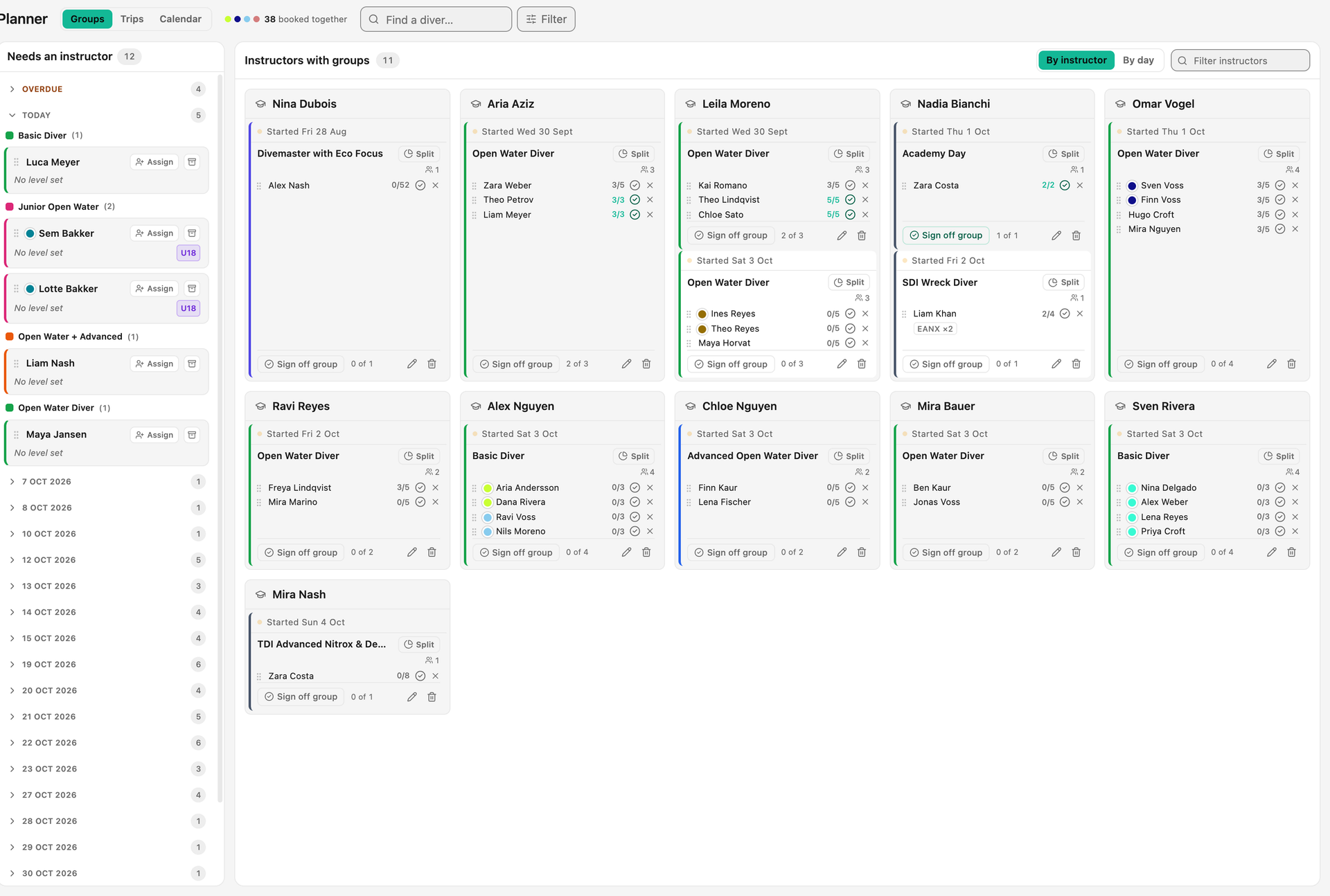
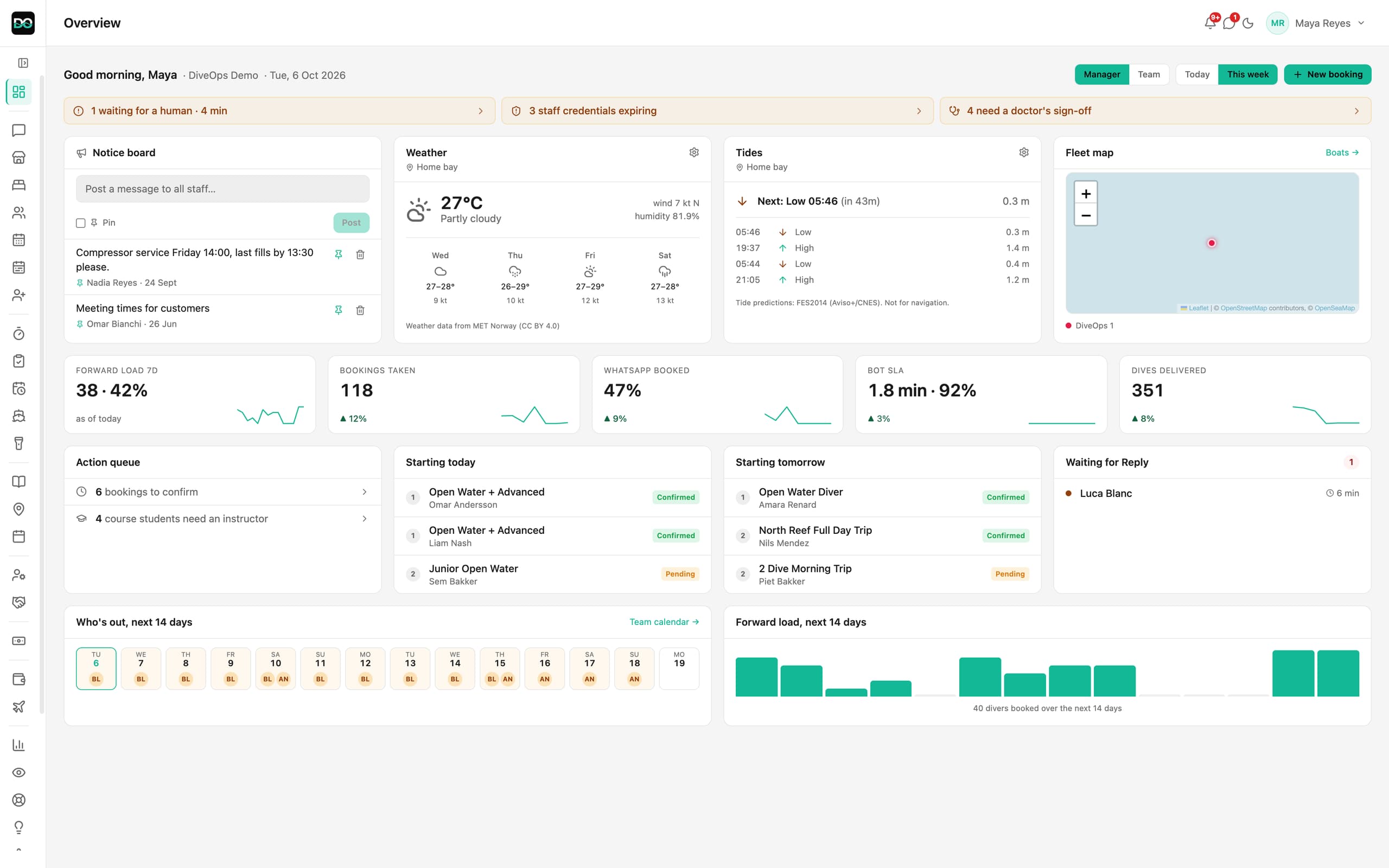
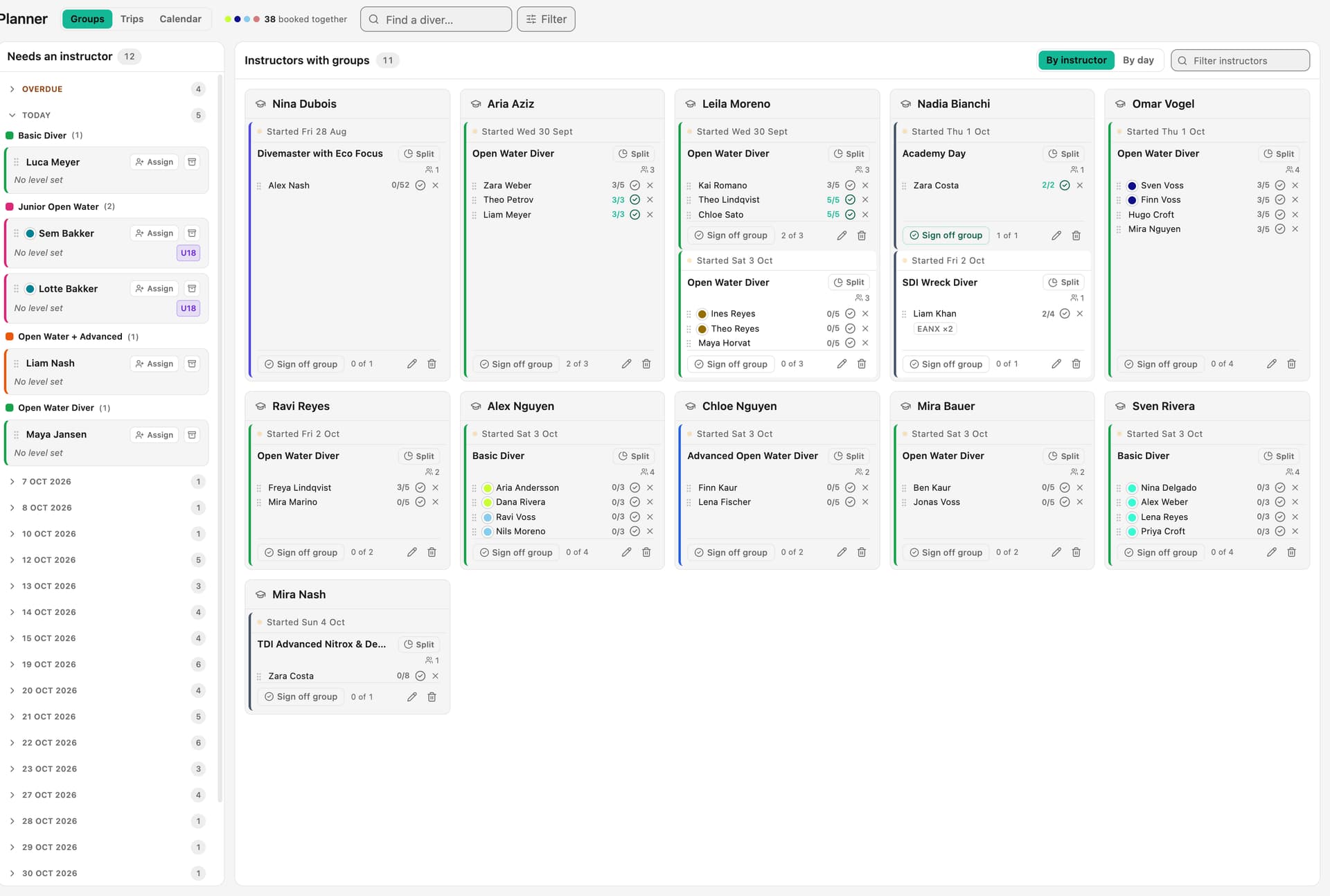
The main change is that each booking is entered once. In DiveOps, a booking from WhatsApp, your website or a walk-in lands in one list, joins a dive group under its instructor, appears on the trip sheet when you drag the group onto a boat, and feeds commission and finance from there. Gear and rentals, the shop till, double-entry books and payroll with payslips sit in the same login.
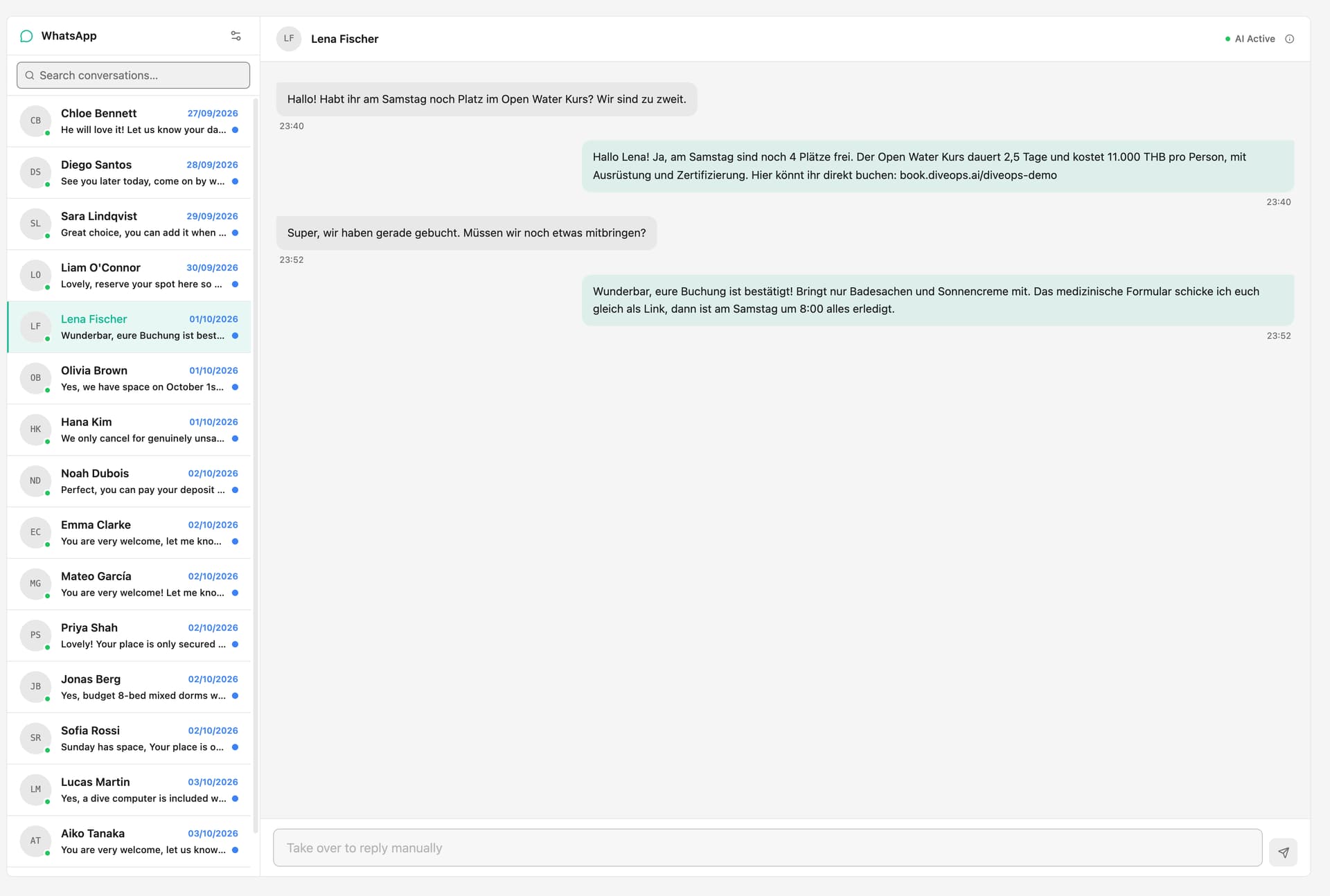
The second change is the front desk. An AI assistant on your own WhatsApp Business number answers routine questions 24/7, in the diver's own language, from your real prices and schedule, and sends your booking link. It handles about 92% of routine questions without a person, replies in under 2 minutes, and hands any chat to your team in one tap. It runs on the official WhatsApp Business Platform, so the number stays yours.
- One booking, entered once, from enquiry to boat to pay
- Six access levels, so each person sees what their job needs
- About 8 hours a week of admin handed back
- Works alongside SSI, PADI and other dive agencies rather than replacing them
What does moving off a spreadsheet involve?
Moving off a spreadsheet takes a setup session, not a project. We set up your services, boats, dive sites and prices with you on a video call and do the technical setup. DiveOps can also read your existing website and suggest your courses, dive sites, FAQs and policies, which you review before anything goes live.
There is no lock-in, and you can export your data as CSV at any time, including after you leave. That matters more than any single feature: the data you collect is yours.
Which option should you choose?
If the spreadsheet is working and nothing is slipping, keep it. If you are the glue between four tools and the phone, a generic booking tool fixes checkout but leaves the boats and the pay with you, while dive-specific software takes the whole day off your plate.
Book a demo and watch DiveOps answer a real enquiry on WhatsApp, then follow that booking onto a boat.
Questions, answered.
Is a spreadsheet good enough to run a small dive centre?
Often, yes, while one person can hold the whole plan and bookings are few. It stops being enough when each booking is typed into several places, more than one boat goes out, or enquiries arrive while you are diving.
Is a generic booking tool enough for a dive centre?
It can be, if online checkout is the only gap. Most generic booking tools are strong on payments and calendars but are not built around dive groups, boats, course sign-off or the trip sheet, so those stay manual.
Will I lose my WhatsApp number or chat history if I move to DiveOps?
No. DiveOps runs on the official WhatsApp Business Platform and the number stays yours. The difference is that routine enquiries get an answer 24/7, and your team takes over any chat in one tap.
Can I bring my spreadsheet data across?
We set up your services, boats, dive sites and prices with you during onboarding, and DiveOps can read your current website to suggest courses, sites and policies. Book a demo and we will walk through what moving across looks like for your centre.
Does DiveOps work with SSI, PADI and other dive agencies?
Yes. DiveOps works alongside SSI, PADI and other dive agencies. Your certifications stay in the agency's own systems; DiveOps runs the bookings, boats, gear, money and the WhatsApp front desk.
See it run your dive centre.
A short live walkthrough on your real schedule. No slides, no sales patter.